THIRTEENTH COHSOD RECOMMENDS STRATEGIES FOR YOUTH DEVELOPMENT
(CARICOM Secretariat, Georgetown, Guyana) The Thirteenth Meeting of the Council for Human and Social Development (COHSOD) of the Caribbean Community (CARICOM), ended on Friday, 28 October with wide ranging recommendations for the development of the Region’s youth, particularly in light of the CARICOM Single Market and Economy (CSME) scheduled to come on stream in January 2006.
The COHSOD which focussed on Youth, Sports and Drugs, was held at Le Meridien Pegasus Hotel, Georgetown, Guyana from 26-28 October under the theme, “Youth in the CSME: Perspectives, Prospects and Challenges.”
The meeting recognised the potential of the CSME for creating employment opportunities for CARICOM nationals, as well as the need for a series of measures to stimulate the urge for self-employment and entrepreneurship. It noted that in the final analysis, the assessment of the CSME would be based on its contribution to increased productivity, competitiveness, investment and increased employment opportunities.
The COHSOD received the Report of the Baseline Data Study on Gender Differentials in Education and noted the trends determined through the Study, that at the regional level, in 17 countries overall, entry and achievement gaps in CXC subjects between boys and girls, favour the girls, except for Mathematics.
As a result, the COHSOD agreed that CARICOM, in collaboration with the University of the West Indies (UWI) Centre for Gender Studies, should follow-up with a policy study on actions for redressing the balance in participation of boys both in the educational process and enhancing their performance.
In considering a model for Caribbean Youth Development, the COHSOD recognised that the Region’s youth were engaged in risk-taking behaviour, including early initiation in sexual activities and aggressive behaviour. In addition, there was a high incidence of crime and violence among and towards youths, and it was observed that the age of first drug user was also declining.
The COHSOD agreed that emphasis should be placed on the “asset behaviour model” which seeks to identify the positive trends and values in youth behaviour and on creating an enabling environment for their development. The COHSOD proposed that efforts be made by the CARICOM Secretariat to extend the World Bank Study on Youth Risk and Protective Factors taking into consideration the strengthening of programmatic interventions and the emergence of gang cultures which should be examined in greater detail.
Cognisant that the main socialisation issues are being seriously challenged by other and stronger influencing factors such as the globalised media and culture, and that some of the music to which young people are listening promotes aggressive and violent behaviour, the COHSOD agreed that a regional agenda needed to be developed and implemented to reduce risks and vulnerabilities among the Region’s young people.
It was of the view that one method of socialising youth positively, would be the establishment of a National Youth Service Programme with a focus on community services.
The COHSOD observed that the CARICOM lacked the human and financial resources to adequately confront the scourge of drug use in its member countries and pointed out that apart from the insufficiency of its data collection, storage and management, the Region was perceived to be placing insufficient emphasis on the reduction in drug supply, as opposed to drug demand.
It was noted that cultural practice and perceptions supported the use of some drugs and that there was a link between HIV/AIDS and substance abuse, a trend which needed to be arrested.
The COHSOD urged that the CARICOM Secretariat in collaboration with Inter American Drug Abuse Central Communication (CICAD) accelerate the implementation of the Regional Strategy for reduction in demand for drugs.
You may also be interested in:
La CSME, la seguridad alimentaria y la financiación climática encabezan la agenda de la Cumbre de CARICOM en las Bahamas.
The CARICOM Single Market and Economy (CSME); food security; climate change and climate finance; health; and security will be among the major topics when Heads of Government of
La Secretaría de CARICOM y la Agencia Caribeña para Soluciones de Justicia (CAJS) forjan una alianza para acelerar la transformación digital.
La Secretaría de CARICOM (CCS) y la Agencia Caribeña para Soluciones de Justicia (CAJS) han establecido una importante alianza con el objetivo de impulsar la transformación digital y mejorar la pre
Related Stories
CARICOM continues pursuit of quality education imperative
The Caribbean Community (CARICOM) Secretariat is advancing efforts to achieve clearer alignment, coordination and harmonization of standards for the teaching profession in the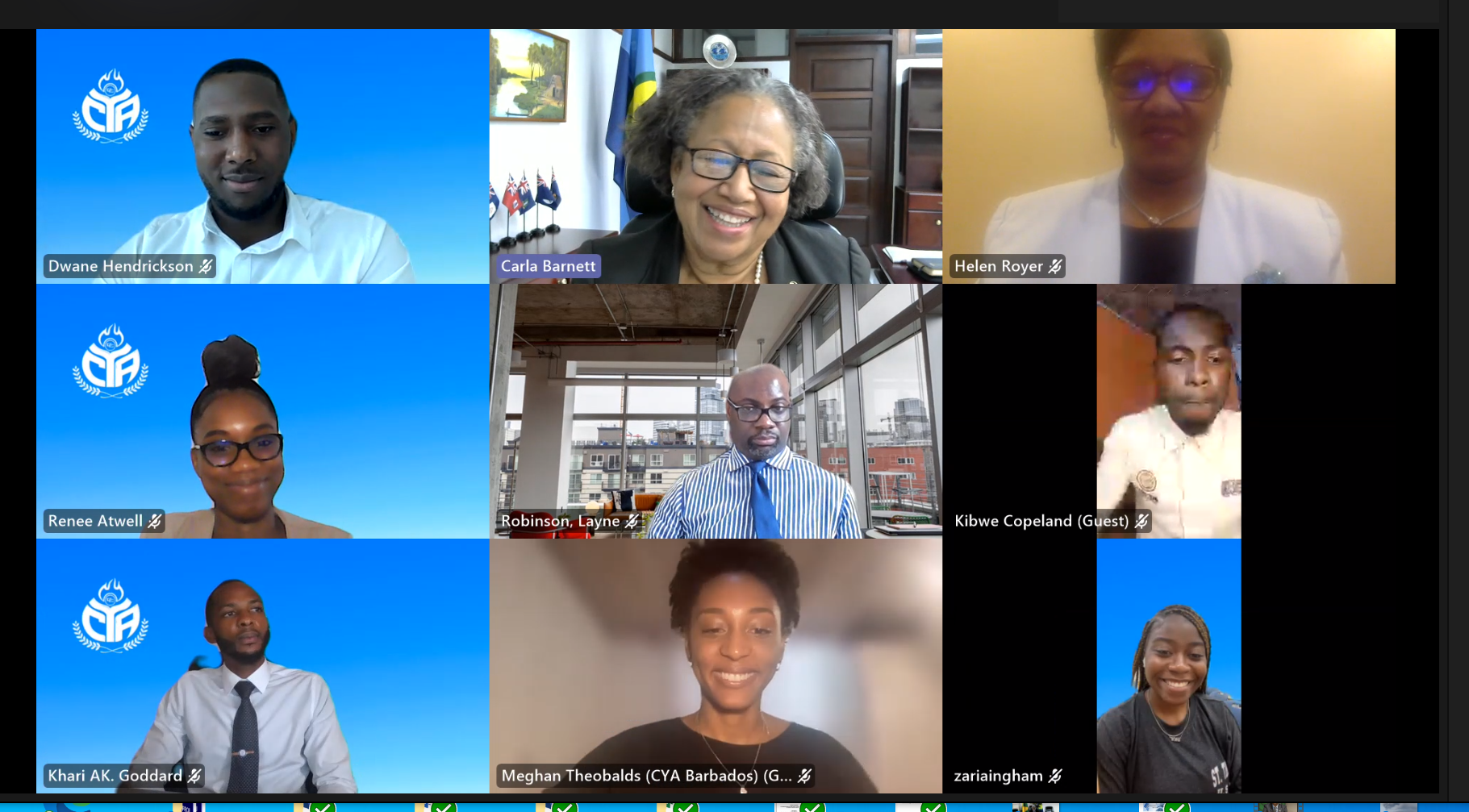
SG commits to building a strong partnership with Youths, in first public engagement
New CARICOM Secretary-General Dr Carla Barnett’s first public appearance since her Installation has been with the Region’s Youth.