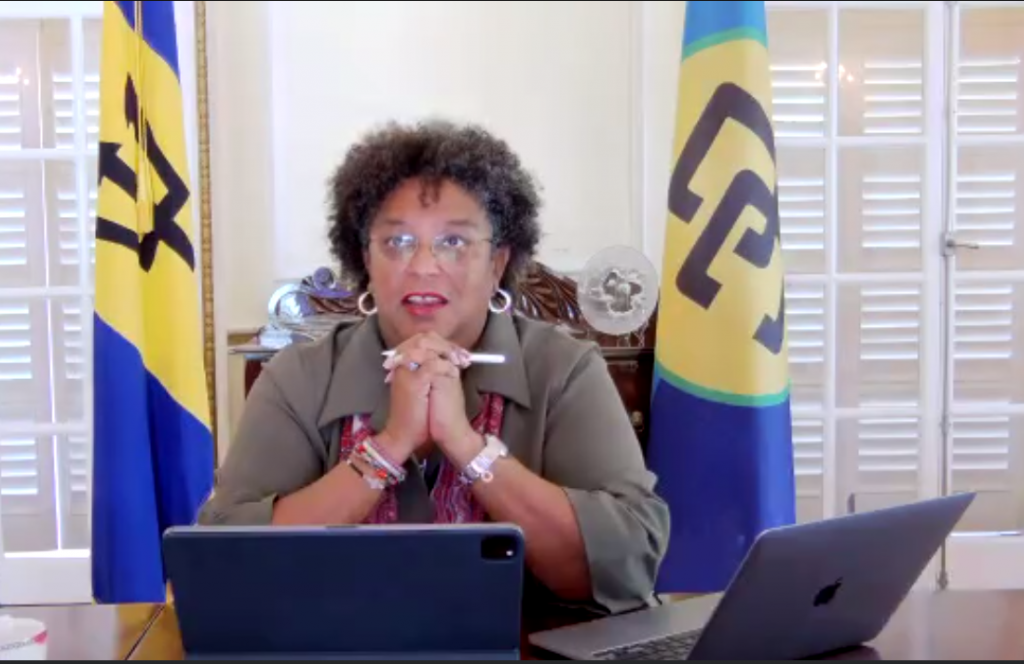
Services Sector key to CARICOM’s future – Barbados Min. Sandra Husbands
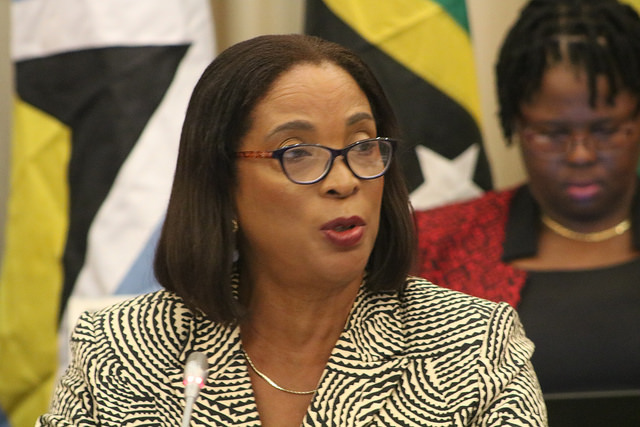
The Hon. Sandra Husbands, Minister in the Ministry of Foreign Trade, Barbados
The importance of the Services sector to the future of the Caribbean
was highlighted Friday as CARICOM Ministers began a day-long
consideration of matters that are key to moving the sector forward.
The Special Meeting of the Council for Trade and Economic
Development (COTED) on Services got underway at the CARICOM Secretariat.
The Services sector is the largest and fastest growing within CARICOM, accounting for more than 75 per cent of GDP in Eastern Caribbean, and more than 55 per cent in the more developed Member States. Statistics indicate that there was growth in the sector in recent years, with 2017 figures indicating an expansion of almost 2.45 per cent to EC$108.5B.

Those figures dictate that it was critical that nations paid close
attention to the growth of the sector, as part of efforts to provide
citizens with a good life, said Chair of the Meeting, the Hon. Sandra
Husbands, Minister in the Minister of Foreign Trade of Barbados.
“Our coming together today in a Special Meeting of COTED
for Services, what we are seeking to do is to look at the tremendous
work that has been done over the past couple of years in terms of
assessing the size of the services industry, analyzing its performance,
identify the SWOT pertaining to how services (sector) performs within
our various territories, as well as looking at draft plans for the
implementation of a strategy to take services forward,” Minister
Husbands said.
She cautioned that there was a lot of work to be done with respect
to the create the environment for the further development of the sector
to fulfil its role in the improvement of the contribution to the lives
of the citizens of the Region.
Mr. Joseph Cox, Assistant Secretary-General, Trade and Economic
Integration at the CARICOM Secretariat, in remarks at the opening of the
Meeting, called for the recognition that there must be fundamental
realignment of “how we do business” in the Region, especially from a
perspective of education and finance, and how we deal with sizeable rate
of informality.
He called for a strategic review of how concessions were granted in the Region, and urged delegates to pay particular attention to the dynamics of finance, banking fees, artificial limits for foreign currency transactions, health and wellness matters, especially non-communicable diseases, and the 2019 coronavirus update.
As the Community focuses on the sector, a Regional Services Project
Steering Committee has been coordinating the preparation of a Draft
Regional Strategic Plan and Implementation Plan for Professional
Services. Priority attention has been given to seven sub-sectors
including Financial Services, ICT Services, Professional Services,
Cultural, Entertainment and Sporting Services, Health and Wellness
Services, Education Services and Tourism Services.
Work has also been done on identifying core elements of the Draft
Regional Strategic plan including Legislative Framework, Financing
Requirements, Incentives, Human Resource Requirements, Technological
Needs, Constraints, cross-sectoral Linkages.
You may also be interested in:

‘A true stalwart of integration’ - CARICOM Secretary-General remembers Sir James Mitchell
The Caribbean Community (CARICOM) says it has noted with ‘profound regret’ the passing of former Prime Minister of St Vincent and the Grenadines Sir James Mitchell, adding thatRelated Stories
ICT Ministers approve CARICOM Secretariat-led action plans to fast-track digital transformation
Ministers of ICT on Friday unanimously approved the CARICOM Secretariat-led action plans to accelerate the Region’s digital transformation.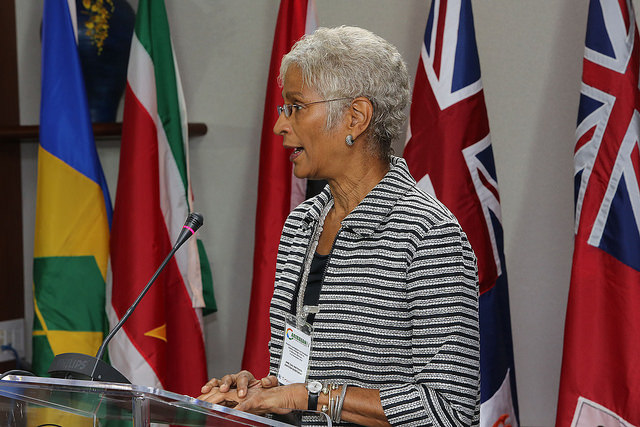
COTED Ministers and Officials praise Ambassador Gail Maturin as she retires
“A consummate professional”, “a shining example of service”, “erudite”, were among the accolades Trade Ministers heaped on outgoing Director-General of the Office of Trade Nego