Regional network launched to collaborate on Zika, other vector-borne diseases
|
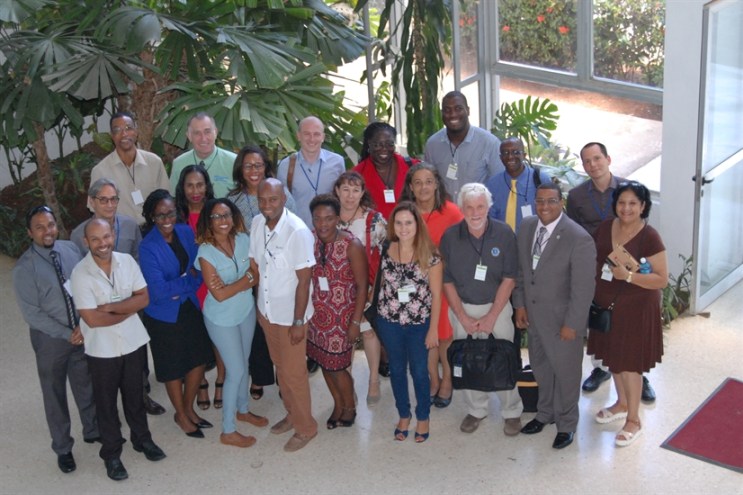
[CariVecNet] Mosquito borne diseases continue to impact the Caribbean’s social, economic and health sectors. Recent outbreaks of Zika (2016), and Chikungunya (2014) and the continued circulation of Dengue, highlight the need for an integrated approach to the prevention and control of these vector borne diseases (VBDs), especially since many countries depend on tourism as a major source of revenue. The need for a Caribbean Vector-Borne Diseases Network, to facilitate information exchange on circulating VBDs, diagnosis and epidemiological trends, collaborate on vector control and research topics was identified as a critical mechanism through which these diseases can be addressed in the Region. On August 8, 2017, the Caribbean Public Health Agency (CARPHA), in collaboration with the Pedro Kouri Institute (IPK), the Institute Pasteur and Ross University School of Veterinary Medicine, formally launched the Caribbean Vector-Borne Diseases Network (CariVecNet) at IPK, Havana, Cuba. The launch was attended by representatives from member states, consortium institutions; St Georges’ University, Grenada; World Health Organisation (WHO); Pan American Health Organisation (PAHO); and the Special Programme for Research and Training in Tropical Diseases (TDR/WHO). As part of the launch, an overview of the network and a review of Zika virus vectors were presented. Other presentations highlighted emerging vector borne diseases in the Americas; and the global vector control response. The Working Groups presented their workplans and activities, and later met behind closed doors to discuss the organisation, structure, terms of reference, management, operation and sustainability of the Network. Participants were given a tour of the official CariVectNet website which is expected to go live soon. CariVecNet includes specialists in VBDs from the Dutch, French, Spanish and English-speaking Caribbean territories. It is expected to bridge coordination and knowledge gaps, acting as an exchange center for surveillance information on the circulating of vector-borne diseases, and collaboration on vector control and research topics such as insecticide resistance and community-based interventions. Additionally, the network will work on the standardisation of operating procedures and training for the diagnosis, surveillance, and better prevention and control of vector-borne diseases in the Caribbean. The launch was possible through financial support from the TDR/WHO and Centers for Disease Control and Prevention (CDC). (Caribbean Public Health Agency Press Release)
|
You may also be interested in:

La CSME, la seguridad alimentaria y la financiación climática encabezan la agenda de la Cumbre de CARICOM en las Bahamas.
The CARICOM Single Market and Economy (CSME); food security; climate change and climate finance; health; and security will be among the major topics when Heads of Government of
La CSME, la seguridad alimentaria y la financiación climática encabezan la agenda de la Cumbre de CARICOM en las Bahamas.
The CARICOM Single Market and Economy (CSME); food security; climate change and climate finance; health; and security will be among the major topics when Heads of Government of