UN adopts declaration on ending AIDS
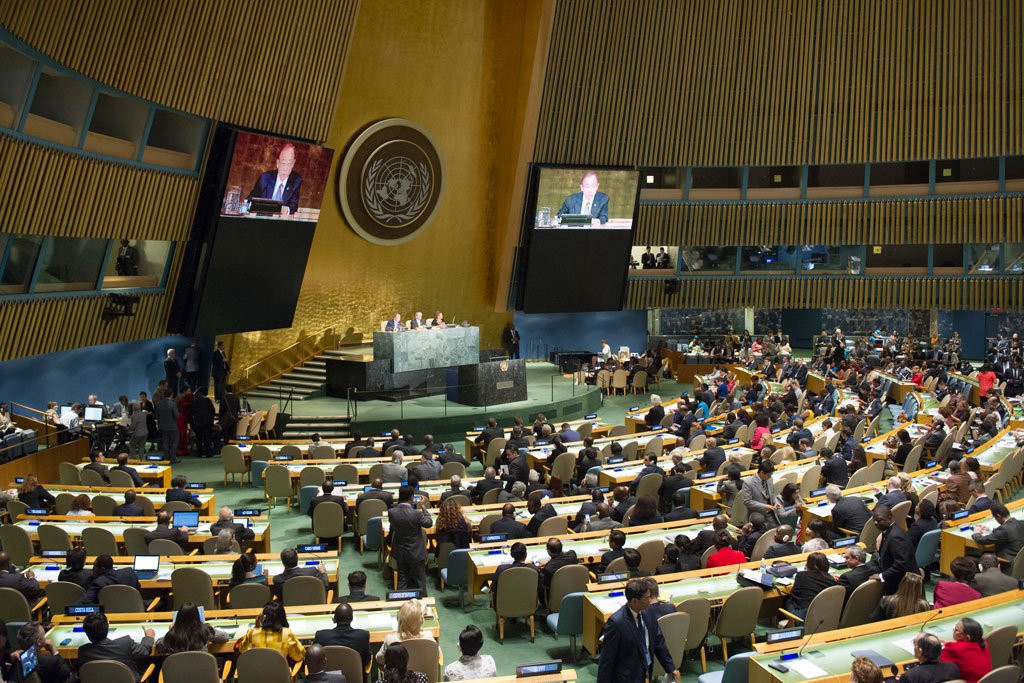
UNITED NATIONS, Jun 8, CMC – The United Nations Wednesday adopted a progressive, new and actionable Political Declaration on Ending AIDS which includes a set of specific, time-bound targets that must be reached by 2020 to end the AIDS epidemic by 2030 within the framework of the Sustainable Development Goals.
The declaration was adopted by member states during the United Nations General Assembly High-Level Meeting on Ending AIDS, now underway here. Caribbean Community (CARICOM) countries met ahead of the conference to put forward a regional approach to the meeting.
Heads of State and Government, ministers, people living with HIV, representatives of civil society, international organizations, the private sector, scientists and researchers have gathered here to build on the commitments made in the Political Declaration and to set the world on course to end the AIDS epidemic as a public health threat by 2030.
“The global community is united in its resolve to end the AIDS epidemic within the framework of the Sustainable Development Goals,” said the President of the United Nations General Assembly, Mogens Lykketoft.
“This meeting is laying the groundwork for future progress in creating healthier outcomes for everybody affected by HIV and building stronger societies prepared for future challenges.”
“The world has an opportunity to end an epidemic that has defined public health for a generation,” said the Executive Director of UNAIDS, Michel Sidibé.
“The decisions made here, including the commitment to zero new HIV infections, zero AIDS-related deaths and zero discrimination, will provide the springboard for the implementation of an innovative, evidence-informed and socially just agenda that will end the AIDS epidemic by 2030.”
The UN noted that remarkable progress has been made in the response to HIV since the last United Nations General Assembly Meeting on HIV and AIDS, in 2011.
By December 2015, 17 million people were accessing antiretroviral medicines and new HIV infections among children and AIDS-related deaths have been considerably reduced. There has also been progress in reducing tuberculosis deaths among people living with HIV.
However, the number of new HIV infections among adults has remained almost static since 2010 and too many people are being left behind in the response, including young women and girls and specific groups of people, including sex workers, prisoners, gay men and other men who have sex with men, transgender people and people who inject drugs.
The High-Level Meeting on Ending AIDS will focus attention on the importance of a Fast-Track approach to HIV over the next five years to set the world on course to end the AIDS epidemic.
The UNAIDS Fast-Track approach to ending the AIDS epidemic has a set of time-bound targets, including reducing the number of people newly infected with HIV from 2.1 million in 2015 to fewer than 500 000 in 2020, reducing the number of people dying from AIDS-related illnesses from 1.1 million [940 000–1.3 million] in 2015 to fewer than 500 000 in 2020 and eliminating HIV-related discrimination.
The participants will take part in a series of discussions and events throughout the High-Level Meeting on Ending AIDS to discuss how to transform the Political Declaration into concerted action through scientific innovation, financial sustainability, ending stigma and discrimination and creating socially just, resilient and inclusive societies that leave no one behind.
There will be a series of panel discussions and side events, including on leveraging the end of AIDS for social transformation and sustainable development, financing and sustaining the end of AIDS and stopping new HIV infections.
UNAIDS will launch a report on the remarkable progress made in stopping new HIV infections among children. UNAIDS has also announced, together with the World Health Organization and partners, that a further three countries—including Thailand, which at the peak of the epidemic had more than 3000 new infections among children per year—have eliminated new HIV infections among children.
Other events include a youth pre-meeting and an interfaith service. The High-Level Meeting on Ending AIDS will also include an innovations marketplace that will showcase new technologies and tools in the area of health and HIV.
You may also be interested in:

La CSME, la seguridad alimentaria y la financiación climática encabezan la agenda de la Cumbre de CARICOM en las Bahamas.
The CARICOM Single Market and Economy (CSME); food security; climate change and climate finance; health; and security will be among the major topics when Heads of Government of
La Secretaría de CARICOM y la Agencia Caribeña para Soluciones de Justicia (CAJS) forjan una alianza para acelerar la transformación digital.
La Secretaría de CARICOM (CCS) y la Agencia Caribeña para Soluciones de Justicia (CAJS) han establecido una importante alianza con el objetivo de impulsar la transformación digital y mejorar la pre
Related Stories
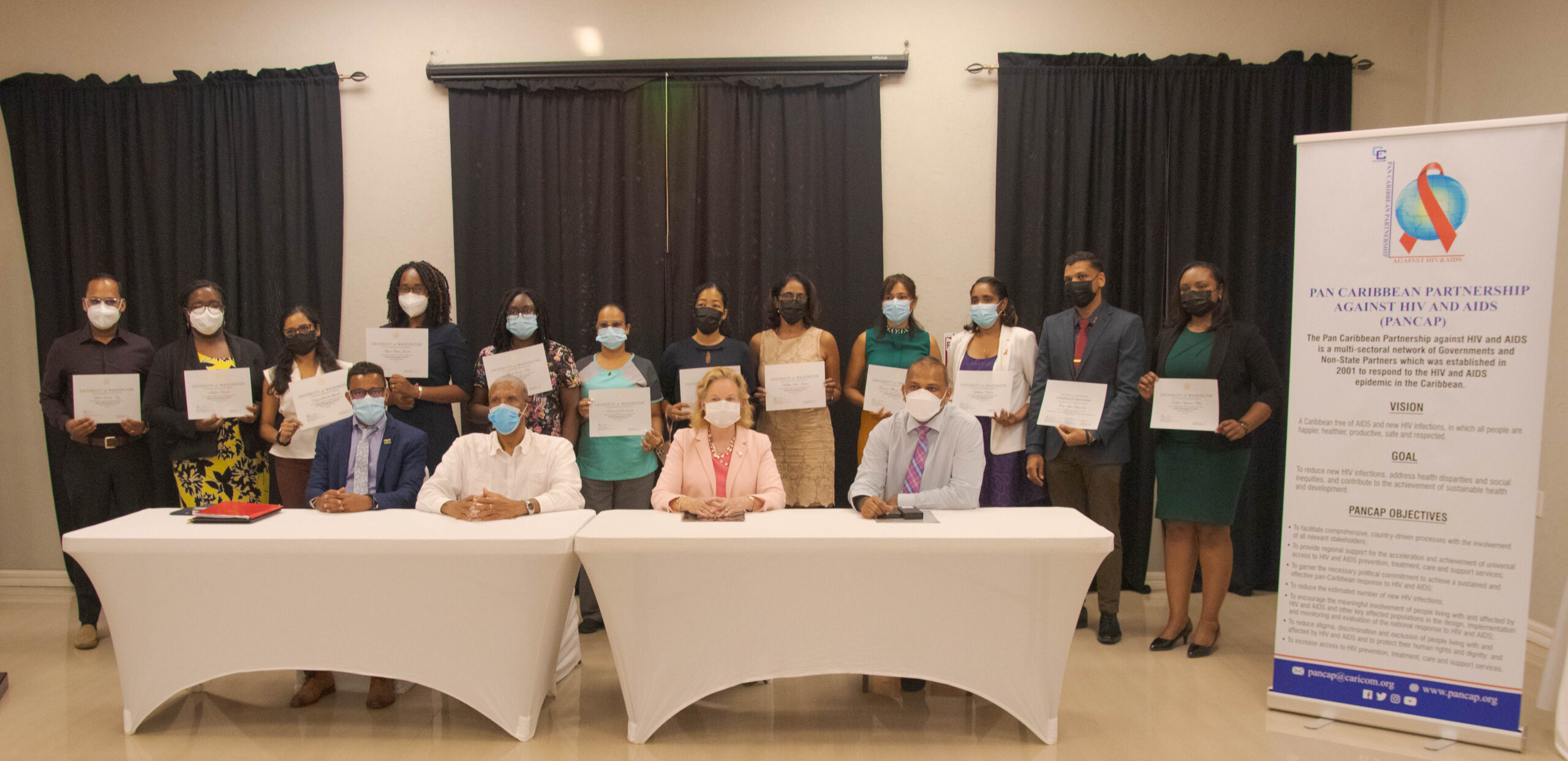
REGION’S PUBLIC HEALTH BOOSTED BY PANCAP CAPACITY-BUILDING INITIATIVE
EIGHTEEN (18) CLINICAL AND PUBLIC HEALTH PRACTITIONERS COMPLETE THREE-MONTH COURSE ON CLINICAL MANAGEMENT OF H
EU/PAHO/CARIFORUM Climate & Health Project Builds Capacity with Health Co-Benefits Training
Bridgetown, Barbados, 7 June 2021 (PAHO/WHO) - During a recently held European Union (EU), Pan American Health Organization (PAHO), [1]CARIFORUM Health Co-