Govt, regional leaders meet to discuss strategy Sargassum still ‘grave problem’
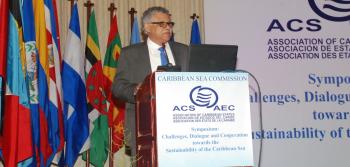
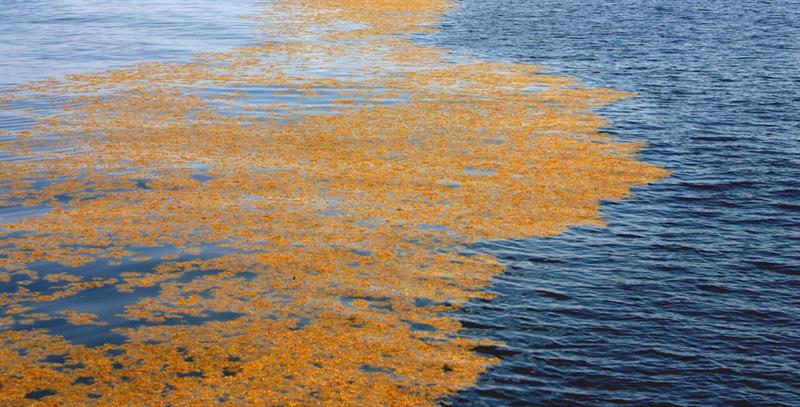
As the sense of urgency continues to grow regarding the Caribbean region’s response to the appearance of the sargassum seaweed which litters the nation’s beaches, the Government is very concerned that it is still negatively impacting this country’s economic, social and environmental development.
This, even after the Tobago House of Assembly (THA) spent $5 million to clean up the beaches in the sister isle since the problem first began in August.
Joining hands with the rest of the region to tackle what she described as a “grave problem,” the acting permanent secretary in Ministry of Foreign Affairs, Frances Seignoret, said yesterday it had “deep, far-reaching implications for all citizens.”
.jpg)
She made the statement as she responded to questions by reporters after the official opening of a two-day symposium, titled Challenges, Dialogue and Cooperation towards the Sustainability of the Caribbean Sea, at the Radisson Hotel, Port-of-Spain.
Hosted by the Association of Caribbean States (ACS), the Caribbean Sea Commission (CSC) highlighted three critical areas they believe needs to be addressed immediately if the region was to move forward, including the appearance of the sargassum seaweed; the overpopulation of the lion-fish which is threatening coral reefs and other sea-going species; and coastal erosion.
Delivering opening remarks on behalf of Foreign Affairs Minister Dennis Moses, who is currently in Malta with Prime Minister Dr Keith Rowley at the Commonwealth Heads of Government Meeting, Seignoret said while it was imperative for both man and nature to co-exist, there had to be a balanced and harmonious relationship.
Acknowledging the negative impact these problems were having on the tourism industry, as well as the fishing industry and the health risks posed to humans, Seignoret cited rising ocean temperatures and changing current patterns as the reason behind the proliferation of the seaweed.
ACS secretary general Alfonso Munera Cavadia hopes the symposium will be able to aid in the development of specific strategies that can be accomplished during 2015 to 2018, and which will have a tangible impact on the problems listed.
Anna-Lisa Paul | http://www.guardian.co.tt/
You may also be interested in:
La CSME, la seguridad alimentaria y la financiación climática encabezan la agenda de la Cumbre de CARICOM en las Bahamas.
The CARICOM Single Market and Economy (CSME); food security; climate change and climate finance; health; and security will be among the major topics when Heads of Government of CARICOM Meet in The...
La Secretaría de CARICOM y la Agencia Caribeña para Soluciones de Justicia (CAJS) forjan una alianza para acelerar la transformación digital.
La Secretaría de CARICOM (CCS) y la Agencia Caribeña para Soluciones de Justicia (CAJS) han establecido una importante alianza con el objetivo de impulsar la transformación digital y mejorar la...
Declaración de la Honorable Dra. Joyelle Clarke, Ministra de Desarrollo Sostenible, Medio Ambiente, Acción Climática y Empoderamiento de la Comunidad de San Cristóbal y Nieves | Segmento de Alto Nivel, 16.ª Reunión de la Conferencia de las Partes del Convenio de las Naciones Unidas sobre la Diversidad Biológica | Cali, Colombia | 30 de octubre de 2024
"La lucha por la biodiversidad no puede desvincularse de la crisis climática. Por ello, nuestro compromiso con el Marco de Biodiversidad Kunming-Montreal es especialmente crucial, y por eso San...Related Stories
Sargassum project presents at the Smithsonian
A Saint Lucian project on the transformation of sargassum seaweed into organic compost will be showcased during the Earth Optimism Summit at the Smithsonian Institute in Washington, DC.
CARICOM, Cuba Foreign Ministers meet in Havana
Foreign Ministers from the Caribbean Community and their counterpart from the Republic of Cuba are meeting on Saturday 11 March 2017 for their fifth Ministerial M