CDB approves US$35M loan to improve education access in Belize

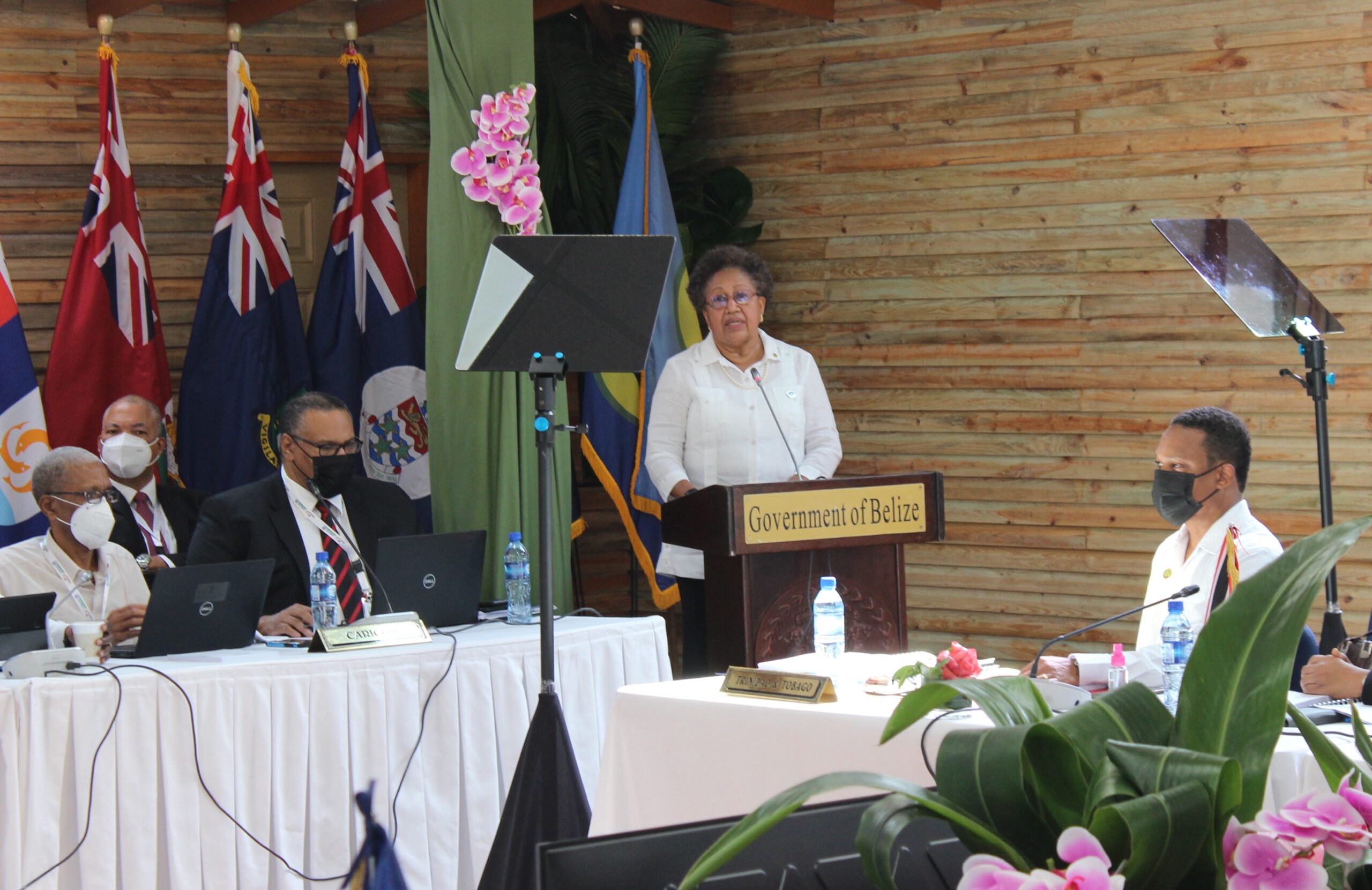
More children are expected to gain access to education in Belize with the construction of 35 new schools and the provision of 5,300 additional places across pre-primary, primary and secondary levels. These are among the benefits to flow from a USD35 million loan and a USD 461,000 grant approved by the Board of Directors of the Caribbean Development Bank (CDB) to the Government of Belize at their meeting in Basseterre, St. Kitts.
The funds will also help in the provision of furniture and equipment; and consultancy services to prepare detailed designs and supervise construction.
This is part of an overall attempt to increase access to basic education as well as help improve the planning, management and delivery of services.
Among the planned programme components are improvements in the learning environment through the development of an early stimulation and emergent learning (ESEL) programme; review of the school feeding programme; development of a schools’ maintenance policy and plan; development of an Early Identification System (EIS) for children at-risk of educational and societal failure; and development and implementation of a public education and communications strategy.
This is in sync with the goals and objectives of Horizon 2030, the Belize Education Sector Strategy 2011-2016, and its objective of supporting inclusive and sustainable growth and development. It also supports the CDB’s Special Development Fund 8 Cycle theme of inclusive and sustainable growth.
Five years ago, in 2010, the Government of Belize (GOBZ) asked CDB for technical assistance to help it address its dissatisfaction with the returns on investment in education. It also wanted a comprehensive review of the sector to diagnose the deficiencies, devise an overarching strategy for addressing them; develop an investment plan for funding the proposed interventions; and create a roadmap for undertaking the broad sector improvements required to ensure sustainability of student outcomes.
The subsequent sector diagnosis identified a number of critical issues including weak governance; absence of quality and relevance; and the need for increased and equitable access.
In the resultant Education Sector Strategy (ESS) 2011–2016, Belize’s revised National Gender Policy highlighted education as one of five priorities areas to be addressed if the country was to achieve its development objectives.
Issues identified as contributing to low participation, high repetition, and dropout rates in basic education included poverty; the absence of financial and other resources to facilitate school attendance; lack of food and poor nutrition; inadequate preparation for formal education; cultural practices; and parental ignorance of the value of education.
The government subsequently drafted a programme to address the identified problems as well as the lack of sufficient places to increase participation significantly.
###
About the Caribbean Development Bank
The Caribbean Development Bank is a regional financial institution established 1970 for the purpose of contributing to the harmonious economic growth and development of member countries. The Bank’s founding president was noted economist and Nobel Laureate Sir Arthur Lewis. There are nineteen regional borrowing member countries – including Guyana and Suriname; three regional non-borrowing member countries and five non-regional non-borrowing countries – Mexico, Venezuela and Colombia. Members outside of the Region are Canada, China, Germany, Italy and UK. As of December 31, 2014, CDB had total assets of USD2.61bn (This includes USD1.38Bn of ordinary Capital resources and USD1.23Bn of Special Funds Resources.) CDB has an “Aa1” with stable outlook rating with Moody’s Rating Agency and a stable “AA/A-1+” rating with Standard and Poor’s Rating Agency. In 2014 the Bank approved loans and grants of USD26.6B.
You may also be interested in:

La CSME, la seguridad alimentaria y la financiación climática encabezan la agenda de la Cumbre de CARICOM en las Bahamas.
The CARICOM Single Market and Economy (CSME); food security; climate change and climate finance; health; and security will be among the major topics when Heads of Government of
La Secretaría de CARICOM y la Agencia Caribeña para Soluciones de Justicia (CAJS) forjan una alianza para acelerar la transformación digital.
La Secretaría de CARICOM (CCS) y la Agencia Caribeña para Soluciones de Justicia (CAJS) han establecido una importante alianza con el objetivo de impulsar la transformación digital y mejorar la pre
Related Stories
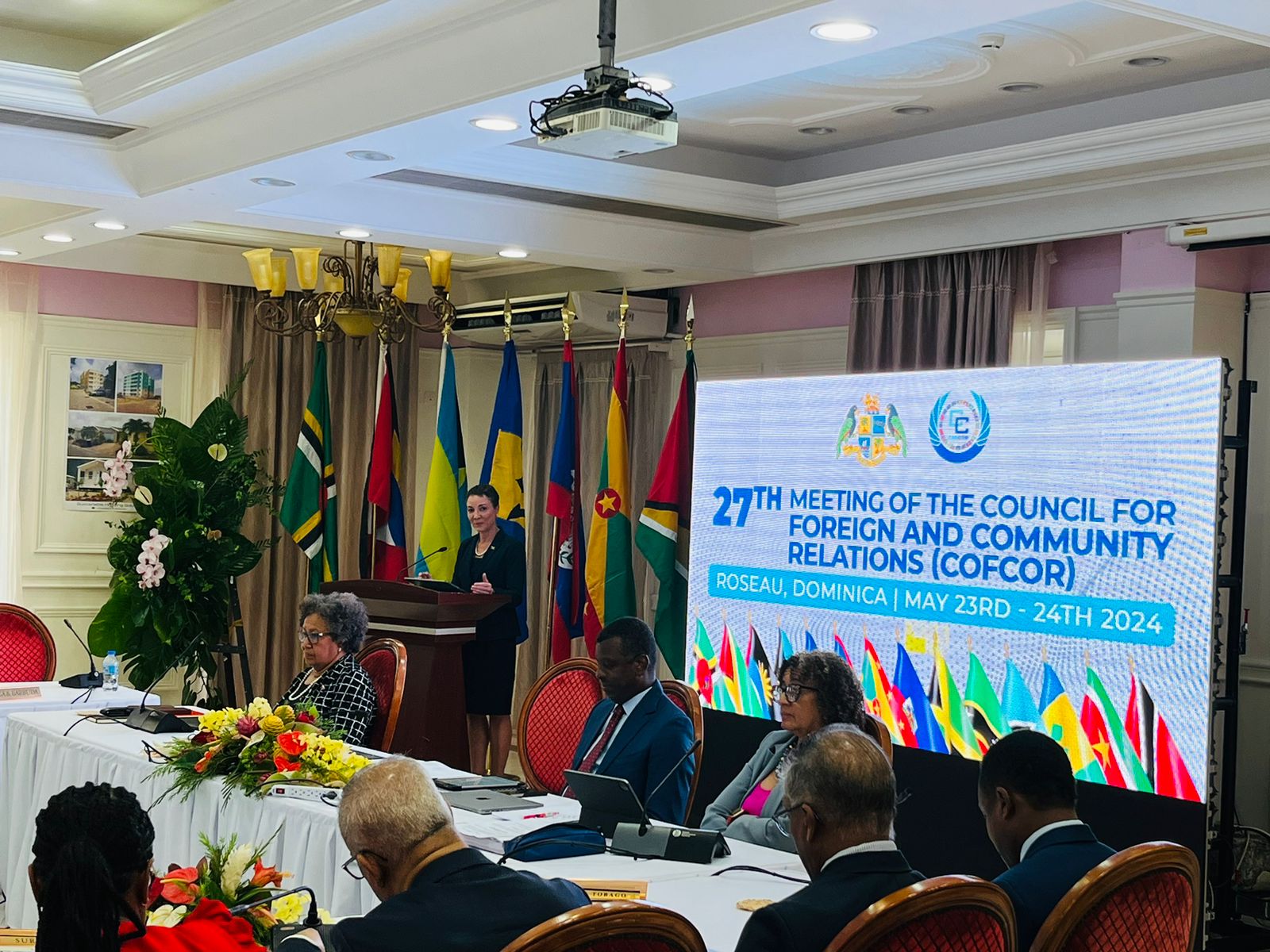
Remarks by the Outgoing Chair of the Council for Foreign and Community Relations (COFCOR), Senator the Hon. Kamina Johnson Smith, Minister of Foreign Affairs and Trade of Jamaica, at the Opening Ceremony of the Twenty-Seventh Meeting of COFCOR, 23 May 2024, Roseau, Dominica
Dr. Carla Barnett, Secretary-General of the Caribbean Community (CARICOM);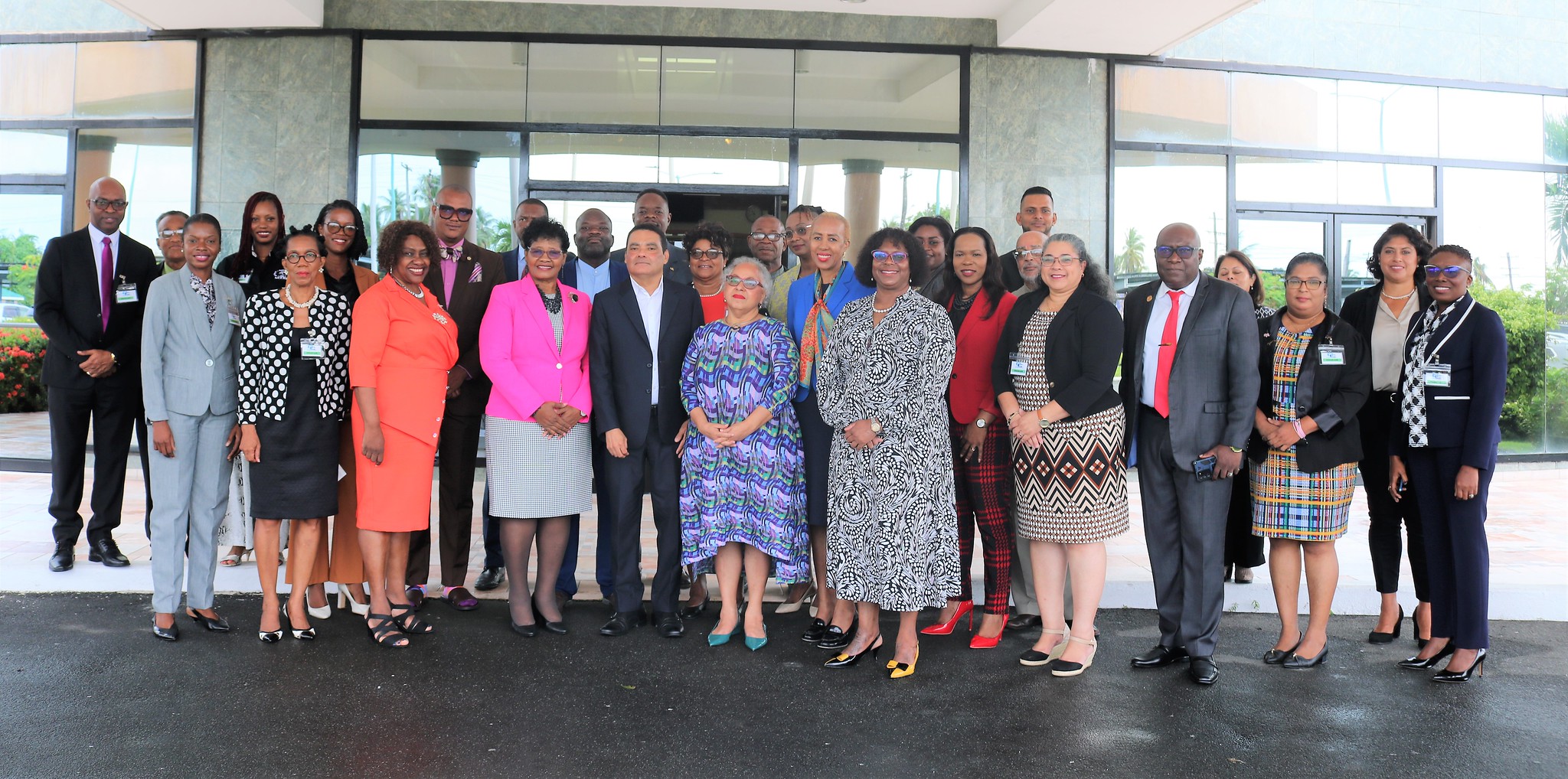
Communique issued at the end of the 44th Meeting of the Council for Human and Social Development (COHSOD) - Education, 13-14 October 2022, CARICOM Secretariat Headquarters, Georgetown, Guyana
The Forty-Fourth Meeting of the Council for Human and Social Development (COHSOD) of the Caribbean Community (CARICOM) was held on 13-14 October 2022, under the theme “Educ