Work advances on CARICOM Industrial Policy

Consultations with key stakeholders have begun across the Region to finalise the CARICOM Industrial Policy and Strategy in time for approval by Ministers of Trade later this year.
Suriname, which holds responsibility for the Industrial Policy in the CARICOM Quasi Cabinet, is spearheading work towards its completion to present it to a Special Meeting of the Council for Trade and Economic Development (COTED) in October 2025. The work to be carried out in time for that meeting includes deeper engagements with key stakeholders in the business community.
Already, consultations have been held with stakeholders in St. Vincent and the Grenadines, while others are planned for later in August.
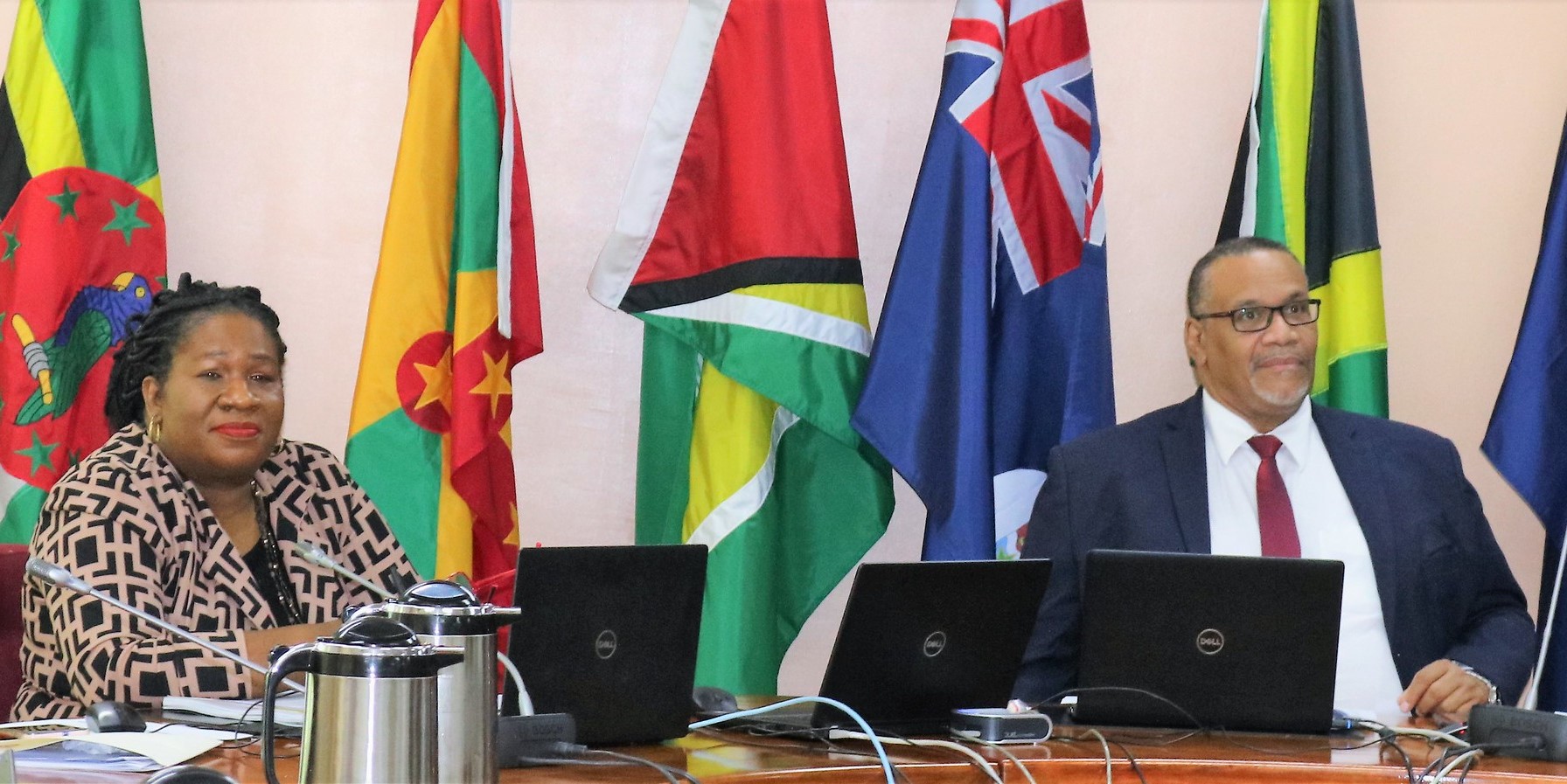
Ambassador David Prendergast, Director, Sectoral Programmes at the CARICOM Secretariat, said that there is a strong demand for the Policy from the Region’s private sector. The Policy is grounded in the Revised Treaty of Chaguaramas and is intended to promote the development of entities ranging from micro to large businesses.
“Essentially, [this policy] seeks to boost productivity, to create more opportunities for employment across the Region, to use our resources optimally, and to connect us into global value chains which are critical for production with the ultimate objective of improving the standard of living of our people across the Region,” Amb. Prendergast explained.
Industrial Policy development consultant to the CARICOM Secretariat, Mr. Sandiford Ruel Edwards, said given the current global environment, the CARICOM Industrial Policy and Strategy is well-positioned to make a substantive contribution to renewed economic diversification and cultivating indigenous growth and prosperity by addressing both established industrial sectors and emerging innovative fields and technologies.
“It is important to acknowledge that this industrial policy is not a universal remedy; historical global initiatives have sometimes resulted in notable failures, and there remain valid concerns regarding government intervention in market selection. This strategic framework proposes a collaborative model between regional governments and the private sector, targeting 12 industrial ecosystems alongside five cross-cutting enablers,” he said.
The 12 eco-systems at the foundation of the Policy are: Agri-Food, Fisheries and Processing; Construction; Culture and Creative Industries; Digitalisation; Education and Human Capital Development; Energy; Health and Wellbeing; Mobility and Transportation; Micro, Small and Medium-sized Enterprises; Non-Food Manufacturing; Research, Development and Innovation; and Tourism.
The cross-cutting enablers are Financing, Competition Policy and Consumer Protection, Intellectual Property, Standards and Environmental Stewardship.
Related Stories
ICT Ministers approve CARICOM Secretariat-led action plans to fast-track digital transformation
Ministers of ICT on Friday unanimously approved the CARICOM Secretariat-led action plans to accelerate the Region’s digital transformation.
COTED Ministers and Officials praise Ambassador Gail Maturin as she retires
“A consummate professional”, “a shining example of service”, “erudite”, were among the accolades Trade Ministers heaped on outgoing Director-General of the Office of Trade Nego