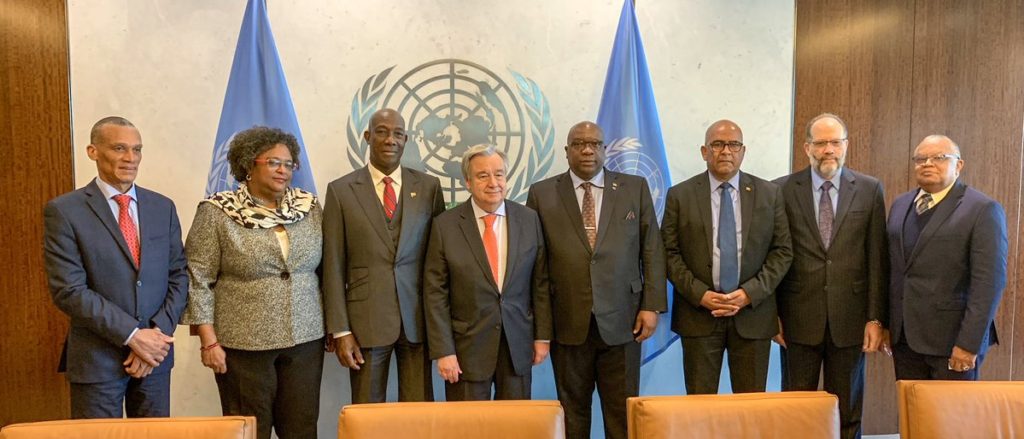
Op-Ed: Caribbean island states need differentiated treatment due to COVID-19. Here’s why.*
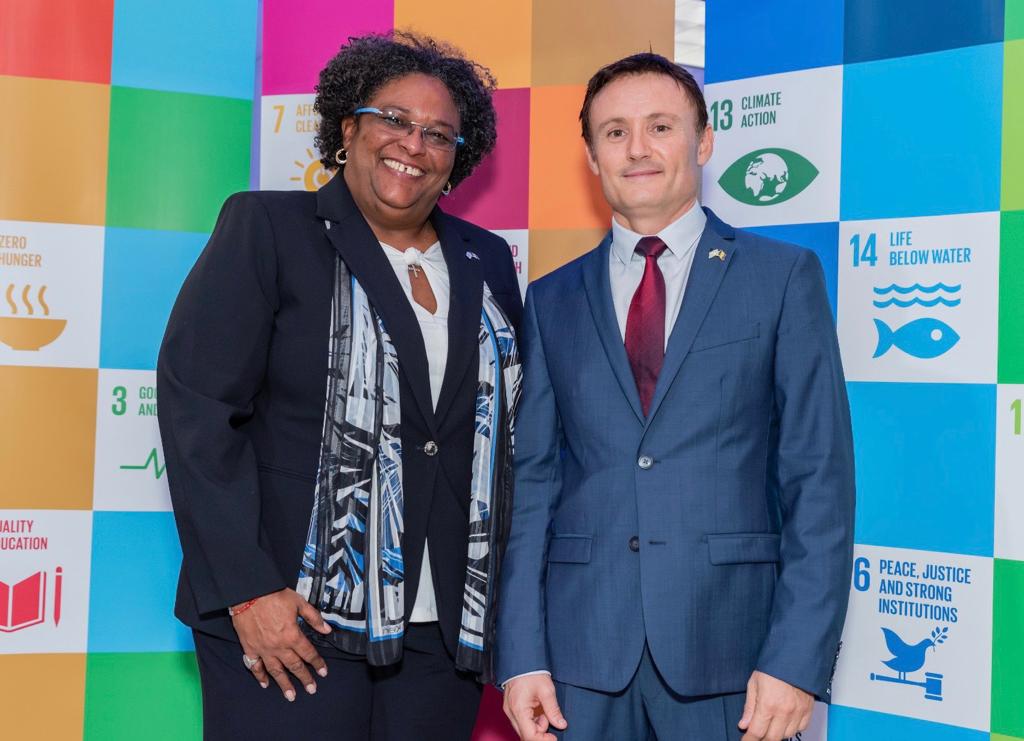
Tourism-dependent, climate-vulnerable states need to respond to the devastation of COVID-19 with a hurricane season around the corner
Small Island
Developing States (SIDS) are characterised by their exposure to a variety of
risks and limited capacity to deal with them when they occur. This is
particularly true in the Eastern Caribbean, being especially prone to natural
disasters that are up to 6 times more damaging when compared to developed
countries.
Now we are bracing up for yet
another hurricane season, while dealing with the dramatic impacts of COVID-19.
Countries in
the region have responded well on the health front, despite the global tension
to access medical and protective equipment and supplies. However, the
implications of the COVID-19 crisis are manifold given this region’s economic,
social and environmental vulnerabilities. The regularity of natural disasters –
as evidenced by Dominica during the deadly 2017 hurricane season – gives
countries a very narrow window of opportunity to recover and rebuild their
resilience.
Economic vulnerabilities facing
the Eastern Caribbean
Limited resources and economic
diversification in Eastern Caribbean countries, compounded by their small size
and remoteness, constrain development. Regional integration when fully realised
will contribute to widening markets, but until then doing business will call
for some ingenuity.
The Caribbean has successfully
used its natural patrimony to develop service-based economies, which account
for as much as 75% of GDP. Tourism can account for up to one-half of GDP and provide
jobs for a similar proportion of the labour force. It is without doubt the
region’s most prized asset. However, with 80% of tourists from the US, Canada
and the UK, it has become a key vulnerability with COVID-19.
Border closures and travel
restrictions within the COVID-19 context, have taken a toll, impacting citizens
of all walks of life from hair braiders and crafts persons on Grand Anse Beach
in Grenada to large tour operators and hoteliers on Barbados’ prized West
Coast. No one is exempt!
Lingering reconstruction costs of
past disasters squeeze fiscal space to tackle COVID-19. Financing past disaster
recoveries through debt has, for many, crowded-out development expenditures. High
public debt – domestic plus external – levels of well over 60% of GDP were commonplace
before COVID and limit fiscal space for years to come. As governments resort to
fiscal stimulus measures to keep their economies afloat, COVID-19 will only add
to this region’s debt burden. The time for debt forgiveness is now.
Social
and environmental vulnerabilities facing the Eastern Caribbean
High unemployment and aging populations,
with a concomitant prevalence of non-communicable diseases (NCDs), add to this
region’s troubles. Regional unemployment ranges from 10% - 25%. COVID-related job
losses within the service industry, will exacerbate this situation.
Aside from wasted economic potential,
joblessness induced by this pandemic harbours a darker side and could further
fuel a host of other socially adverse consequences.
With old age-dependency above the
global average, pressures on public finances to meet the health, pension and
social security commitments are high. Health systems have become further
stretched by a high prevalence of NCDs. While spending on health varies across
the region (between 3% and 7% of GDP), Eastern Caribbean health systems perform
substantially below the global average, forcing this region on the back foot as
it tackles this health crisis.
The poor and vulnerable are
particularly at risk, including employees who would have lost their jobs in the
tourism sector and fisherfolk belonging to vulnerable households suffering from
the lockdown. Many also operate in the informal sector (accounting for as much as
40% of GDP), are uninsured and have difficulty accessing social protection schemes.
A lot has been done in the region to protect the most vulnerable. However
Caribbean Governments will require adequate fiscal space to develop effective and
progressive social safety nets, as they seek to restore livelihoods and income security
following this crisis.
After COVID-19, the Caribbean’s needs will be far from over. Climate
change – an existential threat - will continue to put significant financial
strain on Caribbean countries. The need for increased investment for resilience
is ever-present. The COVID-19 pandemic has made it necessary for Caribbean
countries to reassess their preparedness against a wider range of increasing
risks – including health pandemics. Accustomed to the impacts from natural
disasters, the Caribbean will not only need resilience against global warming
but also to a new wave of health risks that threaten the lives and livelihoods
of its citizens.
It cannot be business as
usual
Effective response demands
decisive leadership and commitment from all partners around the globe to ensure
that ‘no one is left behind’ and ‘no country is left behind.
This is why the United Nations
COVID-19 Multi-sectoral Response Plan and Funding Appeal for Barbados and
the Eastern Caribbean states was launchedon 6th May to support
the region to tackle this crisis with resources it urgently needs. This appeal
will prioritize health and wellness, food security, economic recovery, social
protection, education, and protecting the most vulnerable.
It complements the ongoing advocacy
by the SIDS nations for a differential treatment, based on their vulnerability.
But the sustainability of this response will depend on solidarity and
international support. A regional compact to deliver debt relief and increase
resilience financing is also needed between Caribbean countries, bilateral,
multilateral agencies and private sector. This will augur well in disrupting
the vicious circle of uncertainty, debt-dependency and unrealised sustainable
development potential.
Ends
The Hon. Mia Amor Mottley
is the Prime Minister of Barbados and Chair of CARICOM
Didier Trebucq is the
United Nations Resident Coordinator for Barbados and the Eastern Caribbean
You may also be interested in:
End of Year Message from the Secretary-General of the Caribbean Community (CARICOM) Dr Carla N Barnett
We have come to the end of another year during which strenuous efforts have been made to ensure that the integration process improves the lives of the people of the Caribbean C
CSME, food security, climate finance top agenda of CARICOM Summit in The Bahamas
The CARICOM Single Market and Economy (CSME); food security; climate change and climate finance; health; and security will be among the major topics when Heads of Government of
CSME, food security, climate finance top agenda of CARICOM Summit in The Bahamas
The CARICOM Single Market and Economy (CSME); food security; climate change and climate finance; health; and security will be among the major topics when Heads of Government ofRelated Stories
UN Secretary-General's Remarks to the Opening of the Fourth CARICOM-SICA Summit, 3 March 2022
Excellencies, ladies and gentlemen,
CARICOM Press Release on the AfCAR Joint Statement delivered on the occasion of the International Day of Remembrance of the Victims of Slavery and the Transatlantic Slave Trade
The CARICOM and African Group of countries made history in the United Nations today, when 68 member-countries of the two groupings delivered a joint statement as part of a new