As World observes International Biodiversity Day CARICOM calls for action to address biodiversity loss
Assistant Secretary-General for Human and
Social Development, Dr Douglas Slater has called for actions to foster more
ecosystem-based solutions to address biodiversity loss, climate change and land
degradation simultaneously.
As CARICOM joined the global Community in
celebrating International Day for
Biological Diversity on May 22nd, Dr Slater reiterated the need
for mainstreaming biodiversity in economic sectors; and working together at all
levels to build a future in harmony with nature.
The CARICOM Secretariat launched this year’s
observation with a webinar titled: The
way forward for the Caribbean in Shaping the Post-2020 Global Biodiversity
Framework.
The Forum on May 19 launched a series of
other virtual engagements with biodiversity focal points, negotiators,
technical officers and policy advisers as the Region prepares for the 2020 Meeting
of Conference of Parties for the Framework Convention on Biodiversity. The May 19th event featured
presentations by agriculture and biodiversity expert Dr. Patrick Chesney; environment
and biodiversity expert, Dr Thérèse Yarde, and Grenada’s Ambassador and Special
Envoy for Multilateral Environmental Agreements Dr. Spencer Thomas.
Dr Slater said while the Community has been
fully engaged in the COVID-19 response, it was necessary to observe International Day for Biological Diversity
to mobilize political will and resources. It is also necessary to increase
awareness and understanding of biodiversity issues.
He said the CARICOM Secretariat, along with
partner organizations including the OECS Commission and UN Environment, view
this year’s observation as an optimal opportunity to promote the need for
urgency of action at the highest levels, in support of a post-2020 biodiversity
framework that will contribute to the re-shaping of the Caribbean region’s
vision for biodiversity.
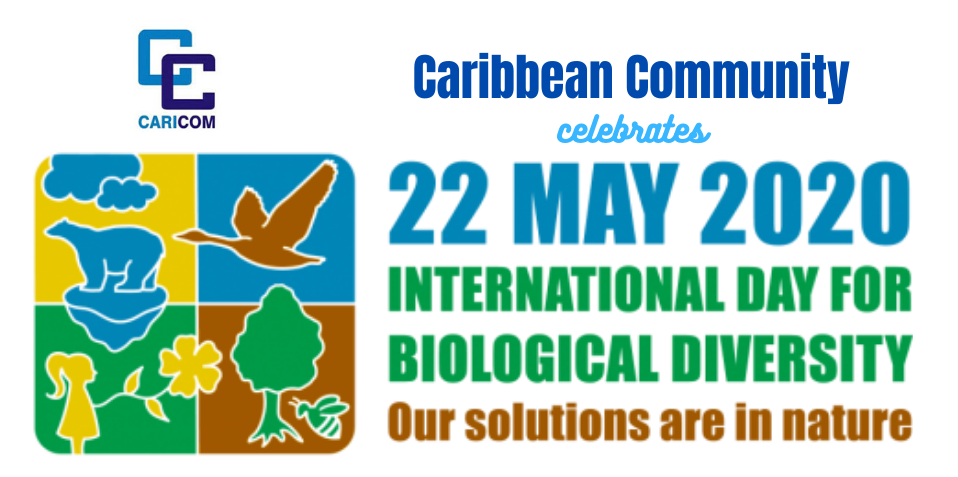
The 2020 International Day for Biological Diversity
is being observed under the theme “Our
solutions are in nature.”
“It is
therefore timely as a Community that we re-examine our relationship with nature
recognizing that, despite all our economic and technological advances we will
always remain dependent on healthy and vibrant ecosystems for our water, food,
medicines, clothes, fuel, shelter and energy. We therefore add our voices to
Calls for Action that include more ecosystem-based solutions for addressing
biodiversity loss, climate change and land degradation simultaneously; for
mainstreaming biodiversity in economic sectors; and working together at all
levels to build a future in harmony with nature,” Dr Slater said as he
addressed participants in the Webinar.
Reflecting
on the activities that were earmarked for 2020 deemed as ‘the year for
biodiversity’, he highlighted efforts to advance a new global framework to
safeguard all life on earth by the Parties to the Convention on Biological
Diversity planned to negotiate.
Another
watershed event is a High-Level Summit on Biodiversity to be convened during
the 75th Session of the United Nations General Assembly.
These
activities are expected to bring countries and people together to find
solutions to the ecological crises that are threatening human well-being, Dr
Slater noted.
You may also be interested in:
End of Year Message from the Secretary-General of the Caribbean Community (CARICOM) Dr Carla N Barnett
We have come to the end of another year during which strenuous efforts have been made to ensure that the integration process improves the lives of the people of the Caribbean C
CSME, food security, climate finance top agenda of CARICOM Summit in The Bahamas
The CARICOM Single Market and Economy (CSME); food security; climate change and climate finance; health; and security will be among the major topics when Heads of Government of
CSME, food security, climate finance top agenda of CARICOM Summit in The Bahamas
The CARICOM Single Market and Economy (CSME); food security; climate change and climate finance; health; and security will be among the major topics when Heads of Government ofRelated Stories