Joint Statement by the Heads of the Organisation of African, Caribbean and Pacific States, the Caribbean Community, and the Pacific Islands Forum Secretariat on the COVID-19 Pandemic
The global spread of the COVID-19 pandemic and its
socio-economic impact on the entire world population requires the global
community to work together to address the consequences to human health and
disruptive effects on an interconnected world economy. The devastating COVID-19
pandemic is reshaping our world and exacerbating inequalities in our societies.
Together, we must ensure coordinated and inclusive response and recovery
efforts, to build economies and societies
that are healthy, equitable, safe, clean, and resilient.
The Organisation of African, Caribbean and Pacific
States (OACPS), the Secretariat of the Caribbean Community (CARICOM) and the
Pacific Islands Forum Secretariat (PIFS) extend their solidarity to the global
community, particularly in the African, Caribbean and Pacific regions, in our
collective and resolute fight against the spread of the COVID-19 pandemic - the invisible enemy of humanity.
During this challenging time, it is vital to promote
increased coordination among all countries and regions with respect to the
prevention and treatment of, and eventual cure for COVID-19. We echo the United
Nations (UN) Secretary-General’s call for an immediate global ceasefire to
reinforce diplomatic action, enable the delivery of lifesaving humanitarian
assistance, and protect the persons who are most vulnerable to the pandemic.
The COVID-19 pandemic has had a negative effect on all
economies in the world, particularly in terms of commodity prices, fiscal
revenues, foreign exchange receipts, foreign financial flows, food supply
chains, travel restrictions, the travel, hotel and tourism industries, and
labour markets. We recognize that these economic and social challenges
are likely to be more disastrous in developing countries. We are gravely
concerned about the potentially dire consequences to the economies and livelihoods
of our Member States.
While
welcoming the recent decision of international creditors such as the International
Monetary Fund (IMF) and the World Bank to provide debt relief to low income
countries, we call for this relief to include the most vulnerable
economies in the world, including our Member States.
The COVID-19 crisis is stretching the already
challenged health systems in many of our countries, which also lack the
required medical equipment, test kits, and protective gear that are in high demand
worldwide and difficult to source. It is expected that COVID-19 cases will
overwhelm health facilities. This will adversely affect patients with
high-burden communicable and non-communicable diseases, who will lack access to
adequate care. This could result in increased morbidity and mortality. We
note with concern that social protection issues are emerging as a result of
COVID-19, particularly for the most vulnerable in our communities. We call
for global COVID-19 recovery efforts that build health infrastructure and systems,
as well as social protection measures, to ensure equitable and inclusive access
for all.
We acknowledge the potentially dire consequences to the economies
and livelihoods of our Member States,
and the exacerbation of inequalities in our societies. Determined to
protect the lives and livelihoods of our people, we also call
on our development partners and relevant multilateral organisations - the Food
and Agriculture Organization of the United Nations (FAO), the International
Fund for Agriculture Development (IFAD), the International Monetary Fund (IMF),
the United Nations (UN), the World Bank Group (WBG), the World Food Programme
(WFP), and the World Health Organization (WHO) - to put in place the needed
short, medium, and long-term emergency response programmes, in coordination
with our regional institutions, to assist developing countries to address the
consequences of the COVID-19 pandemic.
We urge our
development partners to collaborate expeditiously by reviewing any unnecessary bureaucracy
to facilitate movement of health professionals, essential cargo, and emergency
medical supplies to the affected communities in our regions.
We recognise that
while COVID-19 is the most urgent threat facing
humanity today, climate change remains the greatest threat in the longer term. We also call on
all countries to ensure that the economic recovery measures to tackle COVID-19
align with the goals of the Paris Agreement. The
transboundary nature of this pandemic reinforces the importance of multilateralism
to address our common challenges.
In light of this ongoing crisis and the disproportionate
socio-economic effects on countries in Africa, the Caribbean, and the Pacific, we
resolve, on behalf of the organisations listed below, to coordinate our
efforts and pool available resources, in order to aid our respective Member
States to address the challenges posed by the COVID-19 pandemic.
H.E.
Georges Rebelo Pinto Chikoti, Secretary-General of the Organisation of African,
Caribbean and Pacific States (OACPS)
H.E.
Irwin LaRocque, Secretary-General of the Caribbean Community (CARICOM) and the
Caribbean Forum of the Organisation of African, Caribbean and Pacific States
(CARIFORUM).
H.E.
Dame Meg Taylor, Secretary-General of the Pacific Islands Forum Secretariat
(PIFS)
Related Stories
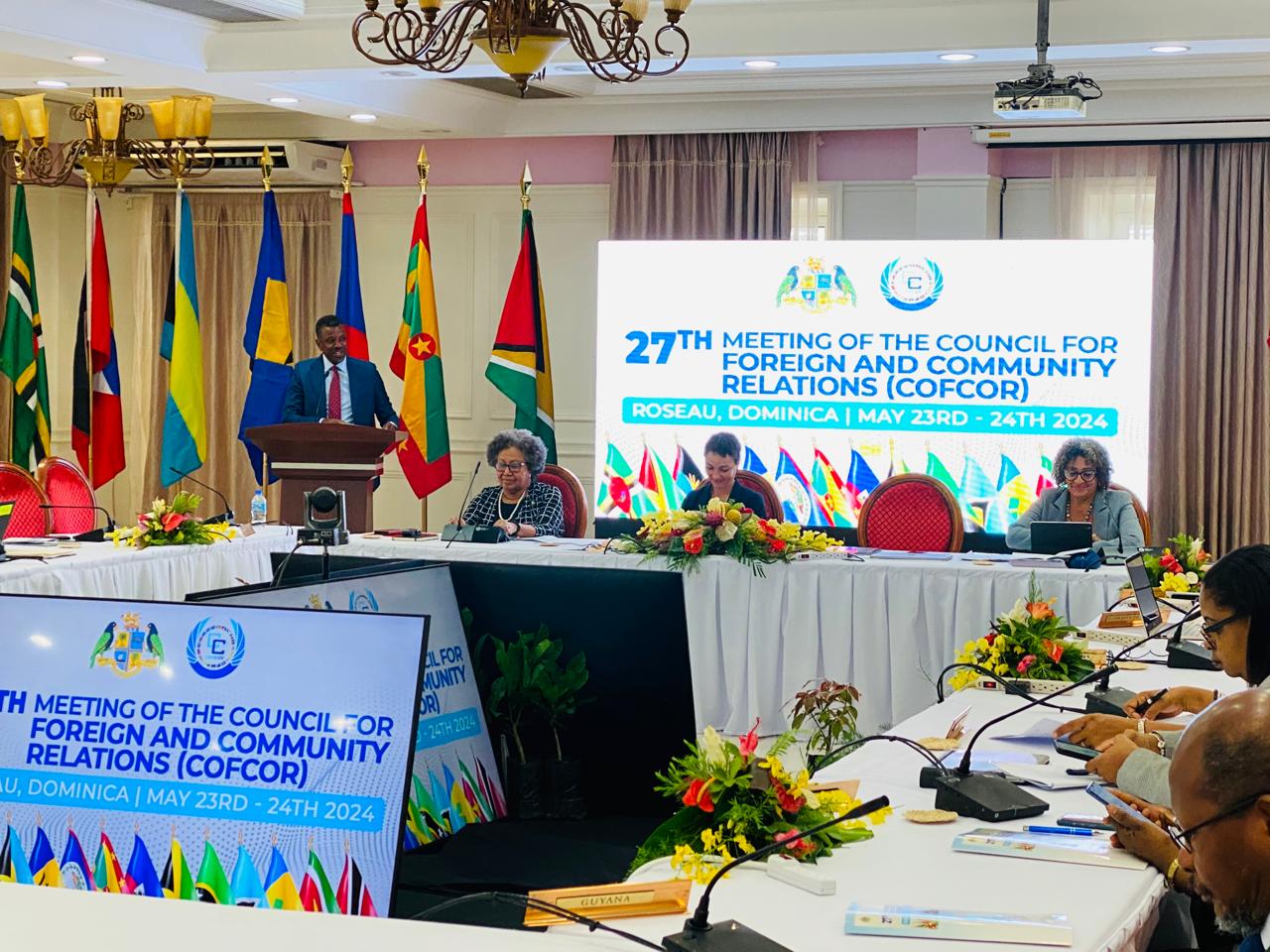
Remarks by the Incoming Chair of the Council for Foreign and Community Relations (COFCOR), the Hon. Vince Henderson, Minister of Foreign Affairs, International Business, Trade and Energy of the Commonwealth of Dominica at the Opening Ceremony of the Twenty-Seventh Meeting of COFCOR, 23 May 2024, Roseau, Dominica
Dr. Carla N. Barnett, Secretary-General of the Caribbean Community (CARICOM);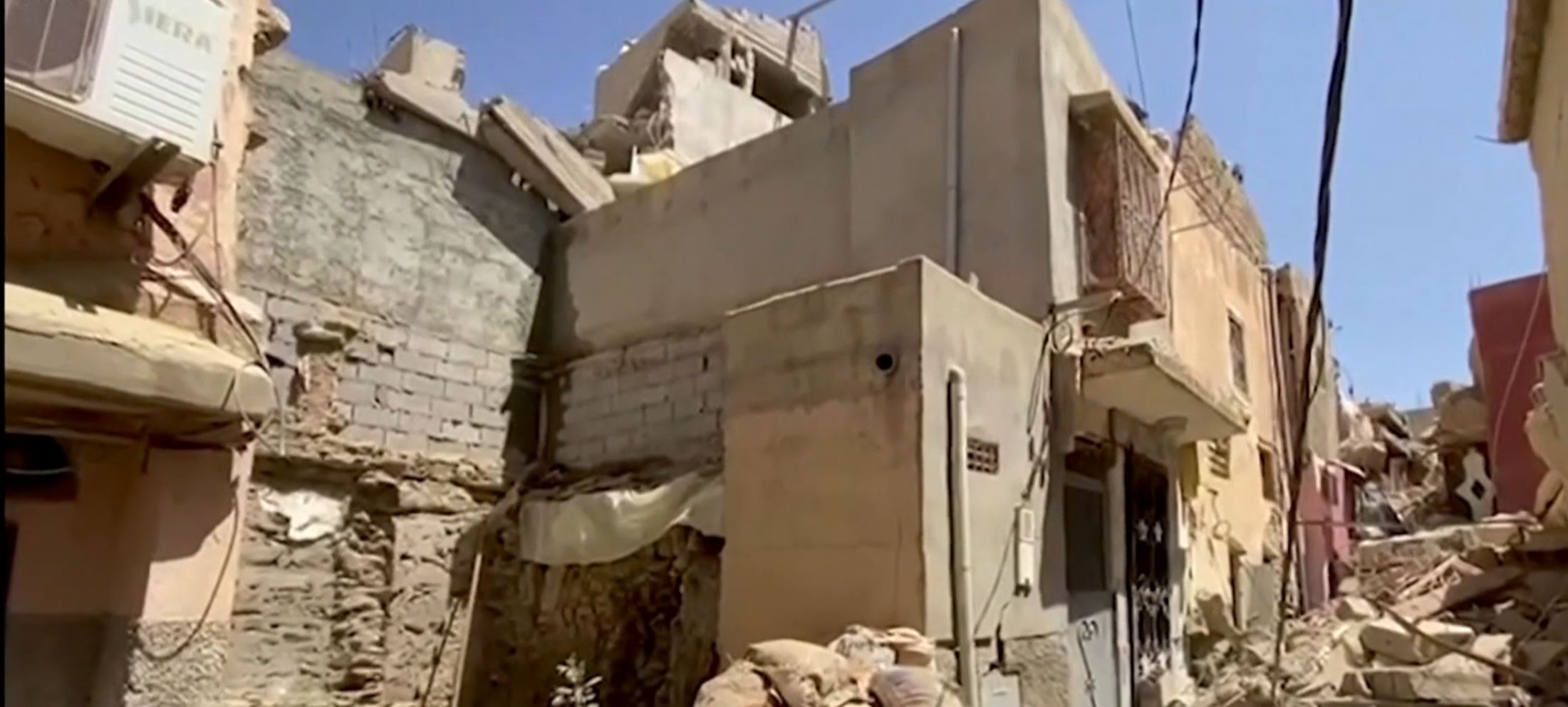
Statement from CARICOM on the Earthquake in Morocco
The Caribbean Community (CARICOM) is deeply saddened to learn of the death and devastation in the Kingdom of Morocco from the earthquake which struck on Friday 8 September.