STATEMENT FROM THE CHAIR OF COHSOD-EDUCATION COVID-19 AND EDUCATION

The COVID 19 Pandemic has been
characterised by many as the unseen enemy moving swiftly across the globe. To
date, at the international level, it has affected approximately 1.5 billion
students with run on impacts for teachers and caregivers. Within the Caribbean
Community (CARICOM) it has disrupted the education and careers of over five
million students and two hundred thousand teachers across the Basic Education,
Skills for Lifelong Learning and Tertiary Education Sectors, including the
provision of special education. In the CARICOM Region, a whole of Government
approach has been taken to managing the impact of COVID-19 at the national
level. The Region is to be applauded for its swift and coordinated responses to
COVID-19, putting in place the health, education, social, economic and security
protocols needed to reduce the impact on the social sustainability and economic
resilience of the region.
With a particular reference to
COVID-19 and education, the response required relates to decisions to ensure the
continuity of education on the one hand, and enabling a swift recovery on the
other. Now more than ever, the Region has become acutely aware of the essential
roles played by schools and teachers in maintaining the safety and security of
children and vulnerable youth. COVID-19 has amplified our awareness of the need
for increased technological innovation in the operationalisation and assessment
of educational systems and has triggered the need for a response to education
for all, in periods of crisis.
The closure of schools has impacted the earning capacity and
participation rates of caregivers, in particular single parents and those who
are self-employed; challenged the health security of children who rely on the
provision of school meals; increased the risk of exposure to incidents of
physical, emotional and sexual abuse and hampered the successful integration of
at-risk youth in continuing education.
Teachers have also been affected.
They are now being called to execute pedagogical innovation that many feel not
prepared or trained for; challenging the quality of educational delivery and
the efficacy of teachers. COVID-19 is rehearsing often aired propositions on
the need for education systems to become 21st Century ready; it is
challenging expectations for continuing teacher professional development and
creating new conditions of labour for the teaching force, made of up mostly of
women, who also fulfil obligations as caregivers.
COVID-19 has exposed even more
the pestering inequalities of educational provision in many of our Member
States (MS). This also challenges our ability to deliver universal quality
education to our citizens. There is now a greater urgency to secure the
continued access and participation of children, youth and adults who live with special
education needs and disabilities. Those families who are extremely poor or live
in remote geographical locations (including the teachers who live in these
areas) are at this time unable to fully access the educational accommodations
that are being put in place by governments as interim responses to the need for
educational provision at a distance over an undeclared, yet protracted period
of time. The uncertainty of when the pandemic will come to an end is
facilitating deepened uncertainties in educational provision.
A Call to Action- COVID19
and Education CARICOM
As it relates to the education
sector our readiness to respond to the provision of quality basic education at
a distance, using online synchronous and asynchronous approaches has been prefigured
by the 21st Century readiness of our educational infrastructure.
Educational resilience requires an urgent digital transformation. Within MS
educational continuity and stability have been managed through interventions
that range from the creation of learning packets that are delivered to
children, to the creation of educational television series facilitated by
particular experts, to the use of learning platforms where both teachers and
students can interact via synchronous or asynchronous modes. Out of an
abundance of concern and using the whole of government approach, MS have also
ensured the provision of welfare relief to students and their families.
Our Higher Education sector
appears most ready to respond to the provision of technology enabled education
in a crisis, with faculty and students of some institutions more ready to
continue their educational careers in an online environment. However, attention
must be given to TVET institutions, and Community Colleges, to ensure that they
too have the capacity and infrastructure to contribute to the normalcy of
post-secondary education provision. The Caribbean Examinations Council (CXC)
has been a regional vanguard in the area of E-Testing and has demonstrated
their solidarity with the region through a proposal for a revised examinations
strategy that aims to ensure the integrity of the examinations process, produce
valid grades and sustain educational progression across levels of
learning.
It is evident, that a critical
paradigm shift in educational provision is needed; we need to ensure
educational resilience through digital transformation. This is the call that is
made through the UNESCO SDG 2030 Agenda and reflected in the CARICOM Human
Resource Development 2030 Strategy, through the design and implementation of a
Caribbean New School Model. Responding to this call can no longer be delayed by
the vagaries of financial and political positioning. If the region is to
acquire the economic and social resiliency required for educational provision
it must become innovative, mediated by ICTs and driven by a competency-based
approach.
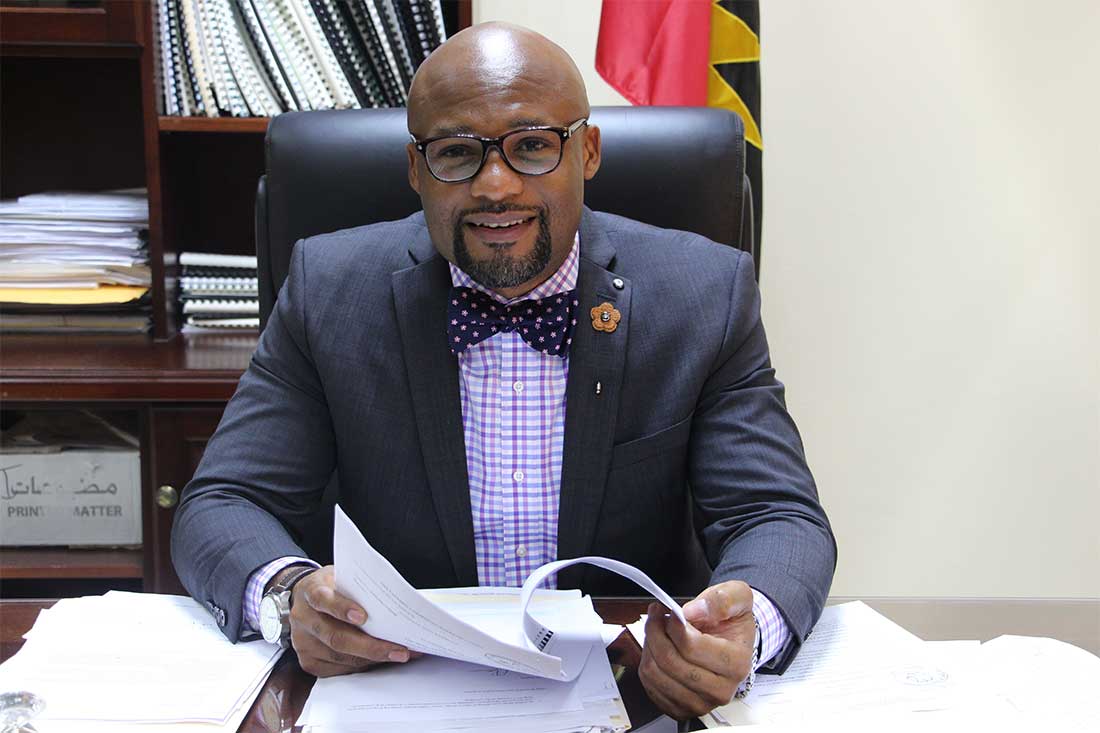
I take this opportunity as the
Minister of Education, Science and Technology, Antigua and Barbuda and Chair of
the Council for Human and Social Development (COHSOD) to call my colleague
Ministers to action. To aid in a swift recovery from COVID-19, Ministries with
responsibility for Education across the CARICOM Region must:
- Contribute to a regional capacity to respond through
knowledge and resource sharing that ensures that we respond and recover at
equitable rates as one CARICOM. - Articulate
national policies related to the provision of education in periods of crisis,
ensuring the protection of the most vulnerable, including where relevant,
members of the migrant population. - Commit to a digital transformation that guarantees the resilience of
the educational system. This is an investment where educational leaders, teachers and
students are enabled to engage in quality learning and assessment using fully
online platforms; thus aiding in the rapid recovery from the effects of
COVID-19. - Strengthen public private partnerships with members of
industry to enable a smoother transition between pre-, during- and
post-COVID-19 realities. Safeguarding the future of our national and regional
workforce and entrepreneurial sectors. - Ensure that the information related to COVID-19 is
disseminated in such a manner that allows teachers, students and families with
cognitive, physical and psycho-social learning differences, access to factual
information that supports their ability to advocate for and protect themselves
and their families in this crisis. - Recognise and cater for the mental health impact of
COVID- 19 on teachers and learners, paying attention to the ways in which this
too can serve to disrupt learning. Interventions must be designed that support
the emotional wellbeing of learners, teachers and parents.
We do not know the length of this road, but we do know that we are journeying together. Let us adhere to the national and regional safety protocols designed to ensure that we remain in the best of health to continue to serve our children, teachers and communities who stand with us in service. We are all obligated to protect our CARICOM legacy that is the health, well-being and educational excellence of the children and youth of our Region.
Related Stories
Statement from the Caribbean Immunization Technical Advisory Group (CITAG) on the stark decline in childhood immunization rates, worsened by the effects of the COVID-19 pandemic
The Caribbean Immunization Technical Advisory Group (CITAG) wishes to alert Caribbean Ministers of Health and Chief Medical Officers that routine childhood vaccination coverage
CARPHA: The Decision to Impose Travel Entry Requirements Belongs to the National Authorities
Port of Spain, Trinidad and Tobago.