
CARICOM SG commends regional response on COVID 19
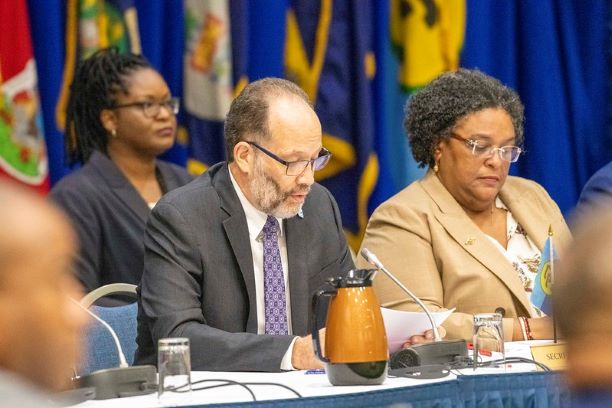
CAICOM Secretary General, Amb Irwin LaRocque delivers remarks at the 31st Intersessional Meeting of Conference of Heads of Government of the Caribbean Community
CARICOM
Secretary-General, Ambassador Irwin LaRocque, has commended the health emergency
response mechanism engineered by the Caribbean Public Health Agency (CARPHA) to
keep the Community free of the novel coronavirus (COVID 19).
Secretary-General
LaRocque said the inter-agency collaboration that is taking place is another
example of the co-ordination required to address the challenges to integration.
The SG was
speaking at the opening ceremony of the 31st Inter-Sessional Meeting
of the Conference of Heads of Government of CARICOM. The two-day meeting began
on February 18th at the Lloyd Erskine Sandiford Centre in St
Michael, Barbados.
Although the
World Health Organisation (WHO) has deemed the risk of COVID 19 to the
Caribbean as low, he told the meeting that the Region has “adopted a pro-active
approach” to the threat. This included the convening of an Emergency Meeting of
the Ministers of Health on the virus, with participation from the Caribbean
Public Health Agency (CARPHA), the Pan-American Health Organisation (PAHO) the
CARICOM Implementation Agency for Crime and Security (IMPACS) and the Caribbean
Disaster Emergency Management Agency (CDEMA).
provides update on CARICOM's Response to the Corona Virus
In
acknowledging the critical role of the Regional Security System in transporting
samples for laboratory testing at CARPHA, the Secretary-General said “we all
must do our part to stave off the epidemic of chronic Non-Communicable Diseases
and the spread of the global viruses that threaten to engulf us.”
While
CARICOM Member States have no case of the novel coronavirus, they have
responded robustly to the threat. They have boosted ports of entry screening,
enhanced medical quarantines, and have increased public awareness to combat
misinformation on the virus as well as increase general knowledge on preventing
respiratory infections. CARICOM Member States have also been working closely
with the Pan American Health Organisation to enhance national preparedness and to strengthen the capacity of the
national laboratories to detect the virus.
Related Stories
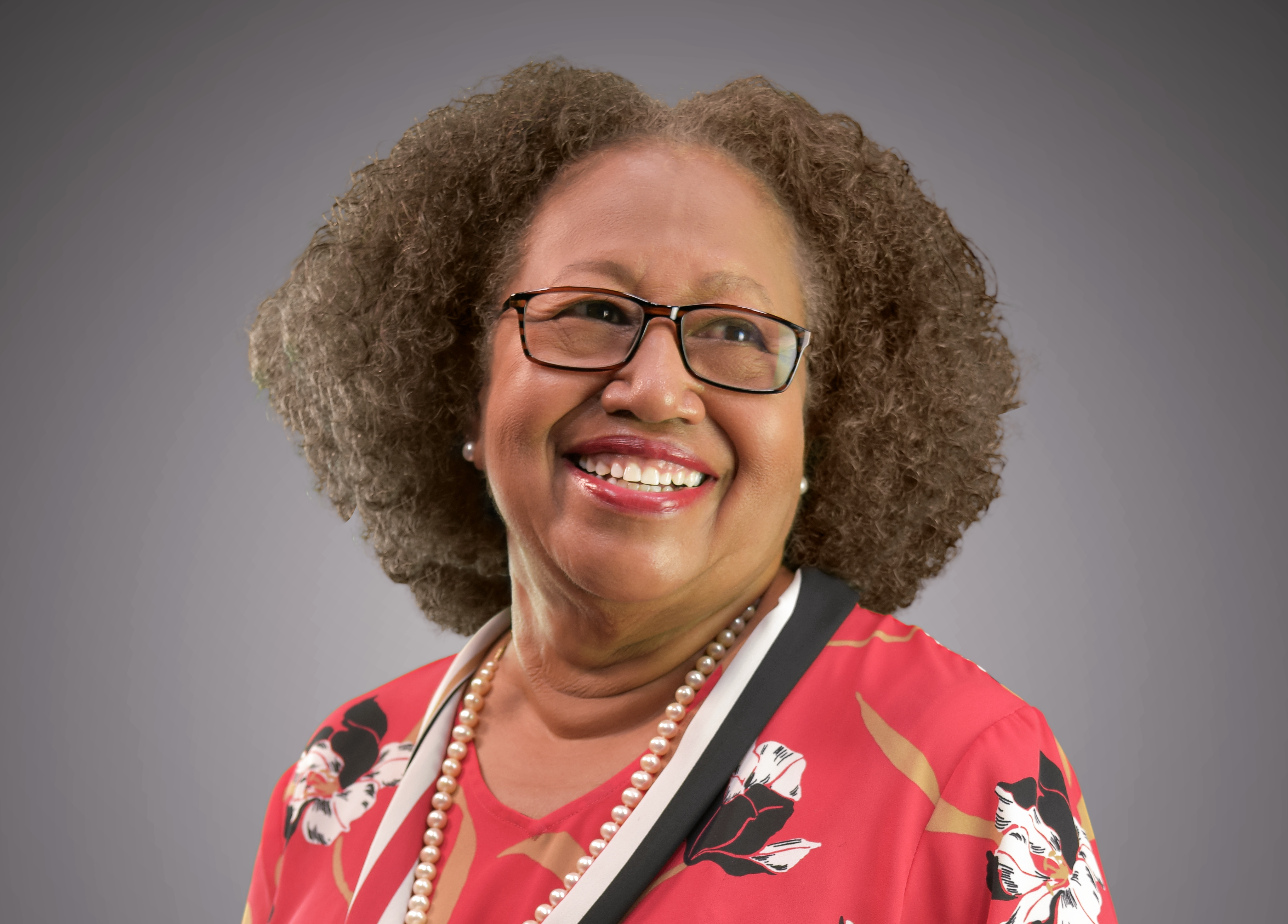
New CARICOM Secretary-General takes up office on Monday
An Installation Ceremony for the new Secretary-General of the Caribbean Community (CARICOM), Dr Carla Barnett, will be held on Monday 16 August 2021, from 10:00 a.m. ECT.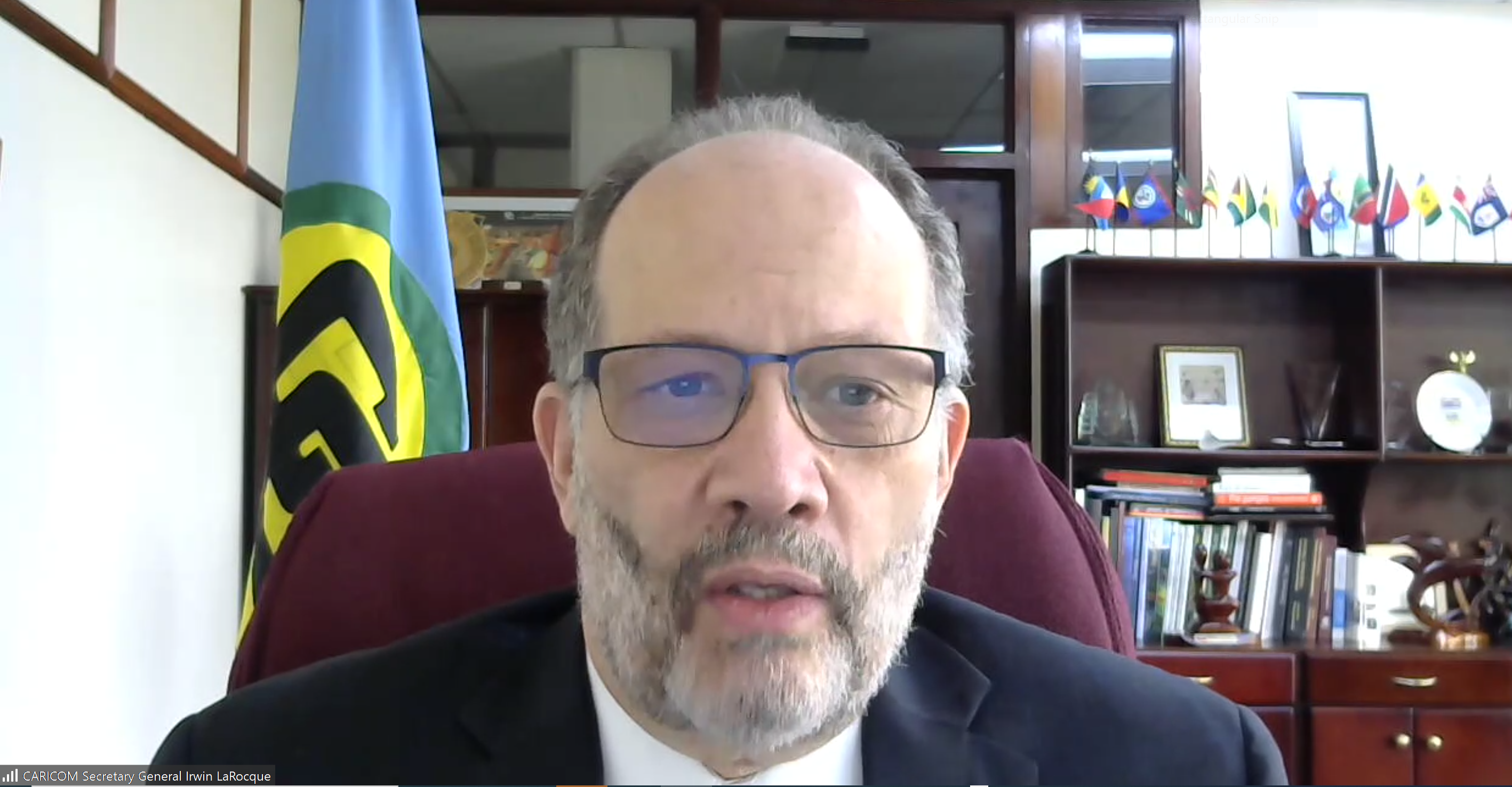
Design recovery programme to revive economies, enhance resilience – CARICOM Secretary-General
Caribbean Community (CARICOM) Secretary-General, Ambassador Irwin LaRocque said that the Region neede