Creating Economic Opportunities for Organic Waste Management Sectors
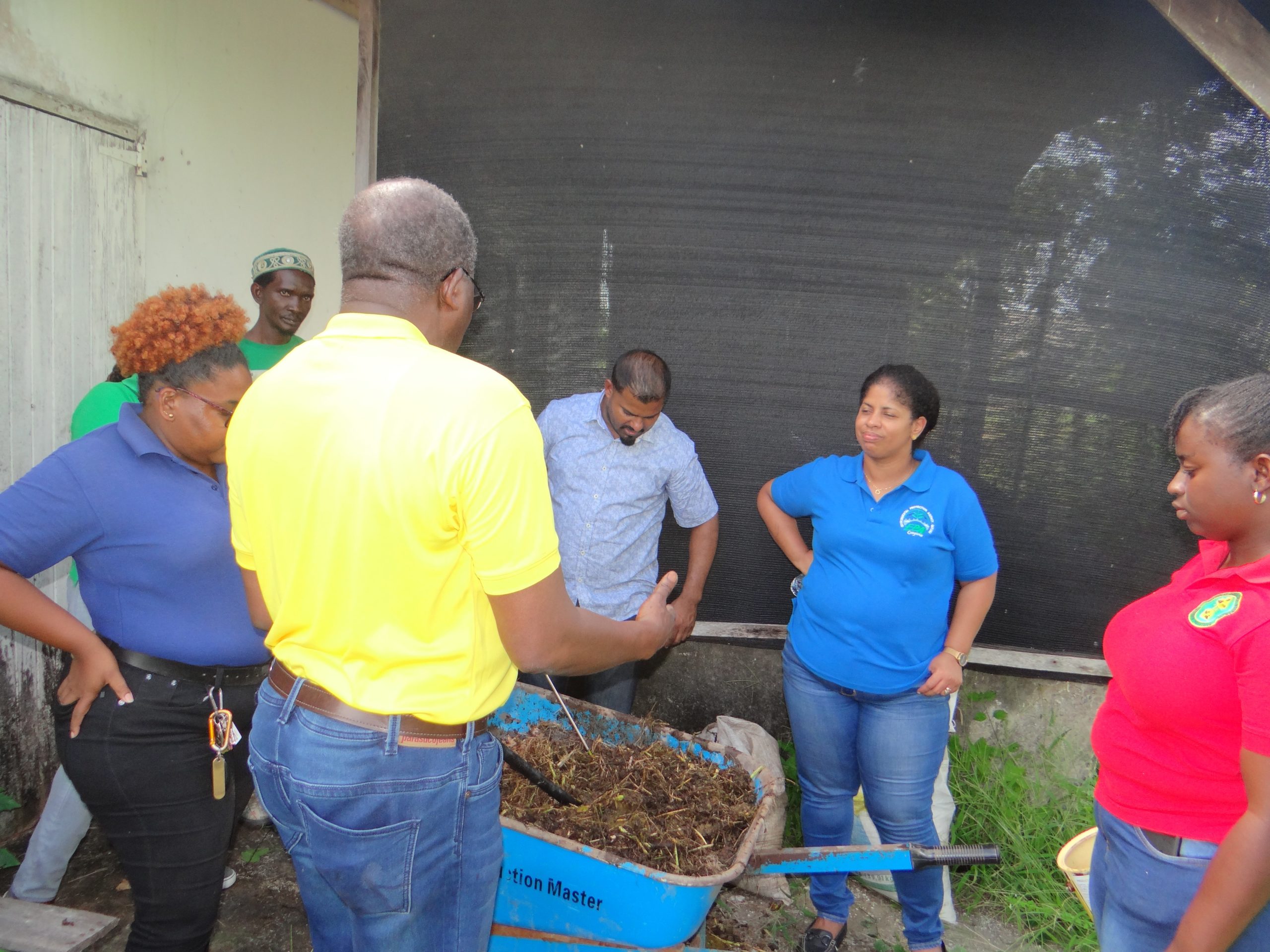
Participants in a practical session at the workshop (Photo via IICA)
(IICA Press Release) The Inter-American Institute for Cooperation on Agriculture (IICA) through its programs Bioeconomy and Production Development and Climate Change, Natural Resources and Management of Production Risks, have identified the potential solution of developing a model based on composting technology (in its first stage).
This model promotes the development of complex inter linkages
between actors in the value chain, such as those in the renowned
industrial symbiosis projects. The model also allows the development of
other potential businesses using different waste processing technologies
(including plastic) that can result in the generation of bioenergy,
bio-inputs and biomaterials in a future stage of the project.
This project was further endorsed by the Caribbean Community (CARICOM) Secretariat at the Eighty-First Special Meeting of the Council for Trade and Economic Development (COTED) – Agriculture held on October 2 and 4, 2019 in Belize.
The Guyana leg of this regional project is in collaboration with the
National Agricultural Research and Extension Institute (NAREI). This
pilot project is being implemented in two-phases and is facilitated by
Dr. Abimbola Abiola, Technical Specialist, IICA. The first phase of the
project is a two-day workshop “Creating Economic Opportunities for the
Organic Waste Management Sector through the Adoption of Bio-economic
Models in the Caribbean,” which commenced January 27, 2020 at the NAREI
Boardroom, Mon Repos. Participating agencies were invited from both the
Private and Public sectors, which included Demerara Distillers Limited
(DDL), NAREI, Environmental Protection Agency (EPA) and the Guyana
Development Livestock Authority (GLDA).
The composting process converts organic wastes into valuable compost
that can be used to enhance degraded soils, as compost is both a soil
amendment and a soil conditioner. Composting could be used to strengthen
the economy of rural areas and, at the same time, the benefit of
compost application can be used in local farming, tourism, land
restoration and others. IICA continues to show its willingness and
aptitude to continue working to facilitate and enhanced good
agricultural practises that could ultimately enhance livelihood.
On January 28, entailed a detail practical experience of composting
with the use of choice organic materials of which Dr. Abiola emphasised
the importance of composting and it being a practical way of dealing
with the problem of organic solid waste management, which comprises over
70% of the solid waste stream in Guyana. The workshop ended with
participants formulating their very own composting projects in groups,
with the aim of being able to find a way to utilise efficiently their
by-products that would otherwise be seen taken to landfills or buried.
They are expected to present their findings in April 2020 when the
second phase of the project will commence.
Related Stories
Momentum accelerating towards fulfilling Region’s agriculture potential and food security
Raymond is passionate about farming. He is not one to simply plant a seed and expect it to grow, but he gets literally to the root of the science behind its growth.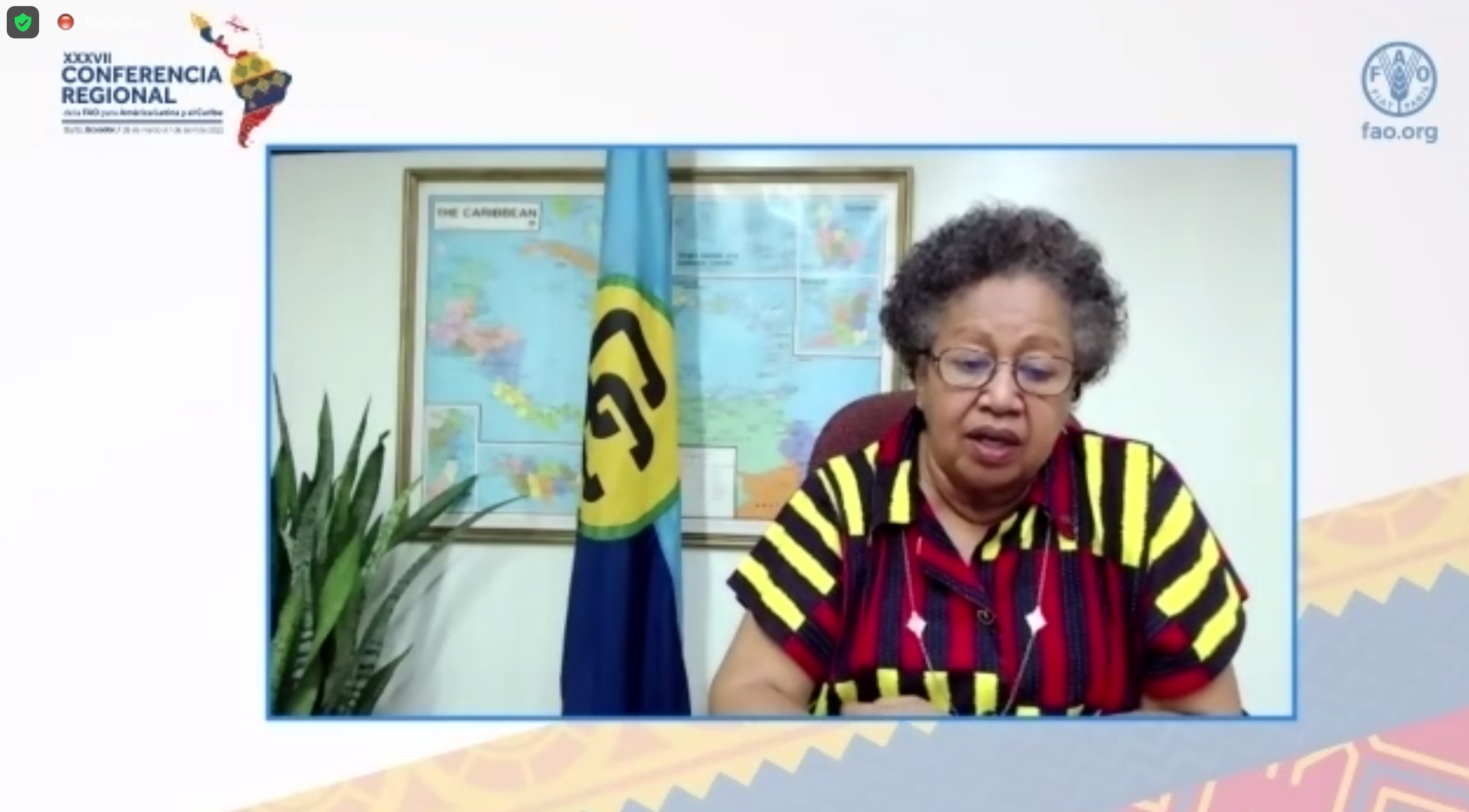
Remarks by CARICOM Secretary-General Dr Carla Barnett at the Meeting of Ministers of Agriculture of the Andean Community (CAN) and the Caribbean Community (CARICOM) being held during the Thirty-Seventh Session of the FAO Regional Conference for Latin America and the Caribbean
Distinguished Chair; Honourable Ministers; Delegates; Ladies and Gentlemen.