CARDI taking action to help rebuild agriculture in Barbuda, Dominica
CARDI Executive Director, Mr. Barton Clarke speaks about reviving agriculture in Barbuda, Dominica from Caribbean Community on Vimeo.
As we observe World Food Day today, we tell you that the Caribbean Agricultural Research and Development Institute (CARDI) has already begun taking action to restore the recently battered agriculture sectors in Barbuda and Dominica.
And while he lamented the destruction of thriving sectors that was caused by monster storms, Hurricanes Irma and Maria, Executive Director of CARDI, Mr. Barton Clarke, said that agriculture in the two islands will flourish again.
Assessing the impact of the two Category Five hurricanes, Mr. Clarke pointed out that there was “almost total devastation” of agriculture in the two islands which has caused a domino effect in terms of food supply in the Region.
For example, Barbuda had coconut germ plasm that was free of lethal yellowing and was expanding its production of peanuts when the hurricane hit.
In Dominica, the hurricane snapped trees, destroyed the coconut, avocado, bead fruit, citrus and other crops, and uprooted even root crops, destroyed the production and agro-processing capacity. Dominica was also self-sufficient in eggs. The country’s ability to provide food products to other territories in the Region was also totally disrupted.
“There’s the issue of food supply in Dominica. Dominica had a fairly vibrant agriculture sector and there was a very strong tradition of consuming root crops such as yams, dasheens, tannias and cassava… All those are gone… Dominica has been providing food products to Martinique, Guadeloupe, Antigua, the norther Leeward Islands, British Virgin Islands, Anguilla… all that is gone. So you have the impact of the destruction of the food supply systems in Dominica but also the food supply systems in the French Caribbean and the northern Caribbean as well.
“So these are really significant impacts”, he pointed out.
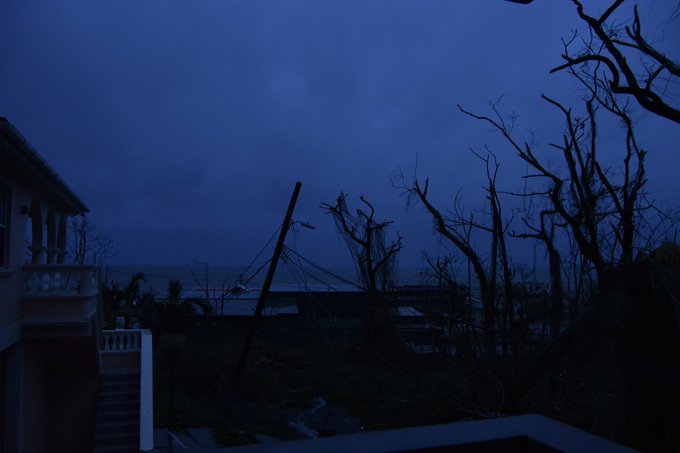
Please see excerpts of the interview above.
Related Stories
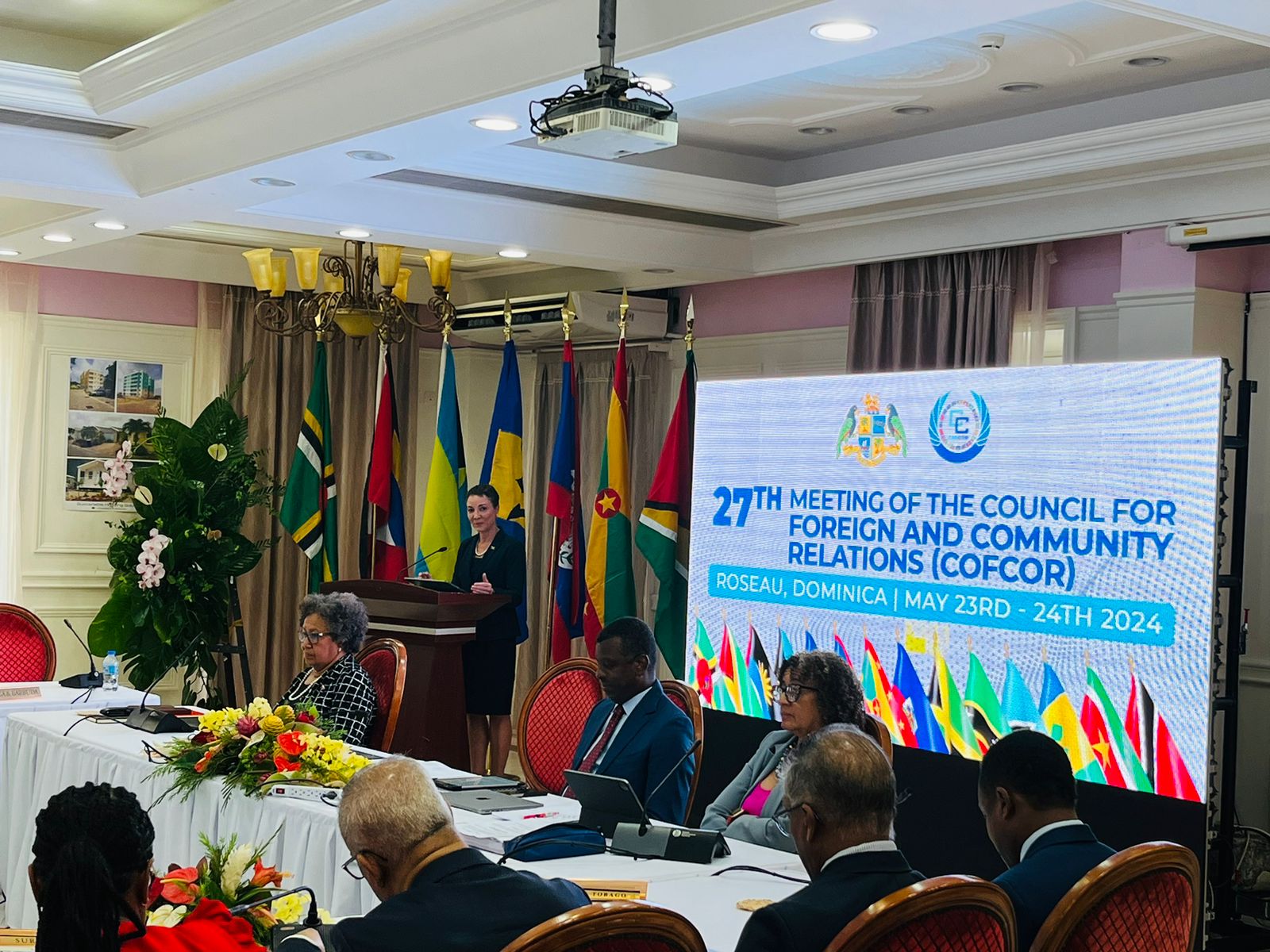
Remarks by the Outgoing Chair of the Council for Foreign and Community Relations (COFCOR), Senator the Hon. Kamina Johnson Smith, Minister of Foreign Affairs and Trade of Jamaica, at the Opening Ceremony of the Twenty-Seventh Meeting of COFCOR, 23 May 2024, Roseau, Dominica
Dr. Carla Barnett, Secretary-General of the Caribbean Community (CARICOM);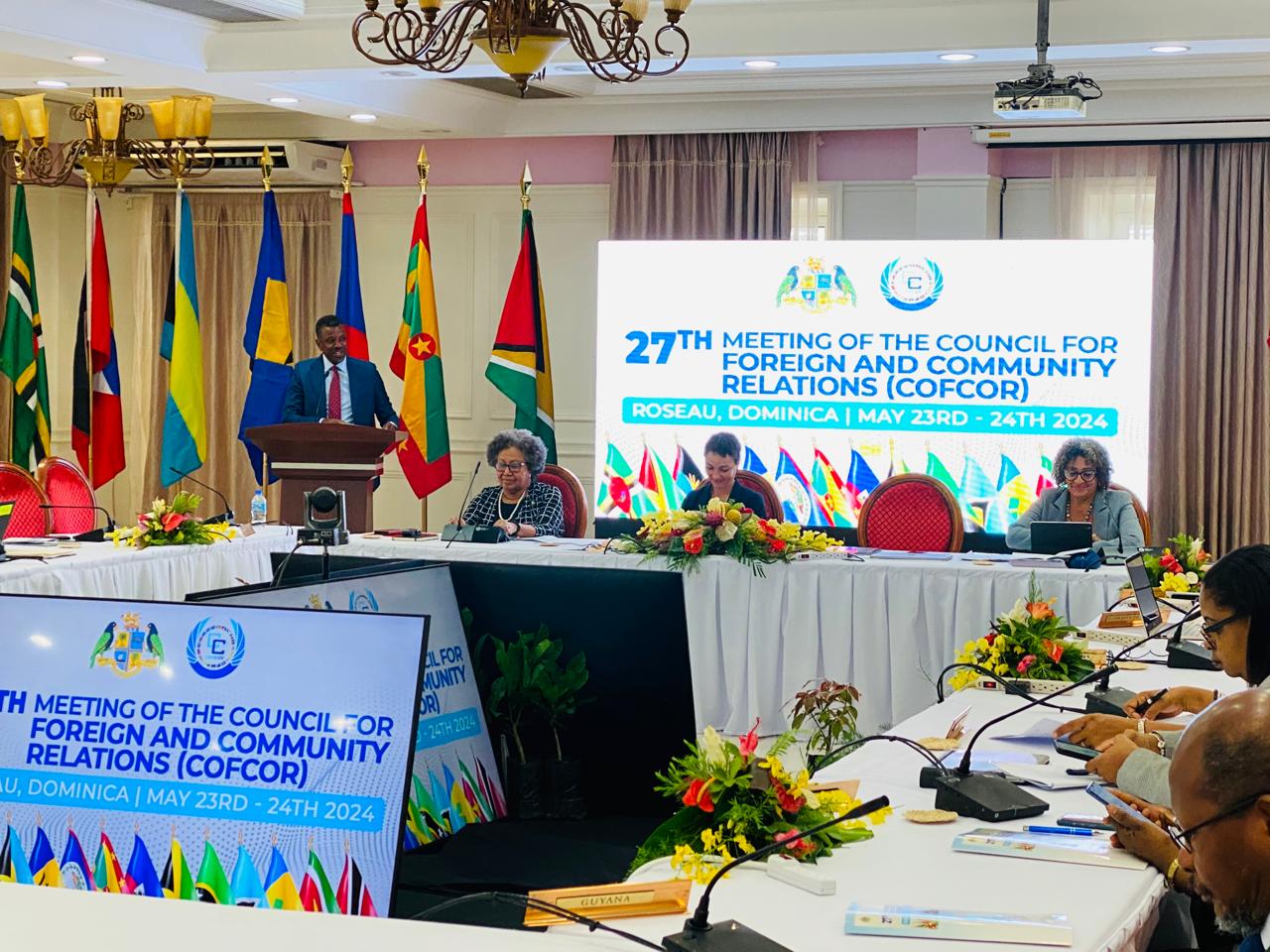
Remarks by the Incoming Chair of the Council for Foreign and Community Relations (COFCOR), the Hon. Vince Henderson, Minister of Foreign Affairs, International Business, Trade and Energy of the Commonwealth of Dominica at the Opening Ceremony of the Twenty-Seventh Meeting of COFCOR, 23 May 2024, Roseau, Dominica
Dr. Carla N. Barnett, Secretary-General of the Caribbean Community (CARICOM);