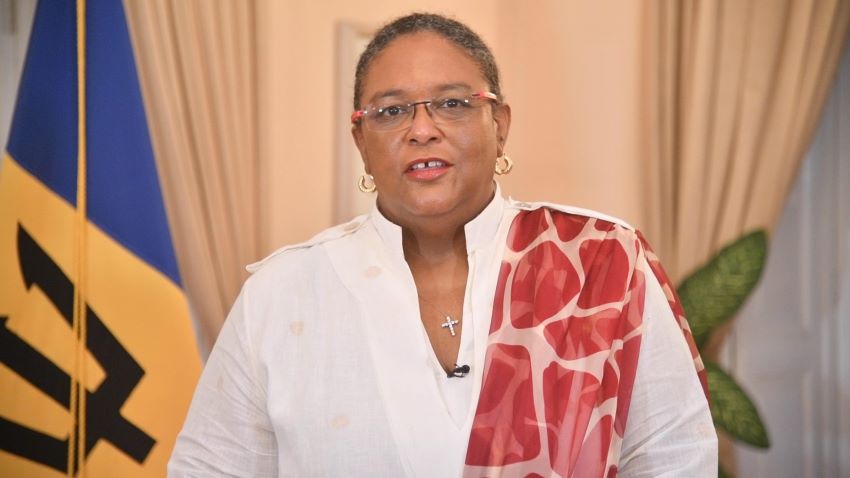
CARICOM Chair addresses 73rd World Health Assembly
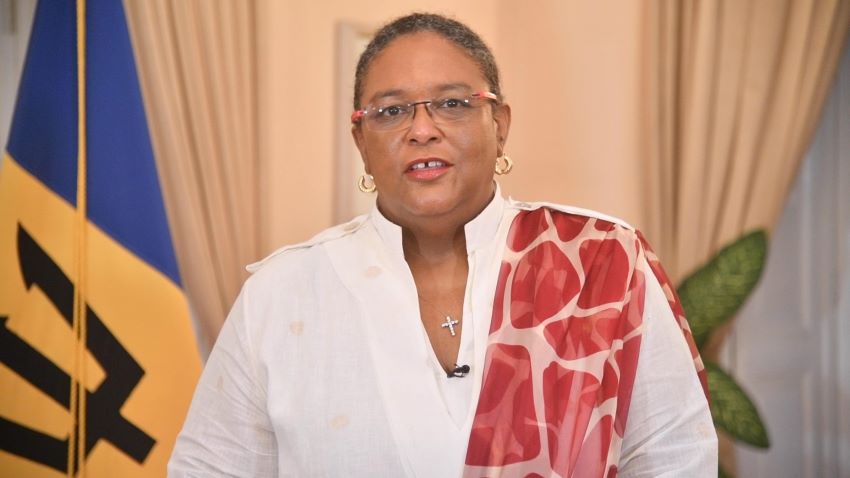
"The Caribbean region’s economies ranks among the most travel and tourism- dependent economies in the world. This has exposed our people and our economies in a way that we have not experienced since becoming independent nations more than fifty years ago in some instances."
The full address:
ADDRESS TO THE 73rd WORLD HEALTH ASSEMBLY by THE HONOURABLE MIA MOTTLEY, PRIME MINISTER OF BARBADOS and the CHAIR OF THE CONFERENCE OF HEADS OF GOVERNMENT OF CARICOM
Today, I join with defenders of democracy
across the Caribbean Community region, the wider Americas, and indeed the Small
Island Developing States of the world who recognise the importance of fearless,
robust leadership.
I speak to you from this region of the Caribbean, CARICOM
as we are known, a region that is characterised by developing health systems that
suffer from the same vulnerabilities as many of our countries. Low numbers of ICU beds per capita, few
intensivist doctors and critical care nurses, few ventilators per capita. And
regrettably, our people have a higher rate of NCDs and obesity than we would
like.
We
have watched how COVID decimated rich and powerful nations with strong curative
care systems - killing their people, over running their health care systems,
and halting business.
And
so early on, CARICOM decided that we cannot fight the illness, and that we had
to delay the arrival of COVID-19 into the region as far as possible.
We
mobilized all of our regional agencies those that dealt with public health like
the Caribbean Public Health Agency (CARPHA) or the modelling like the
University of the West Indies, or with our disaster preparedness and mitigation
like CDEMA and tracking the movement of persons through our borders like the
Joint Regional Communications Centre (JRCC) of CARICOM.
The Caribbean region’s economies ranks among the
most travel and tourism- dependent economies in the world. This has exposed our people and our economies
in a way that
we have not experienced since
becoming independent nations more than fifty years ago in some instances.
In
our own case in Barbados, our Emergency Operations Centre in the Ministry of
Health, has been functioning since mid-January. We reorganised our health
systems to improve access to health service for COVID-19 patients, while at the
same time reducing the risk of exposure for the most vulnerable populations
through reduced movement from as early as February of this year. We repurposed an abandoned naval base into a
facility for COVID patients. This expanded
our access to critical care beds by over 300%.
Fortunately, our investment in and the preparedness of our public health
officials over the decades has permitted us to do the type of public health
surveillance to detect cases, trace and quarantine contacts, isolate and treat
the ill. You will forgive me if I use this opportunity to
salute the public health pioneers of the Caribbean over the last seven decades.
They have been true heroes to our people.
CARICOM
Heads of Government adopted a ‘whole of government’ and
‘whole of society’ approach.
In addition, we reached out to our Caribbean
neighbour Cuba and received hundreds of doctors and nurses to help us. I take this
opportunity to thank our brothers and sisters in Cuba and the Government of the
Republic of Cuba, in particular, for its unswerving assistance during this
pandemic. It has been palpable and clear
to all of our populations.
So,
our CARICOM family banded together to lock down and ride out this first wave
and it has been a
long and treacherous wave.
The closing of our borders and the trebling of
unemployment and the reduction in our Government revenues by half, have created
grave challenges for many of us.
Similarly, the psyche of people in our hemisphere has
been disturbed.
For the majority of persons under age 70 in the
Caribbean, many of whom have never had to confront grave challenges, the world
appears to be on auto pilot. They wonder who is in control and where is the
leadership, where is the global cooperation that they so expected. And for too
many of our citizens globally, life has become a game of roulette betting on
numbers and colours and ignoring the science that needs to underpin our
actions.
Nations rich and poor are seeking inspiration.
This is a crisis therefore that strikes not only at
the heart of our humanity but also at the organisation of our human societies.
It is a crisis that calls for global leadership that
will allow us to rebuild our humanity, our environment and the equity so badly
needed in our societies and our economies.
COVID has brought many of us closer than we have been with each other;
it has equally cast a brighter light on the inequities in our society, but then
it has also allowed the earth to breathe - yet again.
It is why we have contended that nothing short of
coordinated global leadership, not just of governments, but also from people of
influence whether from the religious or faith-based organisations or in other
areas of the society that they ought to be involved. We need a global leadership initiative that
is rooted in moral leadership more so than ever.
Moral leadership that recognizes that 75 years after the
United Nations was formed it is not good enough for us to accept that people or
countries can fall through the cracks.
That in particular as we reflect on the events of the last three months
were it not for Pan-American Health Organisation (PAHO), or CARPHA, the Caribbean
Public Health Agency and more recently the WHO, we would believe that we were
living in the “wild wild west” that we see in movies where only those who are
strong and well-endowed should survive.
It is the intervening hand of these agencies that I just mentioned, that
has sought to move us as a region, closer to a level playing field but my
friends there is still much work to be done.
Moral leadership that will finally recognize that the
use of historic per capita income to determine access to concessional funds or
grant funds, or indeed as I mentioned earlier to determine fair access to the
procurement of goods is unacceptable. As I have said many times it is the
equivalent of taking my blood pressure reading from two years ago and using it
today, to determine my vulnerability to a stroke - a completely useless
exercise.
Even when our circumstances deteriorate, there has
been no review that takes into account the inherent vulnerability to which we
are exposed and which prevents us from being able to access critical money or
goods. In addition, the use of certain proxy criteria to access technologies,
medicines, vaccines or concessional funds and grants, would exclude vulnerable
countries such as ours in the Caribbean, some in Latin America and even in the
Pacific. Why? Because we are using criteria that are more
relevant to fighting problems that have little or no relevance to our current vulnerabilities and challenges. For example, we are less than two weeks away
from the beginning of the hurricane season. Tropical Storm Arthur has already
formed off The Bahamas, well in advance of that start. Many of us are already confronting droughts
and the presence of Sargassum weed as the result of the climate crisis and it
is wreaking havoc in our societies.
But none of
these challenges are captured by per capita income or by maternal mortality
rates. None of them.
In addition, where there is global market failure as
is happening now, small middle income states are at risk of not being seen or
heard or not even accessing critical goods and supplies. I take this opportunity to thank Dr. Tedros
for reaching out to the Executive Director of the Global Fund last evening, to
advocate for the countries in the region that have been excluded from
procurement through the consortium of critical COVID-19 medical supplies. We
need to be included.
It is also therefore clear, that we need therefore additional
criteria to determine equitable access and fair allocation - criteria that
better take into account that vulnerability which we have. And if we are asking for the same solution
for climate, external shocks as we are now asking for the pandemic, it is because
all three destroy our capacity to produce as nations and the ability of our
people to survive.
It is against this background my friends, that
equitable access and fair allocation of resources will allow our small states,
particularly middle income ones, dependent on travel to be able to have access to
increased supplies for testing such that we can reopen our societies safely to
intra-regional travel and, thereafter, to extra-regional travel. But it will also better allow us to ensure
that there is a return to safe work, by safe people, the least vulnerable people
to COVID-19 in our countries. While we can tolerate high unemployment and
severe contraction of our economies for 2 or 3 months, the consequences to our
societies of prolonged shutdown are as equal as the high incidence of COVID
among our population. That is why we
need urgently, to get access to adequate numbers of the appropriate tests in
particular the rapid tests that are affordable and reliable if we are to allow
our economies and societies to reopen safely.
Our small states have been suffering from high debt
and low growth for decades. We believe
that there should also be mature and relevant conversations for middle income,
small island developing states across the globe especially as it relates to our
debt obligations in the midst of this pandemic.
Many countries will either have an orderly restructuring of debt or at
the very least a debt moratorium that provides certainty for both the borrower
and the lender, or they will have a disorderly unravelling that will create a
crisis both within their respective countries and within the global financial
markets. These conversations must admit
of greater certainty in the management of our affairs and I pray that the
global community will have the courage to allow us to have them.
I say so conscious that Barbados took a major leap of
faith when we restructured our debt in the last 18 months to include natural
disaster clauses in our domestic and external debt instruments that provide for
greater fiscal space to be created through a moratorium on the payment of
principal and a capitalization of the interest should we face a natural
disaster event. The certainty that these
natural disaster clauses provide is
increased fiscal space. Were this provision available in the context of this
pandemic, it would bring tremendous relief to those countries and better position
many of us to rebuild in a post-COVID-19 environment.
Let
me at this juncture express my appreciation to Director General Dr. Tedros and the
WHO for the recent appointments of Sir Andrew Witty and Dr. Ngozi
Okonjo-Iweala, a dear friend of the Caribbean, as Special Envoys for the north
and south respectively for the WHO’s Access to COVID-19 Tools (ACT)
Accelerator. It is intended that they
will ensure that there is a framework for equitable access to tests,
therapeutics and a vaccine, if there is ever one. In addition, our
Caribbean countries salute your inclusive leadership and recognize that without
your timely interventions the efforts of PAHO and CARPHA would be stymied as we
try to meet the needs of our populations.
Forty-two years on, our Community still believes that
the principles of Alma Ata must mean something:
- That
we should have equitable access to the supplies we need, - That
we should be able to afford to save the lives of our citizens, and - That
solutions should be appropriate to our context.
I must add at this point that global moral leadership
also means that in aid of supporting human lives, which none of us can replace,
that there ought to be a suspension of international sanctions imposed against countries. Whatever differences or difficulties we may
have with each other, they can be put on pause while we wrestle to the ground
this awful pandemic for wherever it exists, it affects each and every one of us.
My friends, there was life before COVID-19 and I know
that there will be life after COVID-19.
For this reason, even with the pandemic we must not drop the ball on those other global health priorities that are
critical to our overall development. I refer specifically to the chronic NCDs –
the silent killers (diabetes and cardiovascular disease, hypertension). I refer
to HIV and AIDS and to the antimicrobial resistance that we are fighting and the
other health-related diseases that come as a result of the climate crisis. For our populations these challenges remain
real and continue to present a silent but real and present danger.
Let us use the cooperation we are trying to build to
also help fight these challenges.
Why? Because solidarity, unity
and partnership remain enduring principles for us. These are the principles that led our
Caribbean countries to embrace the pursuit of democracy in the late 1930s. Just as they also were the principles that helped
the world rebuild after three decades of challenges 75 years ago with the
formation of the United Nations and the Bretton Woods institutions. I pray that we will have the fortitude to
fight against these challenges of our times, relying on these same principles
of solidarity, unity and partnership. I
wish the leadership and management of the World Health Organisation, success in
its efforts to promote health, to keep the world safe and to serve the
vulnerable people of our world as it is required to do. Your mission 73 years on, after your
formation remains critical.
I say to you as I leave, the world watches on with
bated breath!
We wish you all of the very best as you deliberate
over these two days for so much depends on it.
Thank you.
You may also be interested in:
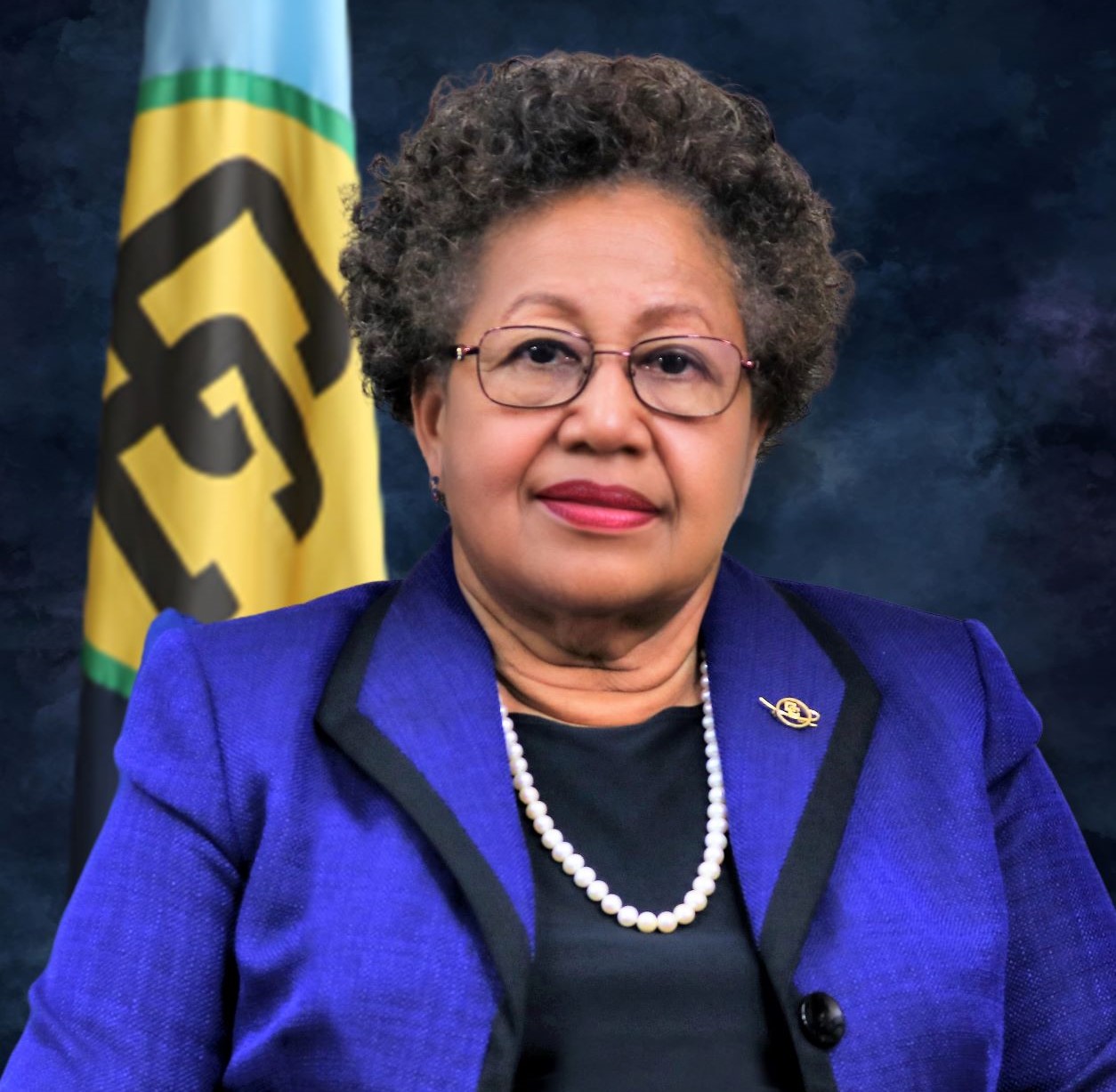
Mensaje de fin de año de la Secretaria General de la Comunidad del Caribe (CARICOM), Dra. Carla N. Barnett
We have come to the end of another year during which strenuous efforts have been made to ensure that the integration process improves the lives of the people of the Caribbean C
La CSME, la seguridad alimentaria y la financiación climática encabezan la agenda de la Cumbre de CARICOM en las Bahamas.
The CARICOM Single Market and Economy (CSME); food security; climate change and climate finance; health; and security will be among the major topics when Heads of Government of
La Secretaría de CARICOM y la Agencia Caribeña para Soluciones de Justicia (CAJS) forjan una alianza para acelerar la transformación digital.
La Secretaría de CARICOM (CCS) y la Agencia Caribeña para Soluciones de Justicia (CAJS) han establecido una importante alianza con el objetivo de impulsar la transformación digital y mejorar la preRelated Stories
CARICOM Covid-19 Response Agri-Food Plan
The Caribbean Community is committed to reducing its food import bill by at least 25% over the next five years. So says Mr.
NEWS FEATURE: Caribbean Community successfully keeps low COVID-19 infection rates
The Caribbean Community (CARICOM) has managed the challenges posed by the COVID-19 pandemic to great effect, ensuring that its cases have been kept low relative to larger and m