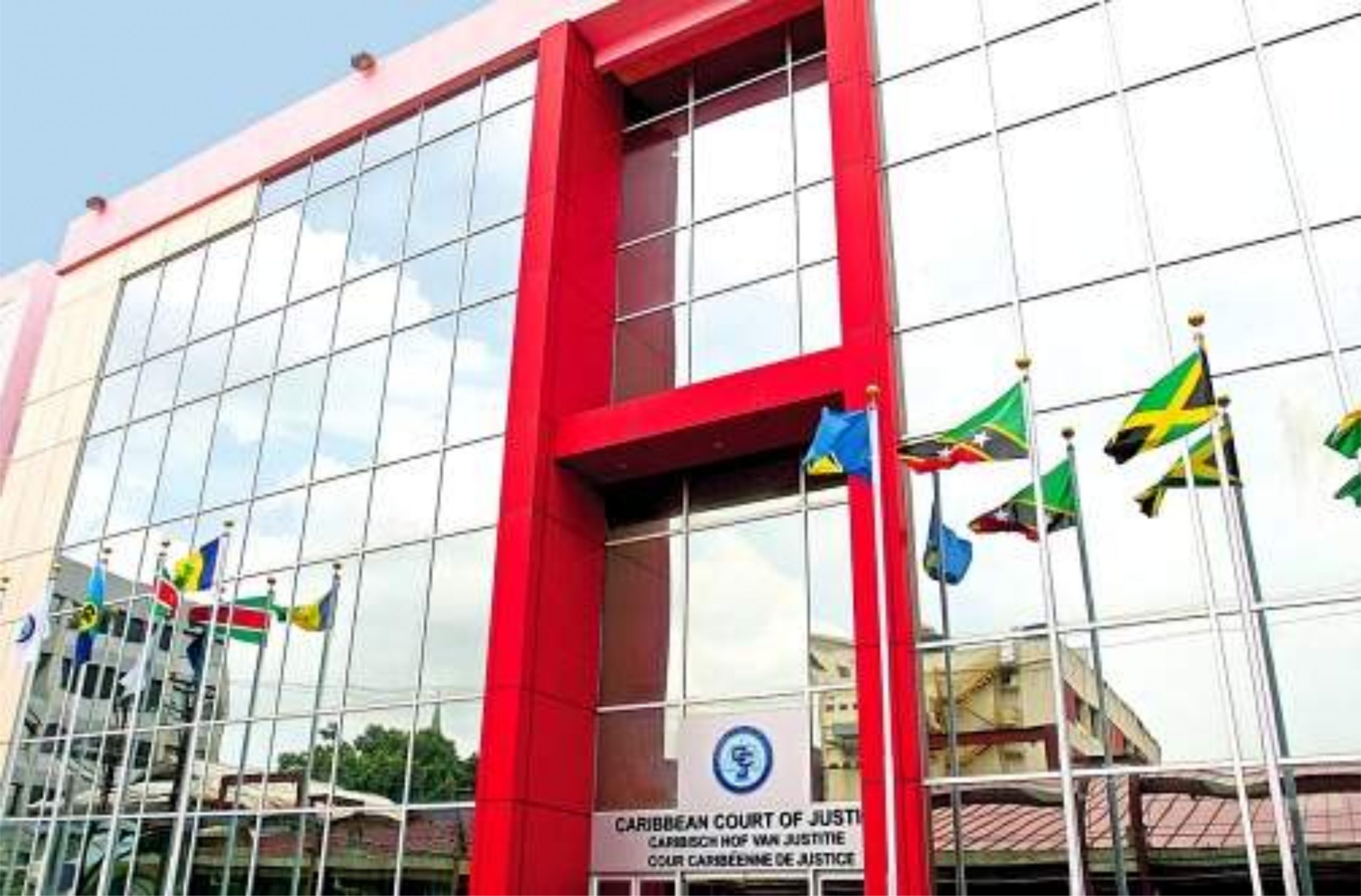
Overview
The Caribbean Court of Justice (CCJ) exercises both an Original and Appellate jurisdiction within the Caribbean Community (CARICOM). It is the only competent legal authority in CARICOM to interpret and apply the Revised Treaty of Chaguaramas (RTC), establishing the CARICOM Single Market and Economy (CSME). In this realm, the CCJ reinforces the rights and obligations of Member States and CARICOM citizens participating in the CSME.
In its Appellate function, the CCJ serves as the final Court of appeal in civil and criminal cases for five CARICOM Member States: Barbados, Belize, Guyana, Dominica, and Saint Lucia. In its Original Jurisdiction, all 12 Member States (including their citizens, businesses, and governments) can access the Court’s Original Jurisdiction to protect their rights under the RTC. Another critical function of the CCJ is to provide advisory opinions, on request, regarding the provisions, rights, and obligations of governments and citizens under the CSME.
Background
The CCJ was inaugurated on 16 April 2005, and delivered its first judgment on 26 October 2005 – Barbados Rediffusion Service Ltd v Mirchandani (No 1). In his contribution to the CCJ’s publication, “The First Ten Years”, Sir Shirdath Ramphal described the 2001 agreement among 11 Caribbean countries to abolish appeals to Britain’s Judicial Committee of the Privy Council and establish their own regional jurisprudence as “an act of enlightenment.”
While only five Member States have so far made the CCJ their final Court, the inauguration of the Court in 2005 is no less symbolic of the Caribbean’s assertion of its full post-colonial independence. For more than 100 years there has been discussion in the region about the Caribbean having its own final appeal, Court. The late Justice (ret.) Duke Pollard traced this “protracted, intensive and regional debate” to a Jamaica Gleaner editorial in 1901 which contemplated whether the Privy Council might be “out of joint with the times”. The editorial, according to Justice Pollard, suggested that serious consideration should be given to replacing British jurisprudence with a regional court.
The idea of transition was left in abeyance for well over four decades. Justice Pollard recorded in his book “The Caribbean Court of Justice, Closing the Circle on Independence” that in 1947 colonial governors of the Commonwealth Caribbean revisited the idea. Again, there was not enough appetite for the serious work required to advance the idea of a regional court. That disinterest would last another two decades, during which time a counterproposal surfaced.
Sir Shridath Ramphal recalled in “The Caribbean Court of Justice: The First Ten Years” that the 1965 Commonwealth and Empire Law Conference addressed the issue of the establishment of a Commonwealth Court of Appeal. Sir Shridath noted that most of the larger countries in the Commonwealth were “not in the mood” after labouring for many years to establish their own Supreme Courts of which they were “rightly proud and confident”. The idea was mainly embraced by smaller countries in the Commonwealth, but there was not enough traction.
The year 1970 marked a genuine attempt and action to establish a Caribbean Court of Appeal. Justice Pollard recalled that Jamaica tabled the proposal at the 6th Meeting of Caribbean Heads of Government. It attracted the attention of the Organisation of Commonwealth Caribbean Bar Associations, which established a committee to analyse and report on the creation of a regional final court for the Caribbean.
That analysis, according to Justice Pollard, needed to resolve five main concerns. These included public accessibility to the Court; political and judicial autonomy; the maturity of indigenous legal systems; judicial independence and integrity of candidates for the Bench; and the financial sustainability of the Court. Today, the President of the CCJ, the Honourable Mr Justice Adrian Saunders, continues to affirm the virtues upheld by the Court, noting that with its judges residing in and familiar with the region, the CCJ “is well placed to set standards and to inspire courts and judges region-wide to pursue excellence.”
The Organisation Today
Concerned about increasing access to justice for its Caribbean citizens, the CCJ has endeavoured to enhance accessibility to the Court through various avenues, including through the CURIA-integrated electronic filing and case management platform for courts in the Caribbean. With the support of the Judicial Reform and Institutional Strengthening Project, funded by the government of Canada, the Caribbean Judicial Information System was established, serving as a repository for Caribbean judgments and other knowledge products with access to the entire region.
President Saunders noted that the CCJ maintains its vision of excellence, following the guidelines established by the International Framework for Court Excellence (IFCE). The CCJ was accepted as an implementing member of the IFCE in 2022, a validation that demonstrates its commitment to the ICFE’s framework for court excellence. He said the Court is constantly assessing standards in three key areas: court user management, affordability and accessibility, and enhancing public trust and confidence. Further initiatives established by CCJ to bolster confidence in the institution include the establishment of the Caribbean Association of Judicial Officers (CAJO) and also the CCJ Academy for Law. CAJO creates a forum for Caribbean judges, magistrates, registrars, and court administrators to share and exchange information and best practices. As the educational arm of the Court, the CCJ Academy for Law’s mandate is to provide informative and innovative perspectives on the rules and the roles of law.
Related News

Caribbean rum producers to present 50th Anniversary Rum Blends to CARICOM governments
Caribbean rum producers will present specially developed 50th Anniversary Rum Blends to Caribbean Community (CA

Mega concert in honour of CARICOM
(National Cultural Foundation Barbados) Barbados has earmarked Monday, July 31, as the day dedicated to celebrating Caribbean unity with the CARICOM 50th Anni
CARICOM Competition Commission Celebrating 15 Years of Regional Service
The CARICOM Competition Commission (“CCC”) is established under Article 171 of the Revised Treaty of Chaguaramas.