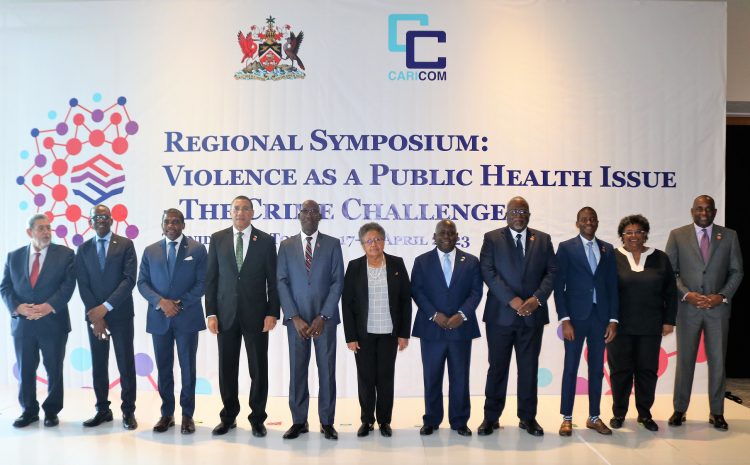
Chair’s Remarks – Hon. Philip Davis, KC, MP, Prime Minister of the Commonwealth of The Bahamas and Chair, CARICOM
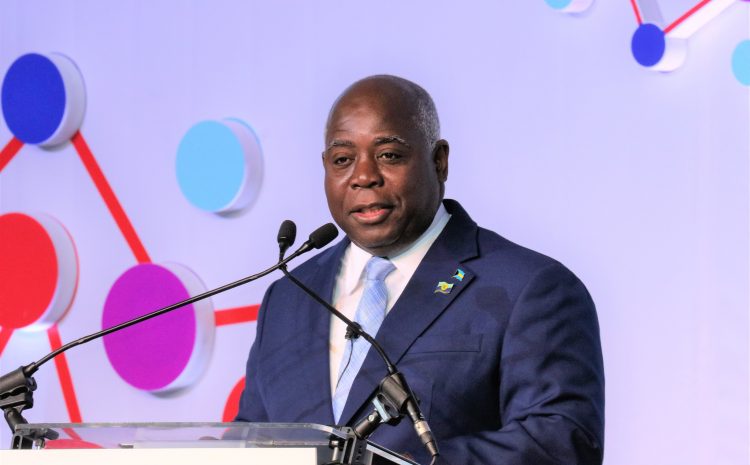
Hon. Philip Davis, KC, MP, Prime Minister of The Bahamas and Chair, CARICOM, addressed the Regional Symposium: Violence as a Public Health Issue – the Crime Challenge and advocated for a holistic approach to violence reduction.
Key Points from His Remarks
The Prime Minister stated that the beauty and joy of the Caribbean coexist with unprecedented violence.
He highlighted that CARICOM had embraced the view of violence as a public health crisis requiring comprehensive interventions to battle an epidemic that has claimed far too many lives.
The CARICOM Chair explained that discussions throughout the symposium would deepen understanding and provide Heads with a foundation from which holistic strategies can be developed.
He noted that there are social, economic, and environmental factors at the heart of this crisis:
“During these two days of deliberation, we must find the resolve to untangle these layered issues”, stated Prime Minister Davis.
The Prime Minister shared estimates which suggest that an average of 13 young adults between the ages of 16 to 30 lose their lives to violent crime in the Region.
He emphasised that crime is not merely a policing or legislative problem. The solution requires the involvement of parents, social workers, educators, rehabilitation specialists, social scientists, community workers and activists, mental health professionals, religious leaders, and other stakeholders.
The Chair underscored that CARICOM is committed to fighting violent crime in all forms and advocated for zero tolerance for violence against women and children.
Prime Minister David noted that:
“Every gun used to commit a crime in the Caribbean is smuggled into our countries.”
He added:
“We have asked the US government and US-based gun manufacturers to cooperate with CARICOM member states when it comes to identifying weapons purchased in the US, as part of a wider effort to hold weapons dealers and traffickers accountable”, stated the CARICOM Chair.
Prime Minister Davis emphasized:
“We are sending a clear message to the world that we are very serious about fighting gun violence in all forms and on all fronts, not just on the home front.”
He urged the Region to face the crisis head-on and leverage the unique resources and expertise of each member state, noting:
“We can make a lasting, positive impact on the lives of our citizens and ensure a brighter future for our Caribbean Region”, stated the CARICOM Chair.
Complete Speech
Good Morning All,
I wish to thank you, Prime Minister Rowley, for graciously hosting us all today for such an important discussion. Thank you, as well, to all Heads of Government and representatives who have joined us.
We have gathered here due to a shared concern about the escalating rates of violence being experienced by Member States. This symposium provides us with an opportunity to hold an in-depth discussion about what we can do as a region to develop a holistic approach to violence reduction.
There are so many things we love about this Caribbean. Our friendly people and rich cultures are a source of great pride. Millions of travellers from around the world visit us each year just to experience a slice of paradise. We are rightly proud of who we are and the very special places we call home.
No matter where we are in the world, we carry our national and regional pride with us. Our identities have been uniquely shaped by a composite of cultural experiences that make us whole.
Because we love our countries so much, it can be difficult to accept that all of this beauty and joy can coexist with such unprecedented violence.
An epidemic of violence grips our region—one that claims lives and generates fear and anger. In 2022, Jamaica had a staggering homicide rate of 52.9 per 100,000 inhabitants; Trinidad and Tobago had a rate of 39.4 per 100,000; and The Bahamas, St. Lucia, and St. Vincent and the Grenadines all recorded homicide rates above 30 per 100,000. This is over five times the global average.
Millions of people throughout the region live in crime hotspots, never knowing if they will be a victim on any given day. In The Bahamas, I have sought to bring comfort to mothers and their families who have lost their sons and daughters—and I know many of you have done the same for your people.
Violence spreads like a virus, gaining momentum as one violent crime begets another.
In fact, there is a substantial history of analysing patterns of violent crime using many of the same references used in epidemiology. Violence is contagious, and those who map the commission of violent crimes find that their data mirrors the spread of infectious diseases within a community. Violence can strike in waves and can grow exponentially. Those who come in close contact with violence are most likely to spread it and most likely to fall victim to it.
CARICOM has embraced the view of violence as a public health crisis requiring comprehensive interventions to battle an epidemic that has claimed far too many lives.
As we would with any public health crisis, we must define and monitor the problems, identify the risks and protective factors, and develop mitigation and prevention strategies to halt the epidemic.
The discussions we will have throughout this symposium will deepen our understanding and provide us with a foundation from which holistic strategies can be developed. There are already many innovative public and non-profit programmes with established track records of success throughout the region. We must continue learning from one another and collaboratively develop data-based violence reduction models.
I know I don’t have to persuade any of you about the urgency of this work. On a typical day, some estimates suggest that an average of 13 young adults between the ages of 16 to 30 lose their lives to violent crime in our region. Each day that passes is another day in which lives are ended, families are broken by grief and loss, and our communities threatened. We need to mobilise resources with the same determination we would bring to fighting any other life-threatening epidemic.
We know that the battle is a complex one. There is a tangle of social, economic, and environmental factors at the heart of this crisis. During these two days of deliberation, we must find the resolve to untangle these layered issues.
It is not merely a policing or legislative problem. Nor is it solely the domain of the courts. While better laws and expanded police capacity are important elements of a successful strategy, we need all hands on deck: parents, social workers, educators, rehabilitation specialists, social scientists, community workers and activists, mental health professionals, religious leaders, and many others must come together to address this pervasive issue.
Later today, we will hear from Dr. David Allen, a renowned Bahamian psychiatrist who was instrumental in expanding the international understanding of the cocaine and crack cocaine epidemic of the 1980s, which many see as a precursor to the violence we are experiencing today.
In his most recent research, he has linked the physical and sexual abuse of children to physical, mental, and sociological illnesses later in life. Many of these children grow up to be the perpetrators and victims of further violence. Dr. David Allen concludes in his research that an abused child becomes a dangerous adult.
Addressing violent crime requires us to confront these ugly truths about the harm damaged and broken people can carry forward from generation to generation.
But we can’t look away. We need to interrupt these cycles of violence. And I believe each of us has valuable perspectives, strengths, and insights to contribute to a more effective set of crime-fighting strategies.
Interagency cooperation and regional cooperation are absolutely necessary to address the problem of violence, which exists at the intersection of so many other issues in our countries.
CARICOM is committed to fighting violent crime in all forms. There must be zero tolerance for violence against women and children. And there must be more outreach to—and support for—our at-risk young men.
Our most at-risk and vulnerable populations require interventions to meet them where they are—in their homes, communities, churches, and schools—to make a real, meaningful impact.
Violence may be occurring in our communities, but the guns used in approximately 70% of violent crimes do not originate in our countries. We do not manufacture guns in the Caribbean.
Every gun used to commit a crime in the Caribbean is smuggled into our countries.
We are sending a clear message to the world that we are very serious about fighting gun violence in all forms and on all fronts, not just the home front.
By facing this crisis head-on and leveraging the unique resources and expertise of each Member State, we can make a lasting, positive impact on the lives of our citizens and ensure a brighter future for our Caribbean region.
You may also be interested in:

CSME, food security, climate finance top agenda of CARICOM Summit in The Bahamas
The CARICOM Single Market and Economy (CSME); food security; climate change and climate finance; health; and security will be among the major topics when Heads of Government of
CARICOM Secretariat and Caribbean Agency for Justice Solutions (CAJS) Forge Partnership to Accelerate Digital Transformation
The CARICOM Secretariat (CCS) and the Caribbean Agency for Justice Solutions (CAJS) have come together in a significant partnership aimed at advancing digital transformation an
Related Stories
Caribbean leaders agree to ban assault weapons for civilian use
Caribbean heads have decided to ban the use of assault weapons in the civilian populations of their respective nations.
Prime Minister Dr Drew Confident that outcomes of the Regional Symposium on Crime and Violence in the Caribbean will Bear Fruit
The Prime Minister of St. Kitts and Nevis, the Honourable Dr.