THINGS TO KNOW AND DO WHEN DEALING WITH A PERSON WITH DISABILITY WHO HAS CONTRACTED THE CORONAVIRUS
Persons with
disabilities are regarded as one of the most vulnerable groups in any society.
Their vulnerability is due to stigma and discrimination and ensuing social
barriers which have restricted their inclusion and participation in governance,
cultural and social issues and denied or limit access to services and programmes
on an equal basis with other members of society in which they live. This
vulnerability makes them susceptible to varied challenges of life. One such
challenge that impacts them is that of the disease COVID-19.
COVID-19 has
been declared as a global pandemic by the World Health Organization (WHO).
Since its first manifestation in December 2019, it has affected over 1 million
individuals in over 200 countries across the world and has killed over 70,000
people. The WHO has cited persons with disabilities among the vulnerable groups
as being particularly susceptible to the disease as most of them have
underlying conditions that can be exacerbated by the coronavirus.
Furthermore,
the pandemic has increased the burden on health care systems in countries to
the extent that persons with disabilities who normally experience significant
challenges in accessing health services are less likely to receive attention
during the pandemic. The consequence of such disregard is death.
One
must recognize that persons with disabilities are human beings and as such,
have the right to quality health care as anyone else. Article 25 of the United
Nations Convention on the Rights of Persons with Disabilities (CRPD) reaffirms
this right to health care for persons with disabilities. There are different
types of disabilities and one must seek to understand how to treat and relate
with them.
This document
categorizes and highlights the major types of disabilities and provides key
considerations for addressing each. It also provides some things for health professionals
to comprehend about persons with disabilities and what to do if they should contract
coronavirus. The list is not exhaustive but should be construed as a guide to dealing
with these vulnerable citizens in a time of preeminent health crisis. The
things to know are:
- There are eight major categories of disabilities and
these are: blindness/visual impairment, deafness/hard-of-hearing, speech
disorders, physical disabilities, mental disabilities, intellectual
disabilities, learning disabilities and neurological disorders. - A blind person
or an individual with a visual impairment is someone with major problems with
his or her eyes and these problems can come about due to varied disease. One
significant disease to contribute to blindness is that of diabetes that can
lead to glaucoma, diabetic retinopathy or diabetic macular edema. The diabetic
condition makes the blind person extremely vulnerable and these individuals
must be very careful at this time since the diabetes has already compromised
their immune system. - If the blind person contracts the COVID-19, then
support mechanisms must be put in place for this individual. This individual
will be isolated and will therefore be alone for most of the time. Arrangements
must therefore be made to ensure that attention is given to this individual and
that the necessities are available for him or her. Please take note that blind
persons are auditory individuals and as such, they listen attentively and hear
voices keenly and so they must be spoken with on a consistent basis and in a
descriptive manner. - Deaf or hard of
hearing refers to the total or partial loss of hearing. A deaf person has no
hearing and a hard-of-hearing person has some degree of hearing. These hearing
loss can be caused by myriads of factors including accidents and excessive
noise. Deaf or hard-of-hearing persons are visual beings, in that they depend on
their sight for daily functioning. It is therefore imperative that when dealing
with a person who is deaf or hard-of-hearing who has contracted the coronavirus,
that Sign Language or some form of captioning is made available. This means
that a Sign Language Interpreter or a caregiver will have to be involved with
the medical team caring for the person who is deaf or hard-of-hearing. - A person with a
physical disability is one who has lost a limb or has a physical impairment
which affects a particular body part. A physical disability can occur because
of multiple factors. In the context of this paper, the most concerning are
those individuals who have developed a physical disability through diabetes or
hypertension. Diabetes can contribute to the loss of a limb and also a stroke
that restricts physical movement. Similarly, an individual with uncontrolled
hypertension can develop a stroke. With both diseases, persons with physical
disabilities are extremely vulnerable to the coronavirus. If any individual with
a physical disability should contract the COVID-19, then particular care will
have to be given to them whilst they are in isolation. Someone has to be around
to give support and in this context, special equipment and protective gear will
have to be provided for these individuals. Special consideration must be given
to the location where these individuals will be isolated as the issue of
accessibility is paramount to their functioning. - Persons with
speech disorders are individuals who have problems in speaking and expressing
themselves vocally. This occurs because of a range of factors. Whilst there are
no recognized underlying conditions relating to speech disorders that can be
exacerbated by the coronavirus, there can be problems communicating with these
individuals if they should contract the COVID-19. In this context, special
efforts should be made to communicate with these individuals by writing so that
they can understand what is taking place and to provide a possible response. - Learning
disabilities constitute the inability of an individual to function effectively
in a learning environment. This inability to function can manifest itself
verbally, linguistically, mathematically, graphically and a number of other
ways that will cause the person to underperform in a particular academic area.
These disabilities are regarded as the “hidden” disabilities because they
cannot be seen or observed by the naked eyes. In the context of COVID-19, one
would have to identify the particular learning difficulty and formulate the
strategy to relate to the individual. For example, if a person has a difficulty
in reading and writing, it is obvious that the person has a learning
disability. In this regard, oral communication is the means by which the medical
professionals should relate with this person. There is no need for
extra-special support for such an individual, unless he or she has another type
of disability. - Mental illness
is one of the major categories of persons with disabilities. It ranges from
mild depression among young people to the more complex dementia in older
persons. Special attention has to be given to these cases because the person
with the mental illness will require 24 hour assistance and a caregiver has to
be available to give support. In this context, special supportive equipment and
gears will have to be provided for the caregiver to attend to the person with
mental illness who has contracted COVID-19. Simultaneously, efforts must be
placed on treating the mental illness of the person with the disability in
order to bring about a stable environment to treat COVID-19. - Neurological
disorders are critical forms of disabilities. A neurological disorder is a
condition that affects the health, function and even structure of an individual’s
nervous system. The nervous system is a collection of tissues and cells that
serve to transmit electro-chemical signals about the body in order to stop or
promote a voluntary and involuntary action. When there is an interruption in
the electro-chemical signals, it contributes to a neurological disorder. These
neurological disorders can contribute to disabling conditions such as cerebral
palsy and epilepsy. In the case of the coronavirus, it can pose chronic problems
for these individuals. For example, an individual who is epileptic can develop
significant complications through a seizure and therefore will need specific
attention if he or she should contract the coronavirus. Again, any individual
with a neurological disorder that results in a disabling condition will need to
have 24 hour attention and therefore a caregiver will have to be involved with
the medical team administering to the individual. - Intellectual disability is another preeminent
category of disability. It is a disability that is characterized by
considerable limitations both in intellectual functioning (reasoning, learning
and problem solving) and in adaptive behavior, which covers a range of everyday
social and practical skills. This disability generally occurs before the age of
18. It ranges from mild intellectual functioning to profound. If an individual
with intellectual disability should contract the coronavirus, one must
determine where the individual falls on the spectrum. This is imperative to
determine the extent of support that the person will need. It must be noted
however that if the individual has severe or profound intellectual limitations,
then there will be the need for a caregiver to be around to consistently give
support. All the relevant equipment and gears will have to be provided for this
caregiver as well.
The above cited scenarios are by no means exhaustive. However, they are developed to give an indication to health professionals as to how to treat and relate to persons with disabilities if they should contract the coronavirus. Having an understanding of the types of disabilities and how to relate to these individuals are quintessential in providing the best health care for these vulnerable citizens if they should develop COVID-19. Persons with disabilities are human beings and therefore one must always remember that they too have a right to quality health care, irrespective of the circumstances.
By Senator
Floyd Morris, PhD
CARICOM
Special Rapporteur on Disability
You may also be interested in:
CARICOM leaders endorse new global pact on the future
(Caribbean Community (CARICOM) Secretariat, Turkeyen, Greater Georgetown, Guyana) - Leaders of the Caribbean Community (CARCOM) have endorsed the Unit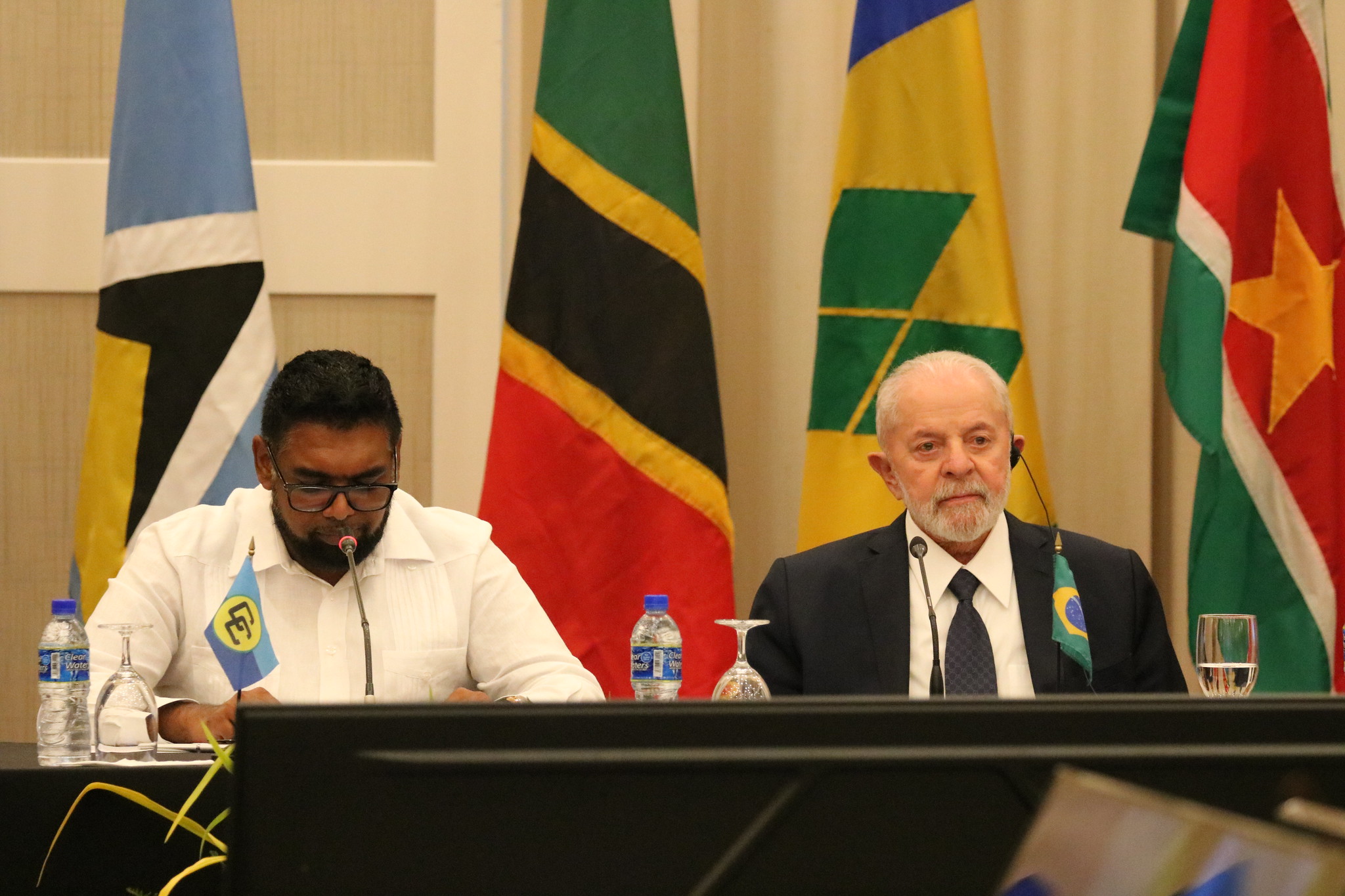
CARICOM and Brazil pledge to Deepen Cooperation
(CARICOM Secretariat, Turkeyen, Greater, Georgetown, Guyana) - CARICOM and Brazil have pledged to deepen cooperation as they see immense potential for enhancin
Understanding the CARICOM Agreement on Social Security
Social security is a crucial aspect of ensuring the well-being and financial stability of individuals and their families.Related Stories
Message for International Day of Persons with Disabilities
Senator Floyd Morris, PhD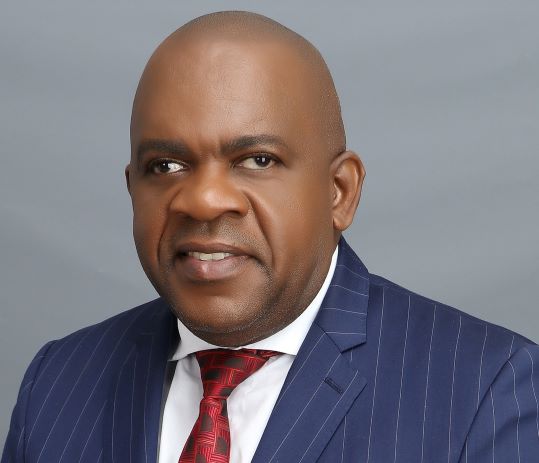
Message by Dr Floyd Morris, CARICOM Special Rapporteur on Disability to mark International Day of Persons with Disabilities
Once again, the world is recognizing the International Day for Persons with Disabilities as designated by the United Nations.