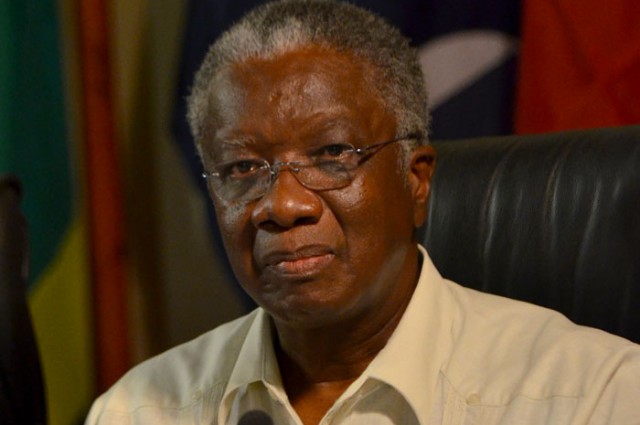
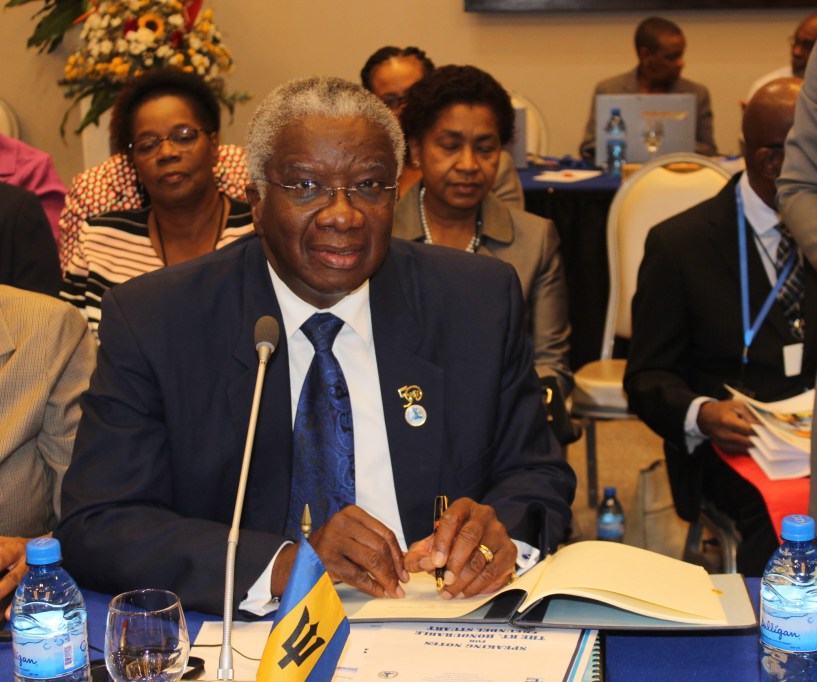
SPEECH BY PRIME MINISTER OF BARBADOS THE HON. FREUNDEL J. STUART, Q.C., M.P. AT THE COMMEMORATION EVENT AT THE CHAGUARAMAS CONVENTION CENTRE, CHAGUARAMAS 4 JULY 2013
Mr. Chairman,
Your Excellency, President of Trinidad and Tobago,
Honourable Prime Minister of Trinidad and Tobago,
Fellow Heads of Government,
Excellencies,
Distinguished guests,
Ladies and gentlemen.
Today is the 4th day of July, in the year of our Lord 2013. Forty years ago at this place, the Treaty of Chaguaramas was signed. Today, we try to re-enact what happened forty years ago.
Now history does not repeat itself. Historians repeat themselves, but history does not repeat itself. But it helps us to understand what happened on the fourth of July 1973. If I remind you that after the collapse of the Federation in 1962 attempts were made to redeem the reputation of this region by attempts at a small federation in the Eastern Caribbean- the so called, Little Eight effort. Most of those negotiations took place in Barbados and when it became clear to the then premier of Barbados, Mr. Errol Walton Barrow that those negotiations were going nowhere, he wrote them off and ended the attempt at a Little Eight Federation.
On the 27 June 1965, Barrow wrote the then premier of Guyana, Linden Forbes Sampson Burnham a letter inviting him to come to Barbados to discuss the possibility of establishing a Caribbean Free Trade Association.
The 27th of June 1965 was a Sunday, and Burnham travelled to Barbados the following Sunday which would be Sunday, July 4, to have those discussions with the premier of Barbados.
Now you know why the date, the fourth of July is sanctified in our regional history. Because it was on that day in Barbados in that meeting between Barrow and Burnham that the decision was taken to establish a Caribbean Free trade Association. Of course, the fourth of July was also the birthday of that distinguished Jamaican patriarch, the late Norman Washington Manley who did so much in his time to promote the integration of this region.
After Barrow and Burnham agreed they were to discover that the then Head of Government of Antigua, Vere Cornwall Bird was similarly disposed and, therefore, in 1965 at Dickenson Bay in Antigua, the CARIFTA agreement was formally signed. Two years elapsed and then at a conference held in Barbados in 1967, all the other English-speaking CARICOM Member States, committed themselves to this Caribbean Free Trade Association and, therefore, CARIFTA became an authentic and living reality.
By 1972, Chaguaramas, which has so much been a history of Trinidad and Tobago reclaimed, as I seem to recall, if my history is not deceiving me, by the then leader of Trinidad and Tobago, the late Dr. Eric Williams, in an event which has gone down in history as the march in the rain, but at Chaguaramas in1972, Barrow, Burnham, the late Dr. Eric Williams and Michael Manley met and took the historic decision to affirm this region’s maturity, committing themselves to diplomatic relations with Cuba. That was a historic step in itself and wrote Chaguaramas further into the history of this region.
One year later, it was here at Chaguaramas, that the same four Caribbean leaders, Dr Eric Eustace Williams, Michael Norman Manley, Linden Forbes Sampson Burnham and Errol Walton Barrow met and signed the Treaty of Chaguaramas.
They had one simple mission- and it was to bring this region and its peoples more closely knit together, and as I said last evening, I need no persuasion at all that forty years later the people of this region are more closely united than at any other time in the history of the Caribbean.
We have been colonials for much longer than we have been independent states. And rolling back the tide of history, and the consciousness which that history imposes will take a little time, but I don’t think that as a region we have anything to be ashamed about. We have shown the world that we have come together, we work together and try to realise the dreams and aspirations of the people of this region.
So, today, as we meet to re-enact the events of forty years ago, we stand, do we not, positioned between hope and history. History we cannot reverse, we cannot unmake, but to hope we can give flesh and authentic living expression.
We need to consolidate the independence for which we fought in this region. And we can only consolidate that independence by working more closely together. It is not going to happen by accident. It is going to happen by our consciously deciding to make our history within the constraints, of course, that our concrete circumstances allow.
We’re not going to consolidate that independence if we keep our gaze fixed beyond the perimeters of this region and if we continue to invest in Madison Avenue tastes and lifestyles. We must look inward; draw on the strengths and on the resources of this region; affirm our faith in what this region produces; what it creates; what it believes; and daily, minutely remind ourselves that we have a unique contribution to make to the treasury of human civilization.
There are those who have gone before who have pointed us in that direction already, but we need to remind ourselves and those whom we meet that this region is special and has its own contribution to make to the unfolding drama of mankind.
So, I’m very pleased to be here today to be part of this effort. Very pleased to see so many people turn out today. I conclude by saying this now- theologians still dispute who wrote the book of Hebrews, and that is not a dispute to which I intend to add my voice today. I seem to recall that it was in that book of Hebrews that it was written, and I close with this, of course, by way of paraphrase.
“Seeing that we are compassed about by so great a cloud of witnesses, let us lay aside every weight and the distractions that so easily beset us and let us as Caribbean people run with patience the race that is set before us. Looking always to Him whose glory the heavens continue to declare as the author and finisher of our regional faith!”
Thank you very much!
You may also be interested in:
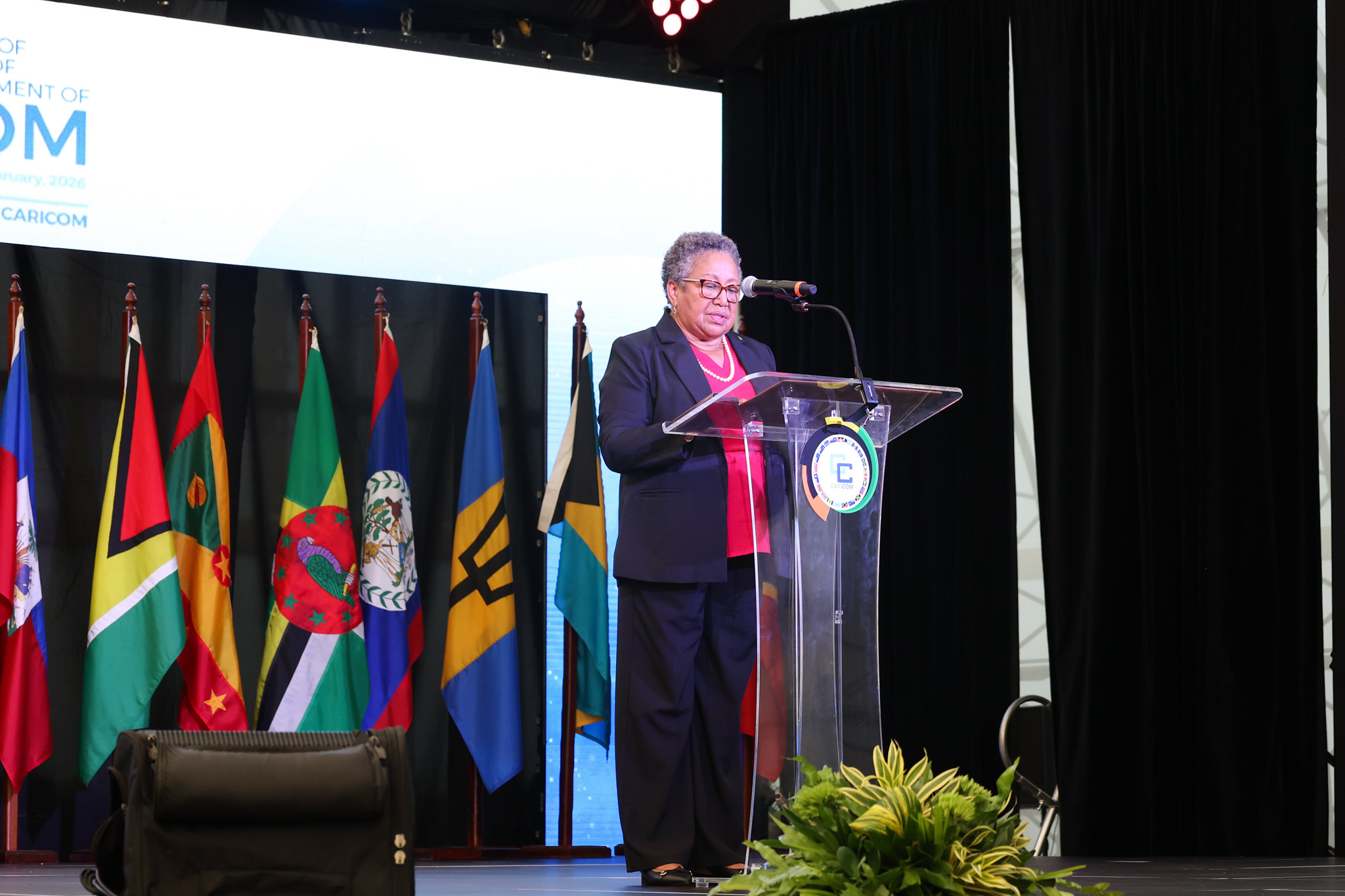
REMARKS: Dr Carla Barnett, CARICOM Secretary-General Opening Ceremony - 50th Regular Meeting of the Conference of CARICOM Heads of Government
Good evening ladies and gentlemen, I will adopt the protocols already established for this afternoon’s proceedings, but would still like to acknowledge: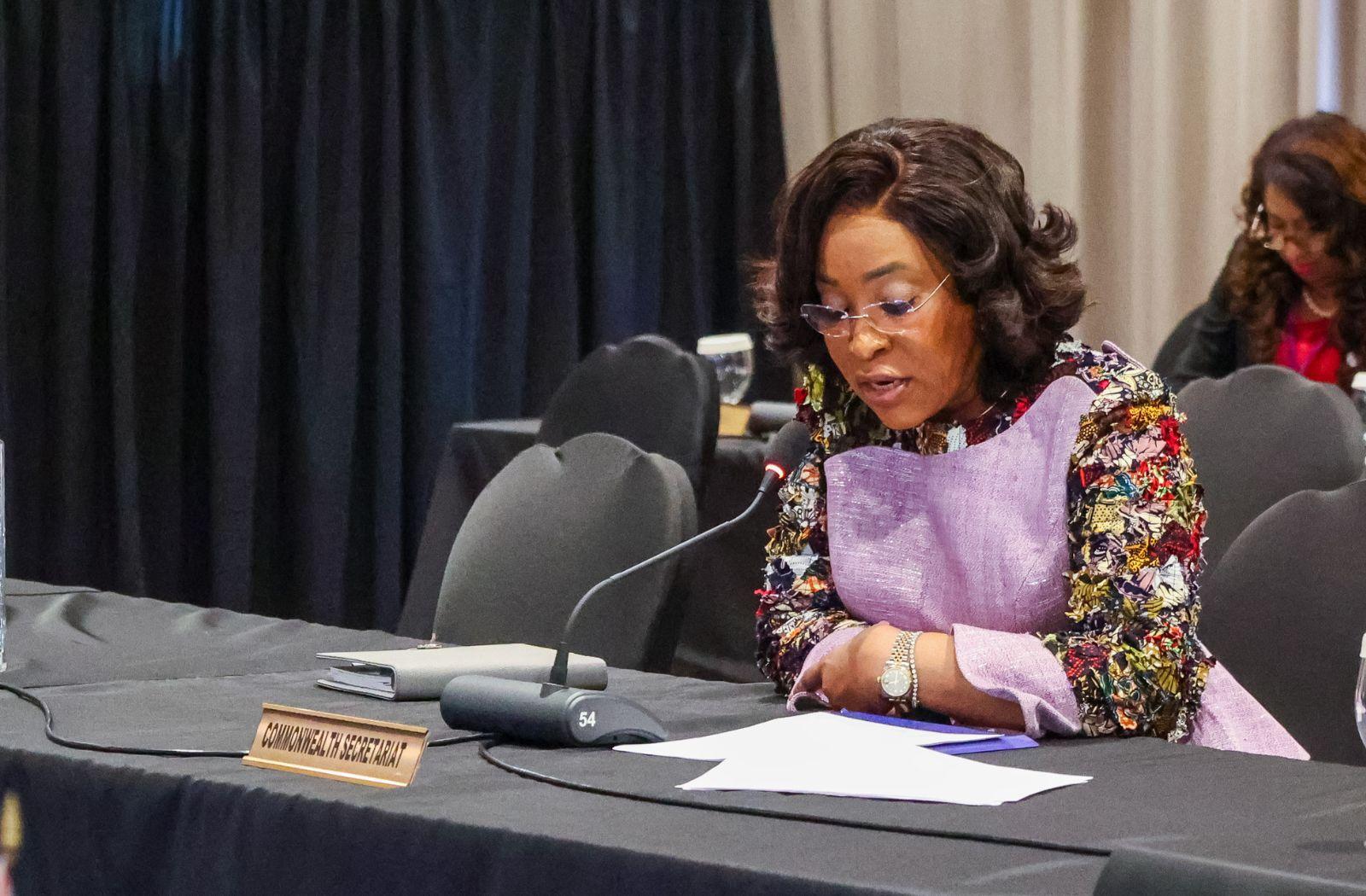
Statement by Commonwealth Secretary-General at the 50th Regular Meeting of the Conference of CARICOM Heads of Government Meeting
It is a profound honour to join you here in beautiful Basseterre — hosted so generously by Prime Minister Drew and the people of Saint Kitts and Nevis — at this 50th Meeting of the Conference of He
Related Stories
Full, frank discussion needed on CSME – PM Stuart
Prime Minister Freundel Stuart believes the time has come to have “full and frank discussions” on the CARICOM Single Market and Economy (CSME).