REGION TO GET BOOST IN TACKLING CLIMATE CHANGE
(CARICOM Secretariat, Turkeyen, Greater Georgetown, Guyana) Efforts are underway through the Washington-based National Oceanic and Atmospheric Administration (NOAA) and the Caribbean Community Climate Change Centre (CCCCC) to extend the installation of Coral Reef Early Warning Systems (CREWs) stations throughout the Caribbean. This would help to build capacity in detecting and responding to early warning signs in climate change.
In explaining the importance of these systems, NOAA”s representative Dr Jim Hendee told the second CARICOM Climate Change Conference in Castries, Saint Lucia on Monday that “knowing what physical factors influence the environment, while at the same time monitoring the biological changes, helps us to understand which of those physical factors are responsible for the changes.”
“You can’t mitigate against change if you don’t know what caused the change,” he said.
A Coral Reef Early Warning System is computer software used to help detect warning signs in climate change. It forms part of the Integrated Coral Observing Network (ICON), a Web presence which is used to gather data hourly from many networks and satellite monitoring “virtual stations” at coral reef sites around the world.
CREWS Stations have been installed in Jamaica, the Commonwealth of the Bahamas, St Croix and Puerto Rico and NOAA is committed to the installation of another two in the Cayman Islands and the St Thomas Virgin Islands in the next two years.
“It is imperative to install several of these throughout the Caribbean because measuring one site won’t give you the information you need to understand Caribbean-wide changes, just like measuring one copse in a forest won’t lead you to understand forest ecology,” Dr Hendee explained.
According to Dr. Hendee, the CREW system has been successfully used in modeling and alerts of coral bleaching conditions in the Florida Keys and the Great Barrier Reef and it is NOAA's intention to expand this alerting capability to other coral reef areas, and to better refine and enhance its alerting capabilities beyond coral bleaching.
The two-day Conference under the theme: Mainstreaming Climate Change for the Sustainable Development of the Caribbean is organized by the CARICOM Climate Change Centre to evaluate the outcomes of its flagship programme - the Mainstreaming Adaptation to Climate Change (MACC) project which will expire on March 31 2009 and to share best practices with its wide cross-section of stakeholders and development partners. This project seeks to build national and regional capacity to address the increasing vulnerabilities of CARICOM States to climate change. Located in Belize, the centre was established in 2004 to coordinate the Caribbean region’s response to climate change.
You may also be interested in:
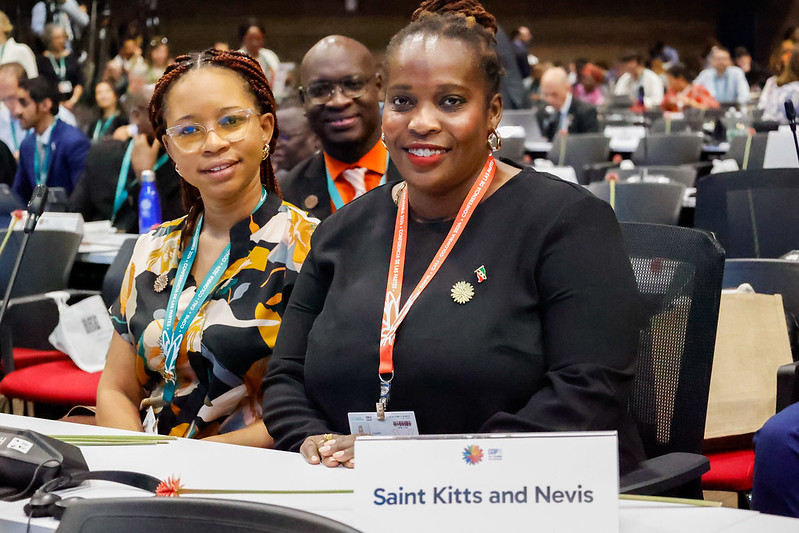
Statement by Hon. Dr. Joyelle Clarke, Minister of Sustainable Development, Environment, Climate Action and Constituency Empowerment of Saint Kitts and Nevis| High-Level Segment, 16th Meeting of the Conference of Parties of the UN Convention on Biological Diversity| Cali, Colombia| 30 October 2024
"The fight for biodiversity cannot be disentangled from the climate crisis. This is why our commitment to the Kunming-Montreal Biodiversity Framework is especially critical and why Saint Kitts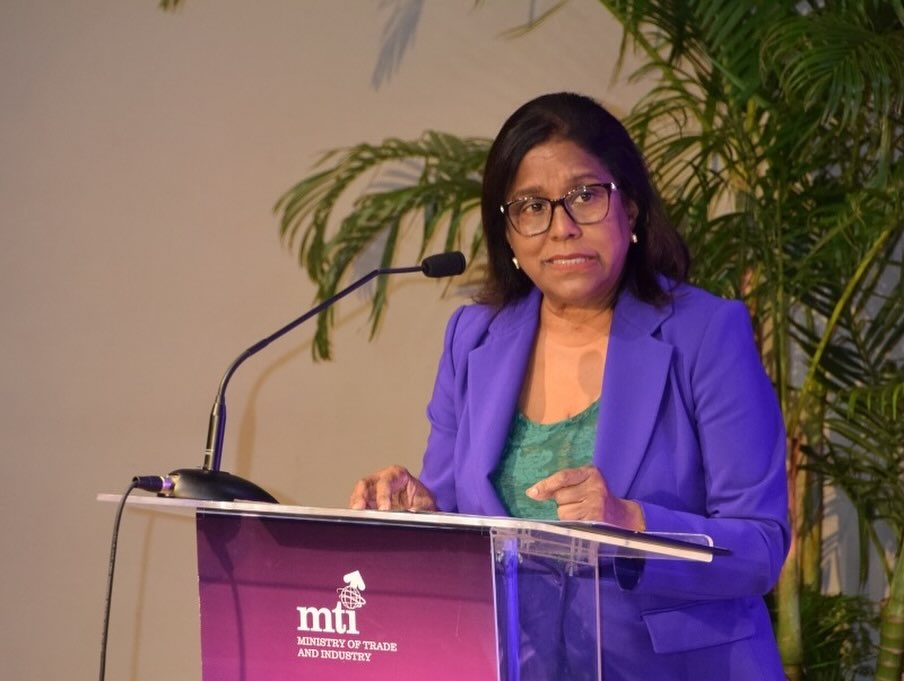
Remarks by Senator the Hon. Paula Gopee-Scoon, Minister of Trade and Industry of Trinidad and Tobago, and Chair of the Council for Trade and Economic Development (COTED), at a meeting with Ambassador Katherine Tai, U.S. Trade Representative, 2 August 2024.
Let me first express my extreme delight in joining Minister Todd and representatives of the CARICOM Secretariat in welcoming Ambassador Tai to Guyana and CARICOM.