New approaches to managing disaster focus on resilience
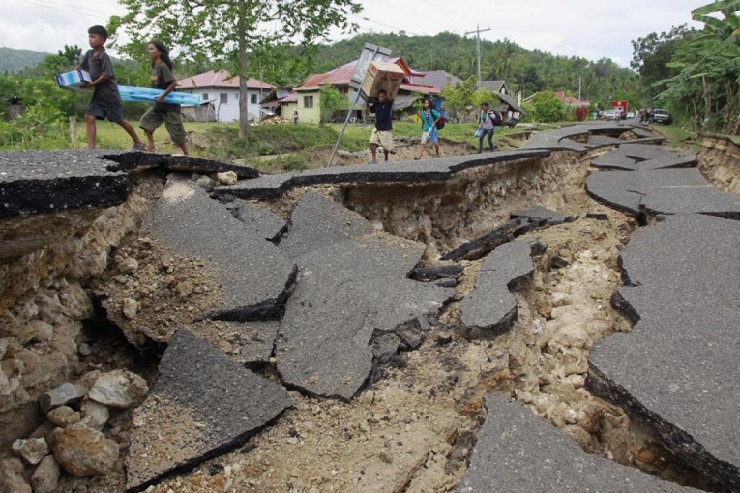
UNITED NATIONS, Friday June 19, 2015, IPS – Natural disasters have become a fact of life for millions around the world, and the future forecast is only getting worse.
From super typhoons to floods, droughts and landslides, these events tend to widen existing inequalities between and within nations, often leaving the poorest with quite literally nothing.
In 2013 alone, three times as many people lost their homes to natural disasters than to war, according to a new policy brief by the University of Cambridge Institute for Sustainability Leadership.
The brief, which recommends incorporating accessible risk insurance into the Sustainable Development Goals (SDGs), frames all this as a human rights issue.
“States and other actors have a duty to protect the human rights of life, livelihood and shelter of their citizens, which can be threatened by natural hazards if exposure is high and resilience low or inadequate,” the brief’s author, Dr. Ana Gonzalez Pelaez, a fellow at the institute, told IPS.
“Insurance is an essential element in building resilience, and for insurance to operate appropriate supportive regulation needs to be in place.”
She said that at least some of these resources could be allocated as part of the adaptation measures countries will negotiate at the climate talks in Paris in December.
Earlier this month, the G7 promised to insure up to 400 million vulnerable people against risks from climate change. This could be accomplished through a combination of public, private, mutual or cooperative insurance systems.
Tom Herbstein is the programme manager of ClimateWise, whose membership includes 32 leading insurance companies. He says many are actively exploring ways to extend coverage to emerging markets and vulnerable communities.
This includes using long-term weather forecasting to support small-scale agricultural coverage, to the African Risk Capacity, established to help African Union members respond to natural disasters.
“Yet entering such markets poses many challenges,” Herbstein told IPS. “These include distribution models unsuited to high-volume, low premium insurance products; a lack of historical actuarial data; populations struggling to comprehend a financial product one might never derive benefit from; and widespread political and regulatory uncertainties.”
Ultimately, he said, if coverage of poor communities is to be mainstreamed, “an alignment between insurers, political leaders, regulators and other stakeholders will be necessary to help lessen the risks – i.e. costs – associated with entering such new and challenging markets.”
Palaez says that microinsurance is also moving further into the mainstream strategy of major commercial insurers like Alliance and Swiss Re. In January 2015, a consortium of eight global insurance institutions announced the creation of Blue Marble Microinsurance, an entity formed to open markets and deliver risk protection in underserved developing countries.
There have already been success stories. In the aftermath of Typhoon Haiyan in October 2013, CARD MBA of the Philippines paid claims to almost 300,000 customers affected by the catastrophe within five days of the event.
You may also be interested in:
Stakeholders Engage in Consultations to Strengthen National Youth Policy
The Department of Youth Development and Sports, through its Youth Unit, has commenced a four-day series of half-day closed stakeholder consultations aimed at strengthening the development and...
Regional Workshop Strengthens Caribbean Capacity on Genetic Resources
Regional policymakers, scientists, and biodiversity experts gathered from March 3-5, 2026, at The University of the West Indies (UWI), St.
Statement by Hon. Dr. Joyelle Clarke, Minister of Sustainable Development, Environment, Climate Action and Constituency Empowerment of Saint Kitts and Nevis| High-Level Segment, 16th Meeting of the Conference of Parties of the UN Convention on Biological Diversity| Cali, Colombia| 30 October 2024
"The fight for biodiversity cannot be disentangled from the climate crisis. This is why our commitment to the Kunming-Montreal Biodiversity Framework is especially critical and why Saint KittsRelated Stories
Elizabeth Riley appointed Executive Director of CDEMA
(Caribbean Disaster Emergency Management Agency Press Release) The Chairman of the Council of the Caribbean Disaster Emergency Management Agency (CDEMA), the Honorable Vincent Byron Jr, Attorney...
The Netherlands flag key areas for cooperation expansion
The Caribbean Community (CARICOM) and the Netherlands on Wednesday renewed a mechanism for diplomatic cooperation with the accreditation of a new envoy to CARICOM, His Excellency Jules Bijl.