Millions of dollars, massive manpower needed to tackle Sargassum seaweed
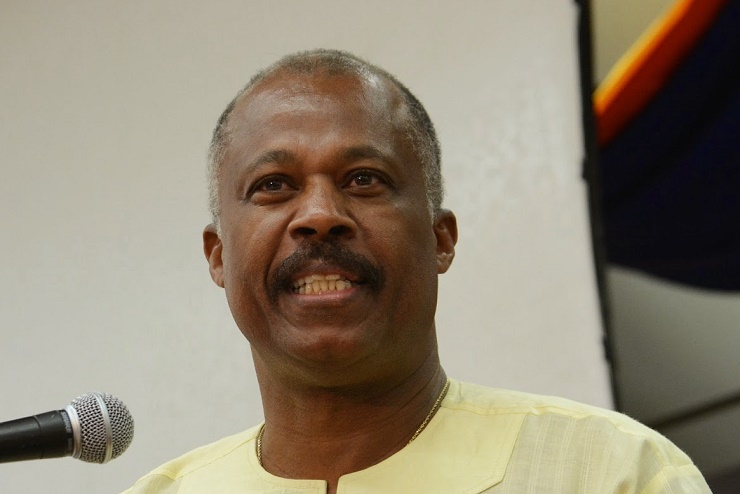
BRIDGETOWN, Barbados, Tuesday August 18, 2015 – It would take at least US$120 million and more than 100,000 people to clean up the Sargassum seaweed that has created “an international crisis” and “the greatest single threat” to the Caribbean, according to Vice Chancellor of the University of the West Indies (UWI) Sir Hilary Beckles.
And he says the international community should step in to provide needed assistance.
The seaweed has been inundating several beaches across the Caribbean, completely covering the shore in some instances, prompting regional tourism officials to partner with the UWI on hosting a symposium to find solutions to the problem.
“This is a threat not only to our tourism product, it is also a threat to our regional economy. . . We have a tourism brand and we have a product and that product is built around the beauty of our marine ecologies and our beaches . . . This phenomenon is a threat to this brand and therefore we must do all we can to protect this brand,” Sir Hilary said as he addressed the symposium at UWI’s Cave Hill Campus yesterday.
He went as far as describing the situation as an international crisis and called on the international community to see it as such and act accordingly.
“Herein is an endemic and systemic threat to the resilience and development of these nations and therefore we must have an international response to this,” Sir Hilary said.
Mexico is among tourism destinations affected by the seaweed and authorities there are spending more than US$9 million and hiring 4,600 people to clean up the beaches on the country’s Caribbean coast.
Sir Hilary said that using Mexico’s strategy, Caribbean countries would need more than 13 times that level of funding and 20 times the amount of manpower.
“What you are looking at is maybe US$120 million . . . and probably we would have to deploy over 100,000 people to carry out a similar strategy across the Caribbean space to make our beaches available to those who wish to use them for their multiple purposes,” he said.
During his presentation, the top UWI official also called for a Sargassum support fund and a Sargassum Emergency Agency to be established, saying that the troublesome seaweed would become the “new normal”.
“I believe we need some institution building. We need a Sargassum Emergency Agency since this is going to be the new normal. We need institutional development to accommodate the sustainability of the necessary research and policy formulation,” Sir Hilary said.
With reports and photographs of seaweed-covered Caribbean beaches making the rounds on Instagram, Twitter and Facebook, Secretary General of the Caribbean Tourism Organization Hugh Riley suggested that those same social media platforms should be used to send the message that not all beaches have been inundated by Sargassum.
“We must show our children enjoying our beaches and give visitors the assurance that the weed is not killing us and that life goes on. We must let people know that we in the Caribbean are not sitting on our hands but trying to find solutions to the threat presented by the Sargassum weed,” he said.
You may also be interested in:
Stakeholders Engage in Consultations to Strengthen National Youth Policy
The Department of Youth Development and Sports, through its Youth Unit, has commenced a four-day series of half-day closed stakeholder consultations aimed at strengthening the development and...
Regional Workshop Strengthens Caribbean Capacity on Genetic Resources
Regional policymakers, scientists, and biodiversity experts gathered from March 3-5, 2026, at The University of the West Indies (UWI), St.
Statement by Hon. Dr. Joyelle Clarke, Minister of Sustainable Development, Environment, Climate Action and Constituency Empowerment of Saint Kitts and Nevis| High-Level Segment, 16th Meeting of the Conference of Parties of the UN Convention on Biological Diversity| Cali, Colombia| 30 October 2024
"The fight for biodiversity cannot be disentangled from the climate crisis. This is why our commitment to the Kunming-Montreal Biodiversity Framework is especially critical and why Saint KittsRelated Stories
St Lucia to introduce Tourism Levy December 15: CARICOM BUSINESS
The Government of St Lucia will introduce a tourism levy effective December 15, 2020 to aid in the financing of the industry marketing and development.
The Bahamas strengthens CARICOM ties with new Ambassador
The Bahamas on Monday underscored the importance of maintaining strong relations within CARICOM with the accreditation of a new Ambassador.