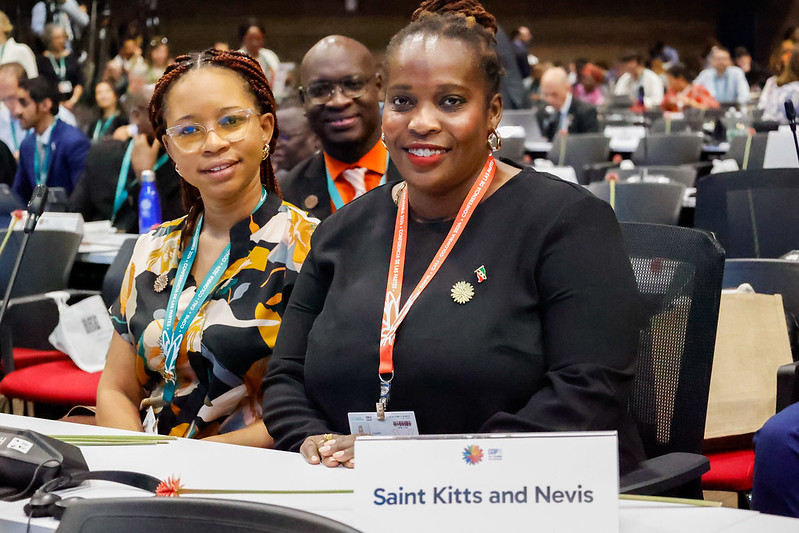
Law Students Across the Caribbean Join Together to Participate in World Day Against Trafficking In Persons

Students across law schools in the Caribbean joined hands to participate in a global online campaign to raise awareness on World Day Against Trafficking In Persons. They spoke out about the crime in their countries and showed solidarity with its victims in their societies.
Guyanese student, Stefan Knights, who participated in the human trafficking project undertaken by the law school’s Human Rights Law Clinic, gave an analysis on the impact of human trafficking in the Caribbean region:
In the Caribbean, human trafficking takes different forms. The most popular form of trafficking up for discussion is generally women and girls being forced into prostitution on the streets. However, this is not the only type of sexual exploitation occurring in the region. Child sex tourism which is common in Belize and the act of adults pressuring children to engage in sex acts with men and women in exchange for money or gifts constitute the crime of human trafficking. Forced labor and domestic servitude are other forms of human trafficking. These forms of human trafficking are visible in the Caribbean but are often ignored by society. Examples would include forced labor in the fishing industry and on construction sites.
Recently, in Suriname, a farmer was arrested on human trafficking charges after Guyanese nationals claimed that they were forced to work for free on his farm. Moreover, in Guyana and Trinidad, the prevalent act of forcing children into street vending and begging is form of human trafficking. Further, another example of human trafficking is where children are forced into domestic servitude, after their parents sent them to live with and work for an outside family who agrees to provide food, clothing and shelter; this is common in Haiti.
Knights wet on to discuss the effect of human trafficking to Caribbean societies:
Human trafficking presents enormous challenges for sustainable human development in the Caribbean. Indubitably, victims will suffer the greatest impacts ranging from risk of HIV AIDS and STDs infections to psychological and emotional trauma to the denial of the enjoyment of a number of basic human rights. The consequences of human trafficking are equally grave for society at large. Trafficking in persons is likely to exacerbate major societal issues such as violence, corruption and poverty.

The observance of World Day Against Trafficking In Persons coincided with the Human Rights Law Clinic’s latest project in which the question “What does freedom mean to you?“ is asked. On August 1, various territories commemorated the anniversary of emancipation of African slaves in the British West Indies.
Read more at globalvoicesonline.org
You may also be interested in:
Stakeholders Engage in Consultations to Strengthen National Youth Policy
The Department of Youth Development and Sports, through its Youth Unit, has commenced a four-day series of half-day closed stakeholder consultations aimed at strengthening the development and...
Regional Workshop Strengthens Caribbean Capacity on Genetic Resources
Regional policymakers, scientists, and biodiversity experts gathered from March 3-5, 2026, at The University of the West Indies (UWI), St.