Focus more on TVET in schools – CDB study
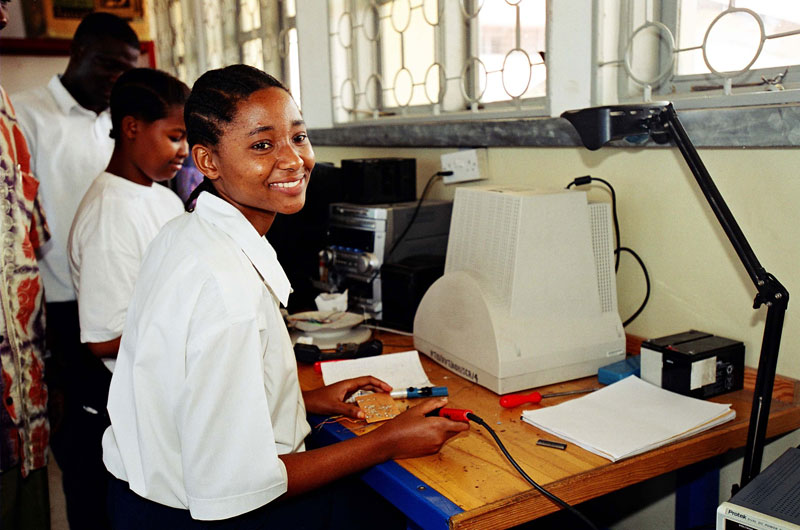
[SKN] Specific challenges of giving youth the right training and tools for the labour market were examined in a Caribbean Development Bank (CDB) study presented today at a seminar at the 45th Annual General Meeting of the CDB’s Board of Governors in St Kitts and Nevis, May 20-21.
The report, entitled “Youth are the Future, the Imperative of Youth Employment for Sustainable Development in the Caribbean,” notes that while TVET was generally widespread in the region and received attention at the level of CARICOM, with the governing body being the CXC, it was seen at times as a last resort in terms of obtaining qualifications by those who were not ‘academically minded’.
The implementation of technical and vocational training and entrepreneurship that is currently provided after leaving secondary school should be integrated within the curriculum, with links to private enterprises, and students guided to certain areas by career education.
Such an approach would ensure that young people leaving secondary school would have an understanding of the needs and expectations of the labour market, as well as some marketable skills,” the report said.
Additionally, there is a disconnect from ‘industry’, where the link between the education system and the needs of the labour market is the National Training Agency (NTA), rather than an integrated relationship between the two, as seen in countries that operate dual-track apprenticeship schemes with both academic and on-the-job training.
The study finds that despite the existence of several core components for addressing youth unemployment across the Region, the overall system is fragmented and disjointed. While there is recognition of the linkages between youth and youth-at-risk issues and unemployment, youth have become the remit of ministries concerned solely with social issues or those related to sports and culture, and sometimes education.
However, there are a few examples of holistic approaches to addressing youth unemployment in the Region. One example is seen in the Cayman Islands. There, the government funded National Workforce Development Agency (NWDA), which was noted as being heavily utilised, provides a number of services. While the agency’s remit is not specifically directed at youth unemployment, it was found to have a direct impact through its activities.
The study calls for transformative shifts in the education system especially in technical and vocational training within secondary schools and at post-secondary institutions, as well as an expansion in entrepreneurship training.
It proposes an 11-point action agenda with specific recommendations at the international, regional and national levels. In specifically addressing the issue of youth unemployment, and seeking to facilitate their entry into employment, four specific groups of unemployed youth were identified: school-leavers; the chronic unemployed; the transient unemployed; and those not in employment, education or training. The differential needs of these groups in attaining employment were also highlighted.
To address these needs, a number of multi-stakeholder actions are recommended, including the involvement of trade unions, educational institutions, NGOs, the church, community departments and practitioners, the police, and the private sector, in addition to central government, and regional and international institutions.
###
About the Caribbean Development Bank
The Caribbean Development Bank is a regional financial institution established 1970 for the purpose of contributing to the harmonious economic growth and development of member countries. The Bank’s founding president was noted economist and Nobel Laureate Sir Arthur Lewis. There are nineteen regional borrowing member countries – including Guyana and Suriname; three regional non-borrowing member countries – Mexico, Venezuela and Colombia. Members outside of the Region are Canada, China, Germany, Italy, Mexico, UK and Venezuela. As of December 31, 2014, CDB had total assets of USD2.61bn (This includes USD1.38Bn of ordinary Capital resources and USD1.23Bn of Special Funds Resources.) CDB has an “Aa1” with stable outlook rating with Moody’s Rating Agency and a stable “AA/A-1+” rating with Standard and Poor’s Rating Agency. In 2014 the Bank approved loans and grants of USD26.6B.
You may also be interested in:
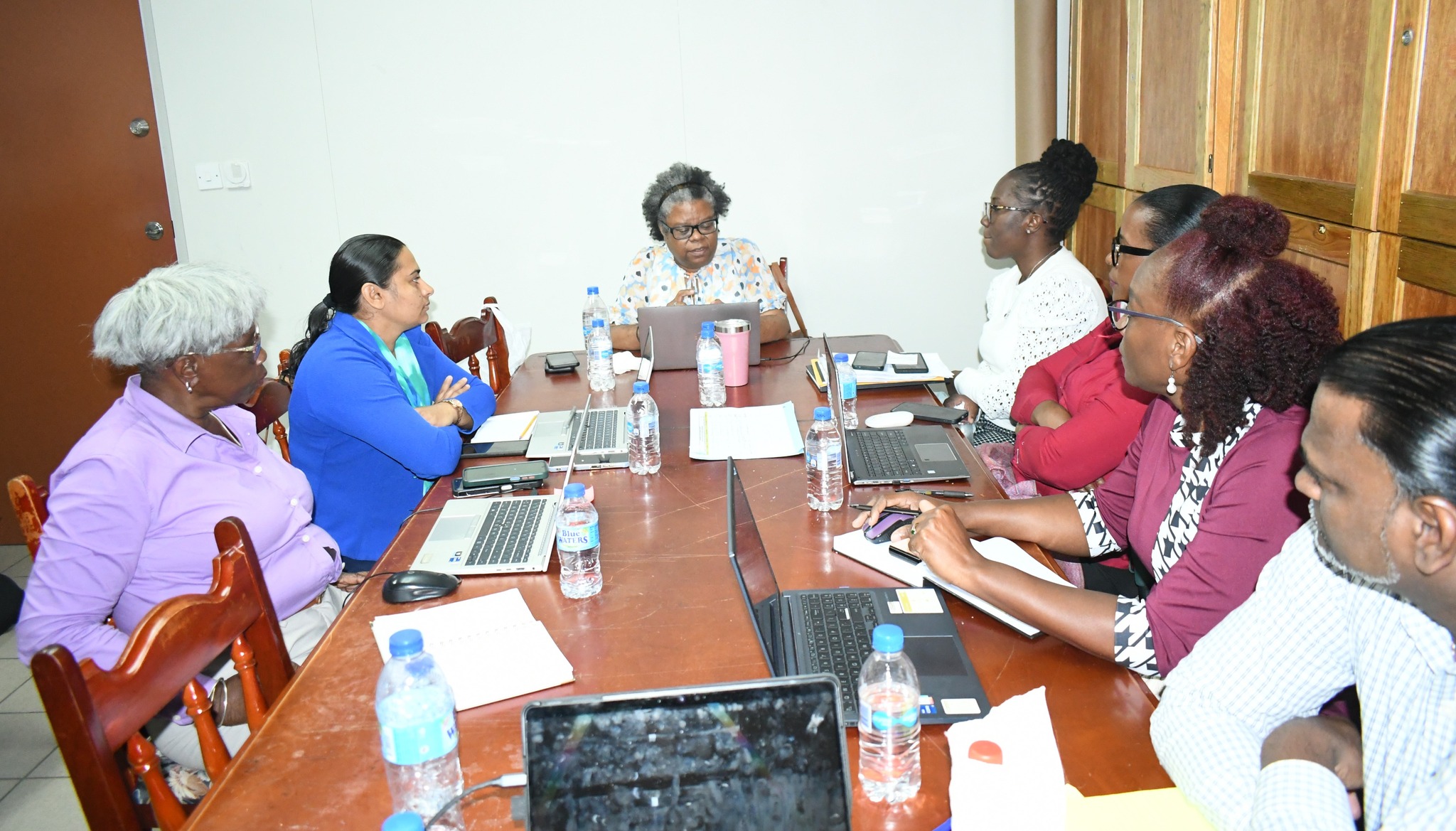
Stakeholders Engage in Consultations to Strengthen National Youth Policy
The Department of Youth Development and Sports, through its Youth Unit, has commenced a four-day series of half-day closed stakeholder consultations aimed at strengthening the development and...
Regional Workshop Strengthens Caribbean Capacity on Genetic Resources
Regional policymakers, scientists, and biodiversity experts gathered from March 3-5, 2026, at The University of the West Indies (UWI), St.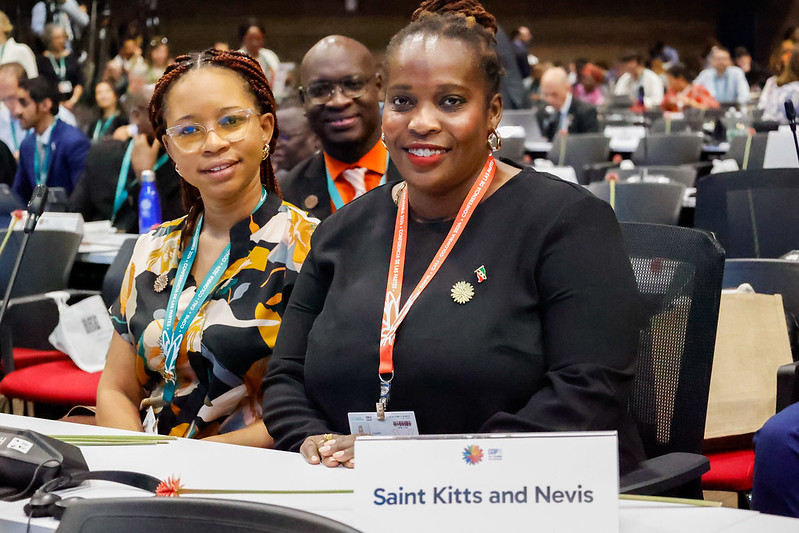
Statement by Hon. Dr. Joyelle Clarke, Minister of Sustainable Development, Environment, Climate Action and Constituency Empowerment of Saint Kitts and Nevis| High-Level Segment, 16th Meeting of the Conference of Parties of the UN Convention on Biological Diversity| Cali, Colombia| 30 October 2024
"The fight for biodiversity cannot be disentangled from the climate crisis. This is why our commitment to the Kunming-Montreal Biodiversity Framework is especially critical and why Saint KittsRelated Stories
Communique issued at the end of the 44th Meeting of the Council for Human and Social Development (COHSOD) - Education, 13-14 October 2022, CARICOM Secretariat Headquarters, Georgetown, Guyana
The Forty-Fourth Meeting of the Council for Human and Social Development (COHSOD) of the Caribbean Community (CARICOM) was held on 13-14 October 2022, under the theme “Education as and for...
CARICOM Secretary-General pays First Official Visit to Caribbean Development Bank
December 3, 2021, BRIDGETOWN, Barbados – Secretary General of the Caribbean Community, Dr Carla Barnett paid her first official visit today to the Caribbean Development Bank since her appointment..