Dry spell could stretch to next season, says Met Office
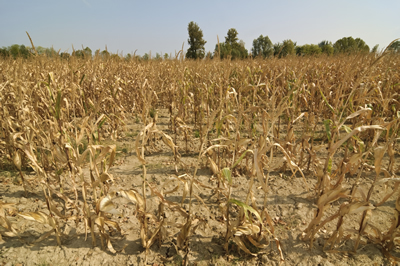
THE Meteorological Service of Jamaica is forecasting that the drought that parts of the island have been experiencing could continue into the January to April dry season of 2015.
Director of the Meteorological Service, Jeffrey Spooner says statistics for January to June 2014 this year show that the island received 33 per cent of its normal rainfall, and that if the prolonged dry weather condition persists, it is possible that the country may not have any significant rainfall until May 2015.
"The southern parishes of St Elizabeth, Manchester, Clarendon, St Catherine, Kingston and St Andrew, and the North eastern parishes of Portland and St Mary were the hardest hit," he informed.
Based on data from June and July, Spooner projected that "the figures will be extreme to severe drought, especially for southern parishes and in particular St Elizabeth, Manchester, Clarendon, St Catherine, and St Thomas".
Additionally, he said rainfall from August through to October 2014 is expected to be below normal. "What we need to bear in mind is October/November is normally our major rainfall- producing season. If this projection for below normal rainfall should (obtain), we, especially in southern St Elizabeth , need to start looking at contingencies," he stated.
Spooner told JIS News that globally, temperatures in May were the hottest since 1880, whilst the average temperature worldwide in June registered 1.3 degrees Fahrenheit. This was higher than any month of June since the 1800s.
Data from the Office of Disaster Preparedness and Emergency Management (ODPEM), chronicles Jamaica's drought history indicating that the island has experienced worse.
In 1876 the northern parishes experienced severe drought conditions, which almost devastated that year's sugar production. The records show that from January to July 1928, and the latter part of that year, parishes along the south coast — St Andrew, St Elizabeth, Manchester, Clarendon, and St Catherine — were hardest hit by drought.
Harsh economic conditions resulting from the Great Depression of 1929 coincided with one of the most severe droughts to hit Jamaica. The southern sections of Manchester, all of Clarendon and St Catherine, St Elizabeth, Kingston and St Andrew, which were then the primary sugar cane, banana and coffee-producing areas, were devastated by what historians recorded as "a great famine". This led to the much documented civil unrest in the 1930s.
Severe drought conditions swept across the island again in the year of Jamaica's independence — 1962 — then in 1975, 1997, and most recently in the long dry spell of 2010.
Acting executive director of the ODPEM Richard Thompson recently reported that the National Drought Response Programme was fully activated on July 31 by the Drought Committee set up by the Ministry of Water, Land, Environment and Climate Change. This opened the way for the committee to set in motion drought-counteracting measures in affected parishes islandwide.
Full activation of the National Drought Response Programme is determined when six or more parishes are experiencing drought conditions as defined by the committee's member agencies — ODPEM, Rural Agricultural Development Agency (RADA), and the Meteorological Office.
You may also be interested in:
Stakeholders Engage in Consultations to Strengthen National Youth Policy
The Department of Youth Development and Sports, through its Youth Unit, has commenced a four-day series of half-day closed stakeholder consultations aimed at strengthening the development and...
Regional Workshop Strengthens Caribbean Capacity on Genetic Resources
Regional policymakers, scientists, and biodiversity experts gathered from March 3-5, 2026, at The University of the West Indies (UWI), St.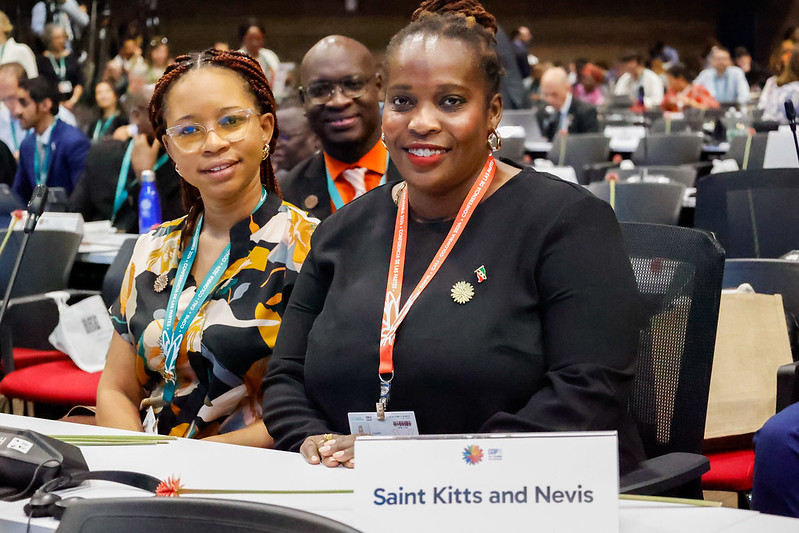
Statement by Hon. Dr. Joyelle Clarke, Minister of Sustainable Development, Environment, Climate Action and Constituency Empowerment of Saint Kitts and Nevis| High-Level Segment, 16th Meeting of the Conference of Parties of the UN Convention on Biological Diversity| Cali, Colombia| 30 October 2024
"The fight for biodiversity cannot be disentangled from the climate crisis. This is why our commitment to the Kunming-Montreal Biodiversity Framework is especially critical and why Saint KittsRelated Stories
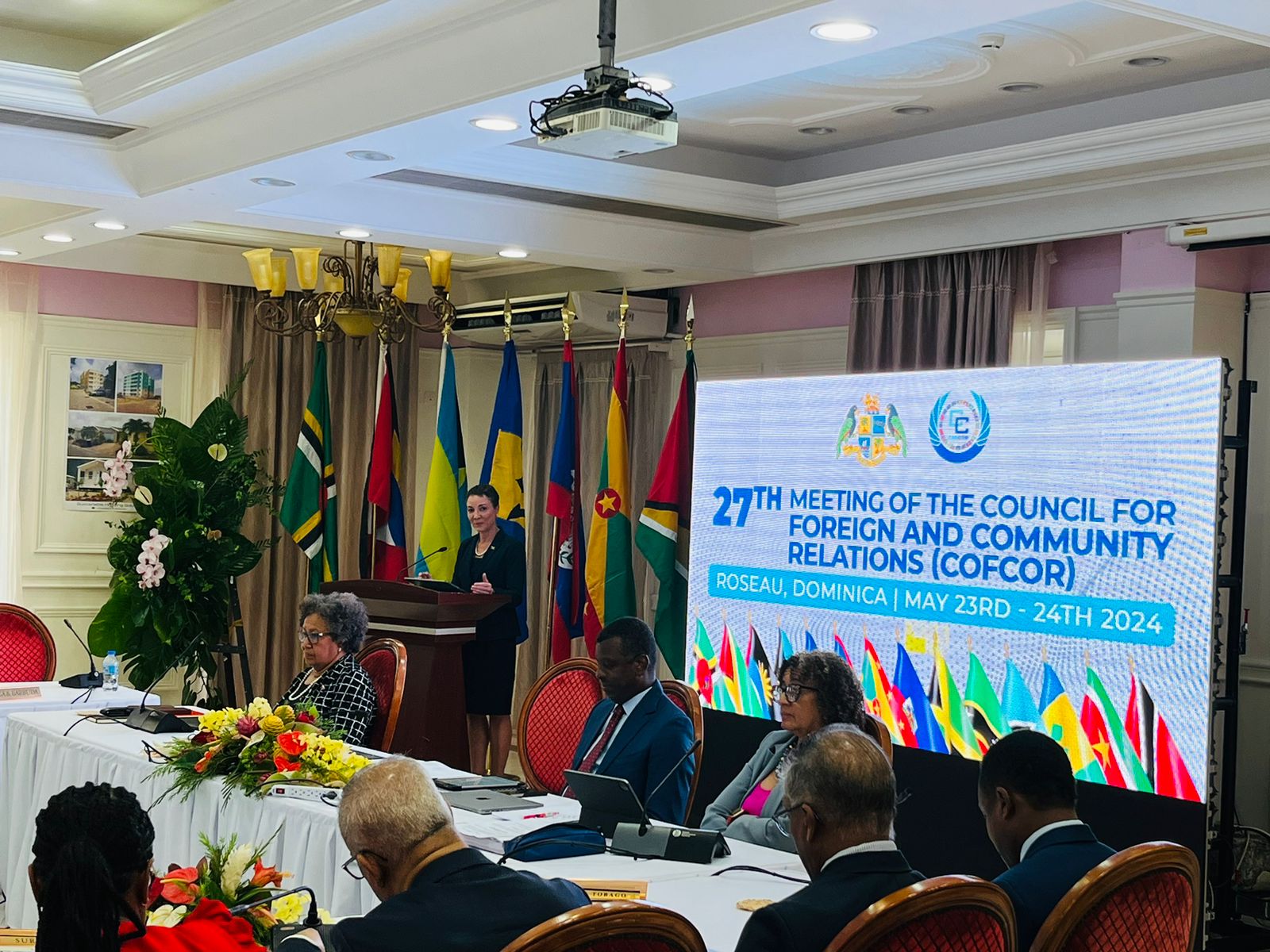
Remarks by the Outgoing Chair of the Council for Foreign and Community Relations (COFCOR), Senator the Hon. Kamina Johnson Smith, Minister of Foreign Affairs and Trade of Jamaica, at the Opening Ceremony of the Twenty-Seventh Meeting of COFCOR, 23 May 2024, Roseau, Dominica
Dr. Carla Barnett, Secretary-General of the Caribbean Community (CARICOM); Honourable Dr.
CARICOM Ministers see COP28 as a test of the world’s commitment to the most vulnerable
MINISTERIAL STATEMENT COP28 is a milestone for the climate agenda.