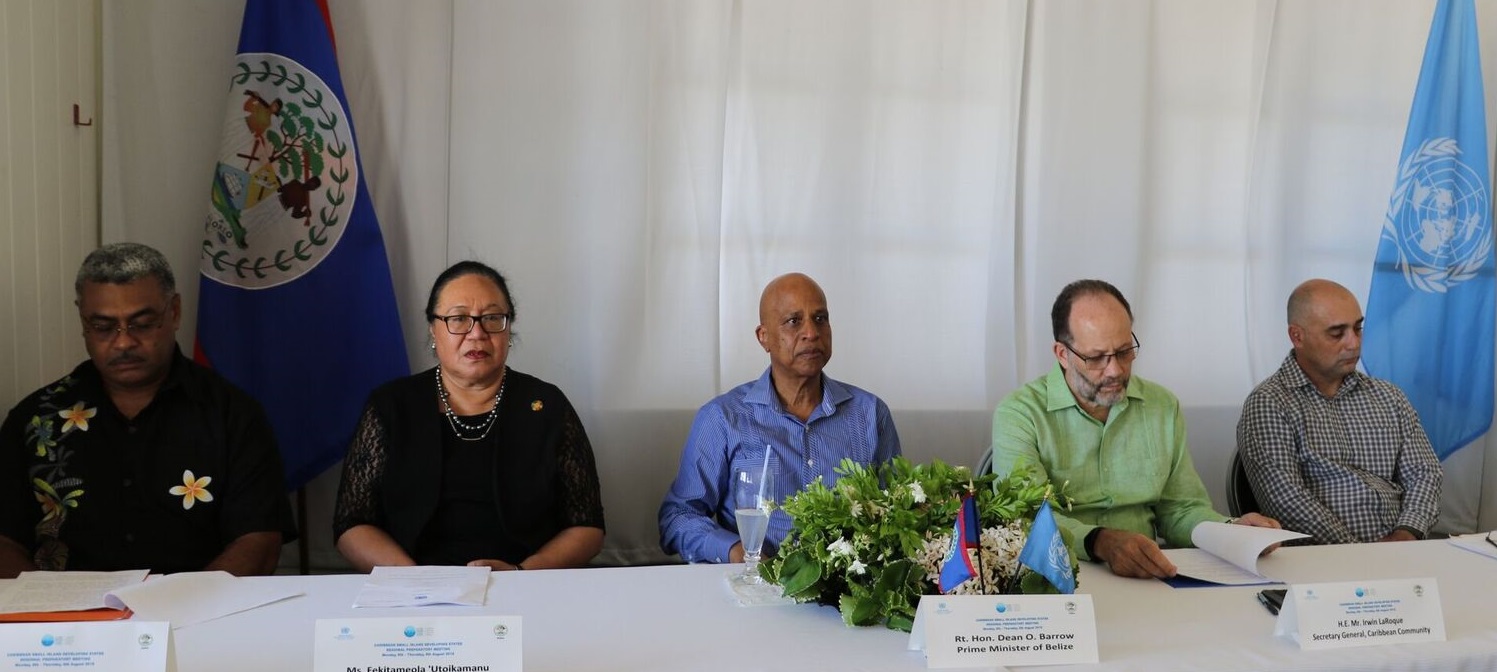
Debt forcing some SIDS to restructure their finances
In the Caribbean in 2014, average public debt levels amounted to 80 per cent of GDP – compared with 34 per cent for developing countries as a whole.
According to Helen Clark, Administrator of the United Nations Development Programme (UNDP), debt problems have forced many Small Island Developing Countries (SIDS) to restructure their finances.
“Research conducted by UNDP found no fewer than 56 debt restructuring operations in seventeen SIDS over the last forty years. Such data suggests that the debt challenge is systemic. It is becoming increasingly clear to many that in order to solve it, international attention is needed.”
Clark was at the time addressing the recently held High-level Panel Discussion on Financing for Sustainable Development UN Conference of SIDS.
She said that despite very high debt levels, all but five SIDS have been considered ‘too wealthy’ to benefit from international debt relief. She also indicated that the countries that did benefit, in particular from the Heavily Indebted Poor Countries (HIPC) Initiative, have proven that comprehensive debt relief works.
“Where all creditors – bilateral, multilateral, and private – are a part of the effort, debt relief has helped countries grow their economies and boost spending on poverty reduction,” she explained.
“An equivalent ‘Heavily Indebted SIDS Initiative’ could be considered as part of a global effort to advance debt sustainability for human development. UNDP would be happy to contribute to the design of such an initiative.”
She went on to point out that a second practical way forward would be to consider reforming the eligibility criteria for concessional finance.
“With few exceptions, SIDS are classified as middle-income countries. That means most cannot access the concessional financing offered by multilateral lenders and must instead borrow at market rates. Recently, many in the international community have been questioning whether it is appropriate for countries which are disproportionately exposed to extreme weather and climate change to have to borrow on commercial terms,” she indicated.
The UNDP Head further revealed that the World Bank and Commonwealth Secretariat are looking at the potential for reform of the eligibility criteria for concessional finance so that it can be extended to more SIDS.
“To achieve that, the eligibility criteria would need to take into account indicators beyond income per capita. Over the long term, SIDS’ progress towards sustainable development will depend, in large part, on their capacity to mobilise resources and use them effectively, including reducing disaster risk and adapt to climate change.”
You may also be interested in:
Stakeholders Engage in Consultations to Strengthen National Youth Policy
The Department of Youth Development and Sports, through its Youth Unit, has commenced a four-day series of half-day closed stakeholder consultations aimed at strengthening the development and...
Regional Workshop Strengthens Caribbean Capacity on Genetic Resources
Regional policymakers, scientists, and biodiversity experts gathered from March 3-5, 2026, at The University of the West Indies (UWI), St.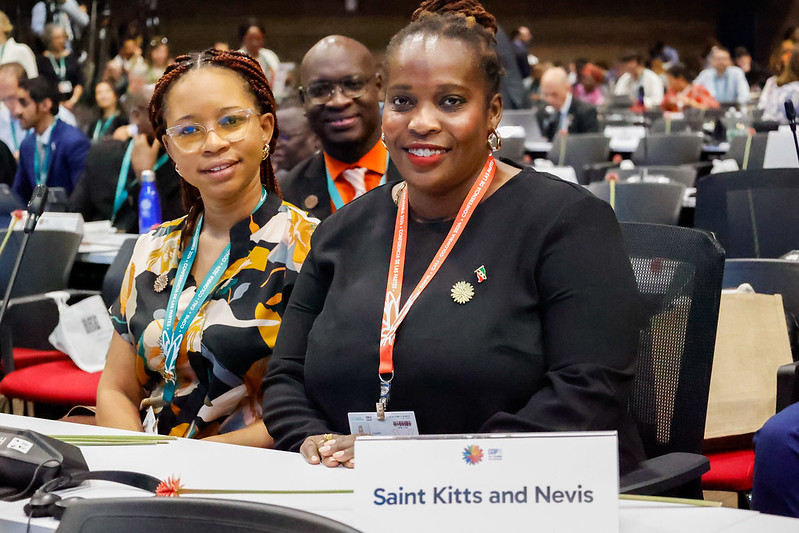
Statement by Hon. Dr. Joyelle Clarke, Minister of Sustainable Development, Environment, Climate Action and Constituency Empowerment of Saint Kitts and Nevis| High-Level Segment, 16th Meeting of the Conference of Parties of the UN Convention on Biological Diversity| Cali, Colombia| 30 October 2024
"The fight for biodiversity cannot be disentangled from the climate crisis. This is why our commitment to the Kunming-Montreal Biodiversity Framework is especially critical and why Saint KittsRelated Stories
CARICOM SG calls for fairness in international financing for SIDs
Caribbean Community (CARICOM) Secretary-General Ambassador Irwin LaRocque has made a call for fairness in international financing for Small Island Developing States (SIDs), noting that they have be
Loss of mangroves, land for agriculture in focus as CARICOM observes International Biological Diversity Day
Caribbean Community (CARICOM) Secretariat’s Human and Social Development chief, Dr Douglas Slater has drawn attention to the decline of land area for agricultural use and alarming levels of...