CXC Launching CAPE Green Engineering Syllabus

The Caribbean Examinations Council (CXC) will launch its latest New Generation Caribbean Advanced Proficiency Examination (CAPE) subject, Green Engineering, on Thursday 28 July in Guyana. The launch ceremony will take place at 10:00 am at the Theatre Guild in Georgetown.
The Honourable Dr Rupert Roopnaraine, Minister of Education will deliver the feature address, while Dr Paulette Bynoe, a member of the Green Engineering Subject Panel will speak about the development of the syllabus. Mr Howard Campbell, Senior Assistant Registrar, Syllabus and Curriculum Development Division, at CXC will speak on the philosophical underpinnings of the new subject.
The Green Engineering syllabus is divided into two Units with each containing three modules. Unit 1 is titled Introduction to Green Engineering and the three modules are Concepts and Issues, Theoretical Framework of Green Engineering and Green Engineering in Practice. Unit 2 is titled Application of Green Engineering Principles and the three modules are Ultilisation of Sustainable Materials and Energy, Sustainable Designs and Green Engineering Solutions.
The Green Engineering syllabus outlines ten objectives. Among these objectives are that the subject will:
- enhance students’ awareness of the broad environmental, social and economic impact of engineering;
- create an understanding of how to incorporate the principles of sustainability into engineering practices;
- promote an understanding of the principles of Green Engineering and Industrial Ecology;
- develop an understanding of the interdisciplinary and multi-disciplinary nature of environmental problems related to engineering;
- promote awareness of the global challenges related to environment and the impact of our decisions on present and future generations;
- apply the principles of Green Engineering and Industrial Ecology to manage and solve environmental problems related to engineering in the Caribbean context;
- apply Scientific, Technological, Engineering and Mathematical (STEM) principles to improve the environment at the local, regional and global levels;
- design solutions to address environmental problems related to engineering;
- develop the capacity for critical thinking, creativity and innovation, problem solving, contextual learning, collaboration, emotional intelligence, entrepreneurial skills and technological competence through authentic learning experiences;
- and, integrate information, communication and technological (ICT) tools and skills.
This course of study will enable students to apply Scientific, Technological, Engineering and Mathematical (STEM) principles to improve their environment at the local, regional and global levels. The study of Green Engineering will enhance quality of life for present and future generations, while providing wealth creation through new and innovative job opportunities and other economic possibilities including entrepreneurship. By pursuing this course, students will develop twenty-first century engineering skills and ethics required for sustainable development.
The assessment will comprise two components, external and internal. The external assessment will be valued at 70 per cent of the grade, while the internal assessment, the School Based Assessment (SBA) is worth 30 per cent of the grade.
The external assessment comprises two papers; Paper one has 45 compulsory, multiple-choice questions, 15 questions based on each module. Paper two comprises six compulsory questions, two based on each module.
The SBA for Unit 1 will be in the form of a report. The report should be based on an industry or an engineering infrastructure such as buildings, roads and bridges in the student’s territory. It should examine sustainability issues such as conservation and efficiency and provide recommendations for improvement. For Unit 2, the SBA is a design project. The project will consist of a written design report and a scaled model that is representative of the product. This model should be made from readily available materials and should be based on a problem that has been identified and should seek to solve that problem by creating a product following the stages of the design process.
Green Engineering will be available for teaching in schools in September 2016 and the first examination will be offered in May/June 2017.
To follow the launch on Thursday 28 July starting at 10:00 am please click this link: https://www.facebook.com/events/310824749306559/
To learn more about Green Engineering, click this link: http://www.cxc.org/introducing-cape-green-engineering/
For further information, please contact Cleveland Sam, Public Information Officer at (246) 227 1892 or via e-mail at ClSam@cxc.org.
You may also be interested in:
Stakeholders Engage in Consultations to Strengthen National Youth Policy
The Department of Youth Development and Sports, through its Youth Unit, has commenced a four-day series of half-day closed stakeholder consultations aimed at strengthening the development and...
Regional Workshop Strengthens Caribbean Capacity on Genetic Resources
Regional policymakers, scientists, and biodiversity experts gathered from March 3-5, 2026, at The University of the West Indies (UWI), St. Augustine Campus in Trinidad and Tobago, for a three-day...
Statement by Hon. Dr. Joyelle Clarke, Minister of Sustainable Development, Environment, Climate Action and Constituency Empowerment of Saint Kitts and Nevis| High-Level Segment, 16th Meeting of the Conference of Parties of the UN Convention on Biological Diversity| Cali, Colombia| 30 October 2024
"The fight for biodiversity cannot be disentangled from the climate crisis. This is why our commitment to the Kunming-Montreal Biodiversity Framework is especially critical and why Saint Kitts and...Related Stories
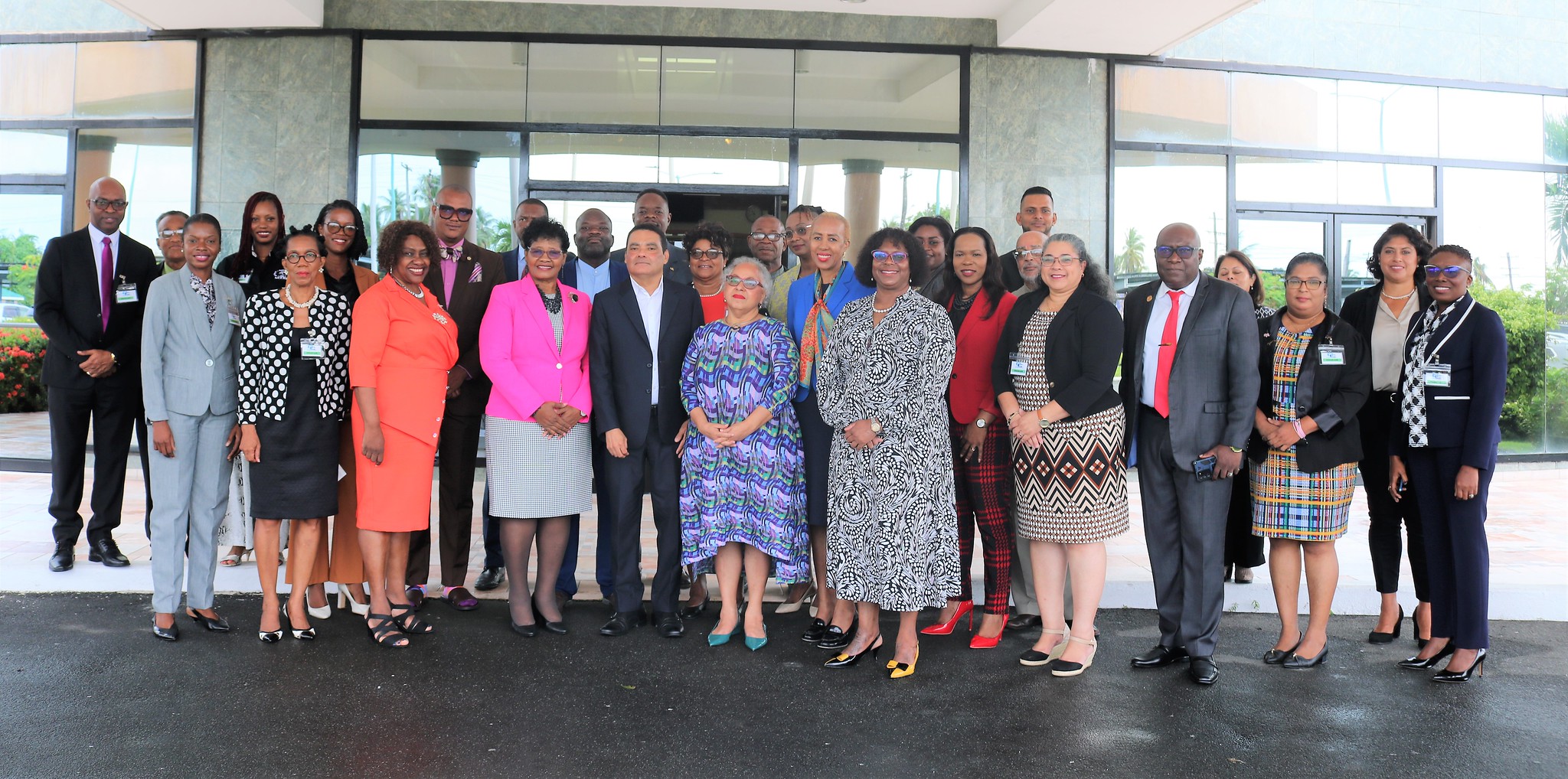
Communique issued at the end of the 44th Meeting of the Council for Human and Social Development (COHSOD) - Education, 13-14 October 2022, CARICOM Secretariat Headquarters, Georgetown, Guyana
The Forty-Fourth Meeting of the Council for Human and Social Development (COHSOD) of the Caribbean Community (CARICOM) was held on 13-14 October 2022, under the theme “Educ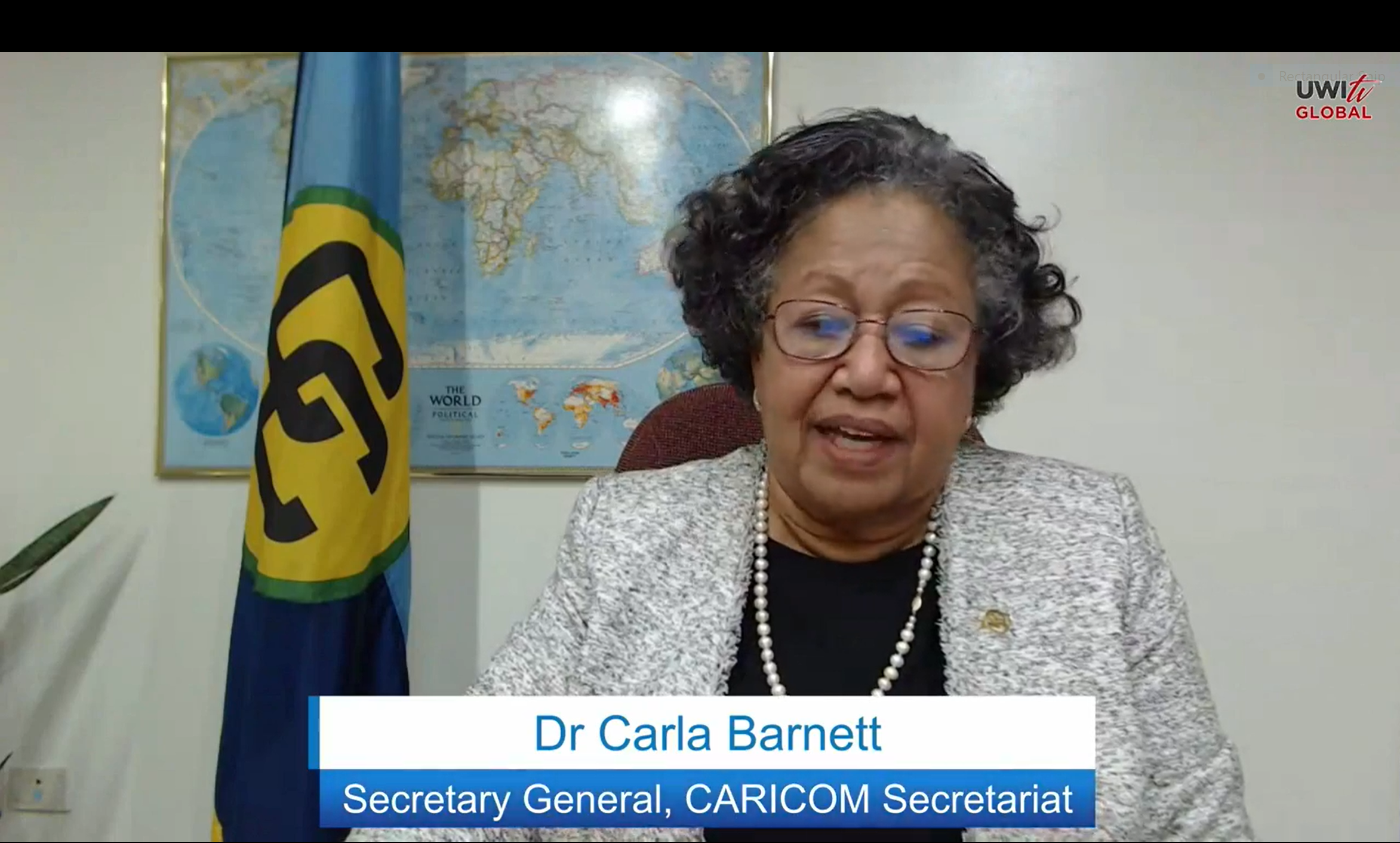
Address by Secretary-General Dr Carla Barnett at the Opening Ceremony for the Inaugural Ministerial Summit on CXC’s Strategy 2021-2025
The Summit was held under the theme: Facilitating Transformation through Assessment