Crisis related to Dominicans of Haitian Descent and Haitian Migrants in The Dominican Republic
The Caribbean Community (CARICOM) continues to advocate for a
resolution to the crisis which makes approximately 250,000 Dominicans
of Haitian descent and Haitian migrants in the Dominican Republic
stateless. A 2013 Constitutional ruling by the Dominican Republic (DR)
Government effectively renders stateless anyone with foreign ancestry
born in 1929 or later.
The international
community’s response to this decision, established as the largest case
of statelessness in the Western hemisphere, resulted in the DR
Government instituting a regularisation system to enable Dominican
Haitians and Haitians migrants to register and to be issued with
identification cards. The 17 June 2015 deadline set for this process
was not met by many Dominicans of Haitian descent and Haitian migrants. This was due, among other reasons, to their inability
to raise the required fees as well as requirements to present documents
that in many cases did not exist, such as ID cards that were
confiscated by authorities. As a result, the DR government has indicated
it will begin deporting migrants not registered. “Up to 250,000 people
are at risk of being deported to a country where many of them have no
family members, no job prospects and no current ties.”1
CARICOM
has firmly “called out” the Dominican Republic for its treatment of
Dominicans of Haitian descent and Haitian migrants in the recent
immigration crackdown at the end of the June 2015 deadline. In a Statement,
issued at the end of the Thirty-Sixth Regular Meeting of the
Community’s highest decision making organ, the Conference of Heads of
Government, Chairman of the Community, Barbados’ Prime Minister, Hon.
Freundel Stuart, strongly indicated CARICOM’s condemnation of
behavior which enshrined “barbarity into the constitutional practices of
the Dominican Republic”.
In June 2015,
at the High-Level Dialogue between the European Union and the Caribbean
Forum of African, Pacific and Caribbean (ACP) States, the Dominican
Republic representatives had agreed that their country would undertake
a new approach. The CARICOM Statement also expressed concern about this
breach.
As CARICOM continues to
advocate at every level, it has invoked the assistance of the United
Nations, particularly its human rights agencies, as well as the
Organisation of the Americas to help resolve this matter In July this
year, CARICOM Secretary-General, Amb. Irwin LaRocque, raised this issue
when he accepted the credentials of Archbishop Nicola Girasoli,
Plenipotentiary Representative of the Holy See, on the occasion of the
establishment of diplomatic relations between CARICOM and the Vatican.
Snapshot of Key Facts related to the Crisis
- In Sept. 2013, the Constitutional Tribunal of the Dominican Republic
(DR) issued a decision (TC 168-13) that stripped as many as 200,000
Dominicans of Haitian descent born in the DR, of their Dominican
citizenship. The ruling was also retroactive, applicable to the descendants of people who have resided in the DR as far back as 1929.
- Dominicans
of Haitian descent and Haitian immigrants are a critical source of
cheap labor in the Dominican Republic making up 70% of agricultural
workers.
- While every country has a right to
change its immigration laws, making those changes retroactive and
applicable to only a particular minority group is an unprecedented violation of the most basic human rights, even by the DR’s own laws.
- This ruling also violates the DR’s own Constitution, which provided that those born in the DR were Dominican citizens by birth. This also violates the Universal Declaration of Human Rights, which states that nationality is a basic right of all individuals.
- Not
recognized as citizens by the DR nor Haiti, those Dominicans affected
by the Court’s decision were automatically rendered stateless. This is the largest case of statelessness in the Western hemisphere.
- Being stateless in DR means being socially dead: unable to attend school past 8th
grade, go to college, engage in a profession, travel outside DR, get
married, own property, or participate in the formal economy.
- In May 2014, in response to domestic and international outcry, the DR government enacted a Naturalization Law (Law 169-14) to provide a path to citizenship for those Dominicans affected by the Court decision.
- In Oct. 2014, the Inter-American Court of Human Rights found that the Constitutional Tribunal decision and part of Law 169-14 violated the American Convention on Human Rights. The Dominican authorities immediately rejected the ruling and refused to comply with it.
- The majority of Dominicans of Haitian descent, who were not registered in the civil registry, were given until February 1, 2015, to comply with Law 169-14.
- This Naturalization Law has been poorly implemented.
The costs of the application process alone (lawyer fees, acquiring
notarized documents, transportation, to the cities etc) were prohibitive
for many.
- Of the over 200,000 Dominicans
rendered stateless by the ruling, 55,000 had their citizenship restored
and another 9,000 were able to apply for permanent residency in their
own country. However, there are few known cases of Dominicans of Haitian descent amongst these 2 groups who have actually been able to receive their documents.
- Another
group impacted by this court ruling is foreigners in the DR, including
undocumented Haitian migrants in low-wage jobs in the Dominican
Republic.
- The DR government launched a Regularization Plan that sought to provide temporary resident status to undocumented migrants ended on June 17th, 2015.
- 290,000 of an estimated 450,000 applicable applied for the Plan, yet only 2% have received their IDs because
Dominican authorities routinely refused their documents and set up
additional hurdles to get regularized, implemented arbitrary fees,
unrealistically short deadlines, and continued systemic discrimination
by authorities.
- The DR government reports that undocumented migrants who could not get "regularized” by the June 17, deadline as well as many Dominicans of Haitian descent with legitimate rights to Dominican nationality are “self-deporting” because they lack access to proper documentation.
- Additionally there are cases of racial profiling
being used to arbitrarily expel individuals of Haitian descent without
providing guarantees of due process or effective judicial remedies to
challenge the expulsions.
- Under threat of violence and intimidation, over 63,000 people have crossed the border into Haiti since June 17th, 2014.
- On August 14, 2015, the Dominican government officially announced that deportations would begin despite the fact that no negotiations have taken place between Haiti-DR on a protocol for deportations.
- The U.S. State Department
issued a release urging the “Dominican Republic to ensure the
protection of human rights, encourage social inclusion of all people,
and work to prevent the arbitrary deprivation of nationality for legal
citizens.”
the fact that no negotiations have taken place between Haiti-DR on a protocol
- Limited in their capacity, the Haitian government has called this a grave humanitarian crisis.
Other Reference
Institute for Justice and Democracy in Haiti) http://www.ijdh.org/
----------------
Additional Reading
Dominicans Of Haitian Descent And Haitian Migrants In The Dominican Republic
Excerpted from DR Human Rights Crisis Fact Sheet UpdatedContent updated October 2015
[1] Institute for Justice and Democracy in Haiti (http://ijdh.org/
You may also be interested in:
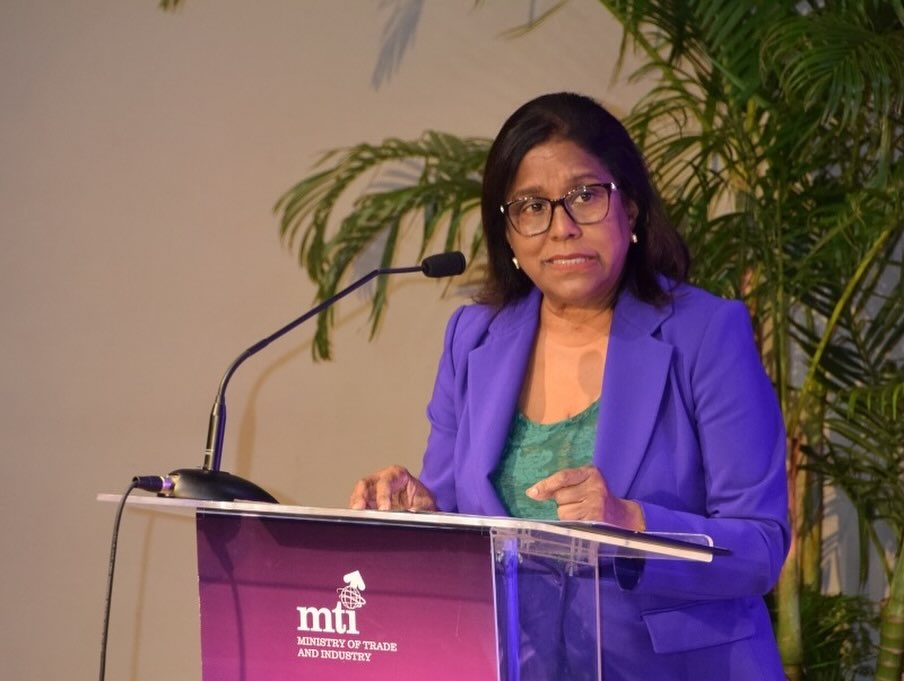
Remarks by Senator the Hon. Paula Gopee-Scoon, Minister of Trade and Industry of Trinidad and Tobago, and Chair of the Council for Trade and Economic Development (COTED), at a meeting with Ambassador Katherine Tai, U.S. Trade Representative, 2 August 2024.
Let me first express my extreme delight in joining Minister Todd and representatives of the CARICOM Secretariat in welcoming Ambassador Tai to Guyana and CARICOM.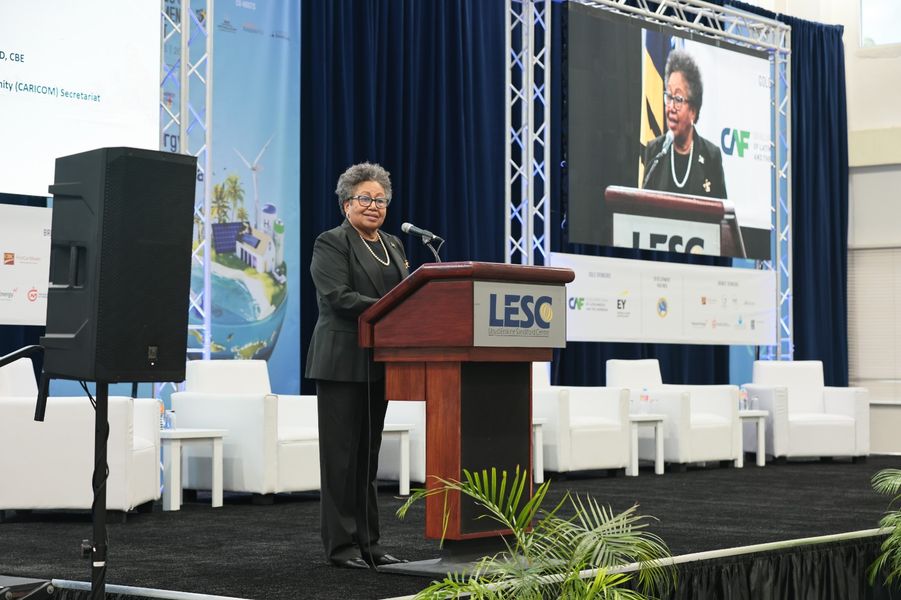
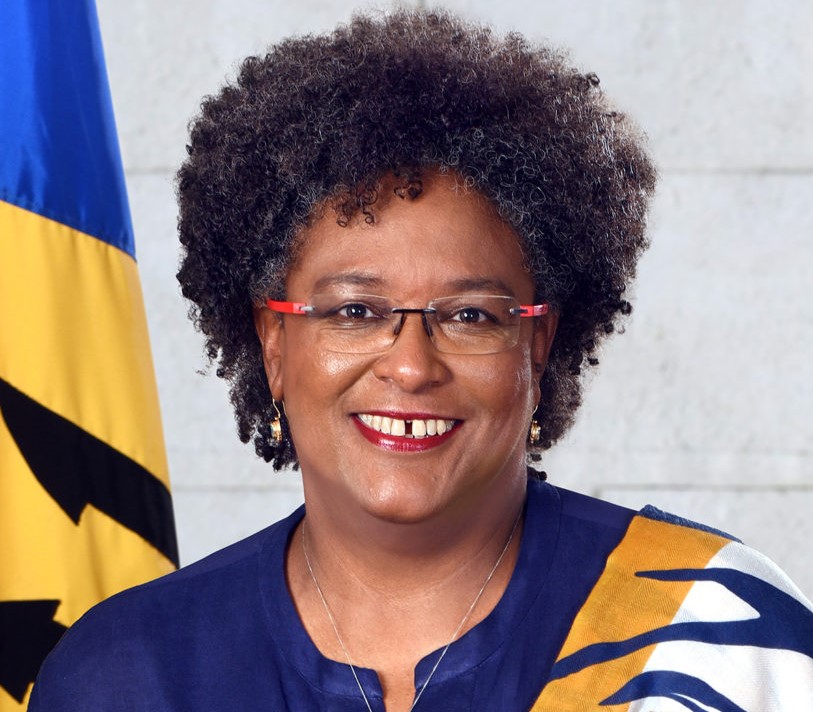
Statement By Prime Minister, The Honourable Mia Amor Mottley S.C., M.P, on the admission of the African Union to the G20
It is with great joy and optimism that I join my fellow African brothers and sisters across the world to celebrate the African Union’s (AU) admission to participate in the Group of Twenty (G20) as.Related Stories
Statement on Multi-National Force to support Haiti
The Caribbean Community welcomes the decision taken by the Governments of The Bahamas and Jamaica to join Kenya to contribute to a multi-national force in the Republic of Haiti to assist that natio