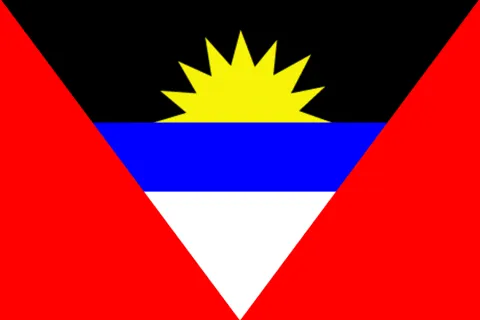
Antigua and Barbuda
Key facts
Date of Membership in CARICOM: 4 Jul 1974 - Learn more about membership in CARICOM
Also Known as:The Island of 365 Beaches. (Root: Waladli and Wa'onomi (Amerindian))
Status of Independence:Independent 1981/11/01
Area: 442 km2 (170 miles2)
Capital City: St. John's
Population: : 90,801(2015)
Currency: Eastern Caribbean Dollar (EC$)
Highest National Award: Order of the Nation
Economy
GDP Growth: GDP Growth: –3.6% p.a. 2009–13
GNI: GNI: US$1.2bn
GNI PC: GNI PC: US$12,910
Key dates in history
1493 Arrival of Columbus; named island after Cathedral in Spain – Santa Maria de La Antigua
1632 Colonised by Sir Thomas Warner
1667 Island formally became a British Colony
1871 Incorporated into Leeward Islands Federation
1939 First Labour Movement formed – Antigua Trades and Labour Union (ATLU) out of which evolved ALP
1951 First elections under universal adult suffrage took place
1958 Member of the West Indies Federation
1965 CARIFTA Agreement signed at Dickenson Bay, Antigua. Antigua and Barbuda one of three original signatories
1967 Associated Statehood with Britain (full internal self government) within the West Indies Associated States (WISA) Vere C. Bird, Snr, first Premier
1981 Independence achieved. Vere C. Bird, Snr. First Prime Minister