CARICOM states urged to give CCJ 10th anniversary gift of ‘full accession’
KINGSTON, Jamaica (JIS) – The Caribbean Court of Justice (CCJ), in April, celebrated 10 years of existence as the regional court for the Caribbean.
President of the CCJ, Sir Dennis Byron, in a statement issued to mark the milestone, called on all CARICOM member states to give the CCJ the 10th anniversary gift of “full accession” to the court.
While the CCJ, in its original jurisdiction, is the court of the 15-member CARICOM, only four countries have signed on to its appellate jurisdiction. They are Barbados, Guyana, Belize, and Dominica, which joined in March.
In its original jurisdiction, the CCJ serves as an international tribunal interpreting the Revised Treaty of Chaguaramas, which governs CARICOM.
Jamaica is moving to join the list of countries that have replaced the United Kingdom (UK)-based Privy Council with the CCJ, as their final appellate court.
The required pieces of legislation were passed in the House of Representatives on May 12, and were tabled in the Senate on May 22.
The Bills are:
• An Act to Amend the Judicature (Appellate Jurisdiction) Act, which seeks to amend the Judicature (Appellate Jurisdiction) Act, to repeal provisions for appeals to the Privy Council, and exclude any appeals to the Privy Council instituted prior to implementation of the CCJ;
• An Act to Amend the Constitution of Jamaica, to amend Section 110 of the Constitution to repeal provisions relating to appeals to the Privy Council and replace them with provisions establishing the CCJ as Jamaica’s final court; and
• An Act to make provisions for the implementation of the agreement establishing the CCJ as both a court of original jurisdiction, to determine cases involving the Caribbean Community (CARICOM) and International treaties, as well as a superior court of record with appellate jurisdiction.
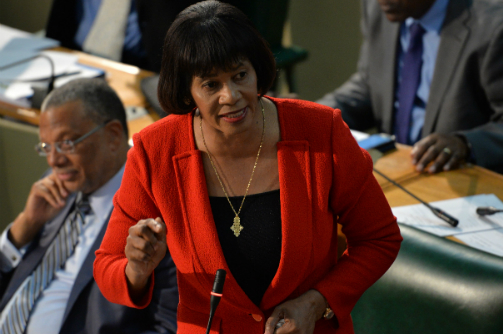
Prime Minister Portia Simpson Miller in the debate on the CCJ Bills last November, said joining the court, in its appellate jurisdiction, will ensure access to justice for all Jamaicans.
She noted that the Privy Council is fundamentally inaccessible to the vast majority of Jamaicans.
“Litigants and their Jamaican lawyers need visas to travel to the UK. Visas are not available or granted as a right. Jamaicans are the only people in the entire global structure, who are obliged to seek and obtain visas to access one of the courts,” she noted.
She further argued that the costs of retaining UK lawyers for representation in appeals are too high for the vast majority of Jamaicans.
The CCJ, on the other hand, is so designed that it travels to its member countries to hear cases on home soil.
Justice Minister Senator Mark Golding said that after more than 50 years of independence, the time has come to fully embrace the CCJ as the country’s final court of appeal.
"It is time for us to embrace the regional institution, which has the potential to be a fantastic institution. The judges are excellent and their rulings have been illuminating and sound," the minister said.
You may also be interested in:
Stakeholders Engage in Consultations to Strengthen National Youth Policy
The Department of Youth Development and Sports, through its Youth Unit, has commenced a four-day series of half-day closed stakeholder consultations aimed at strengthening the development and...
Regional Workshop Strengthens Caribbean Capacity on Genetic Resources
Regional policymakers, scientists, and biodiversity experts gathered from March 3-5, 2026, at The University of the West Indies (UWI), St.