CARICOM REGION MUST CAREFULLY CONSIDER RENEWABLE ENERGY - SECRETARY-GENERAL
(CARICOM Secretariat, Turkeyen, Greater Georgetown, Guyana) CARICOM Secretary-General HE Edwin Carrington says that in view of the energy challenges facing the small states of the Caribbean Community (CARICOM), the Community has to carefully consider renewable energy; bio-energy in particular,
In a feature address to the opening ceremony of the High Level Seminar on Expanding Bio-Energy Opportunities in the Caribbean, on 6 August 2007, at the Guyana Conference Centre in Georgetown, Guyana, the Secretary-General described the forum as timely, since it was being held against the escalation of oil prices from about US$26 per barrel in 2002 to the current price of more than US$70 per barrel and a 37 per cent decrease in sugar prices. Those key external developments, he said, impact significantly on the economies of the Caribbean.
“Put another way; as a region, the price of what we import increases while the price of what we export decreases,” the Secretary-General said.
Secretary-General Carrington noted the Region’s extremely high degree of dependence on fossil fuels and pointed out that about 93 per cent of commercial energy consumption in the Caribbean is derived from petroleum products.
“This fossil fuel dependency, together with other factors such as the lack of economies of scale and the lack of inter-connectivity among Member States, translate into high prices for secondary energy sources such as electricity. Indeed, average electricity prices in most Member States of CARICOM range from 2 to 4 times that of prices in Europe and North America, the Secretary General said.
Secretary-General Carrington pointed to the limited but significant role renewable energy has been playing in the Region. Some Member States currently utilize wind, solar and hydroelectric power in various commercial activities, he said.
Against that background, the Secretary-General urged the seminar to consider the penetration of bio-energy in several ways including:
- the systematic integration of the Region’ agriculture and energy sectors;
- the pooling of bio-energy projects to maximized the benefits under the Clean Development Mechanism of the Kyoto Protocol;
- the reorganization of sugarcane factories to permit the routine sale of electricity to local national electric grids;
- the production of fuel ethanol from sugar cane and other feedstock, and
- the production of bio-diesel from vegetable oils such as palm oil
“I hope that during your deliberations, ideas will emerge on how given the regional hemispheric and global environment that battle may be won – a battle to reduce dependence on oil, save on energy costs, and save the local and global environment – a tall task indeed; but not an unachievable one,” the Secretary-General said.
You may also be interested in:
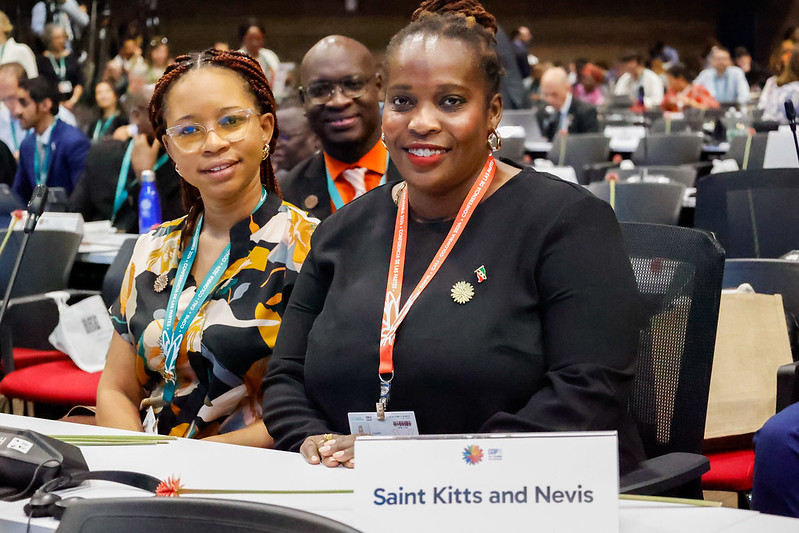
Statement by Hon. Dr. Joyelle Clarke, Minister of Sustainable Development, Environment, Climate Action and Constituency Empowerment of Saint Kitts and Nevis| High-Level Segment, 16th Meeting of the Conference of Parties of the UN Convention on Biological Diversity| Cali, Colombia| 30 October 2024
"The fight for biodiversity cannot be disentangled from the climate crisis. This is why our commitment to the Kunming-Montreal Biodiversity Framework is especially critical and why Saint Kitts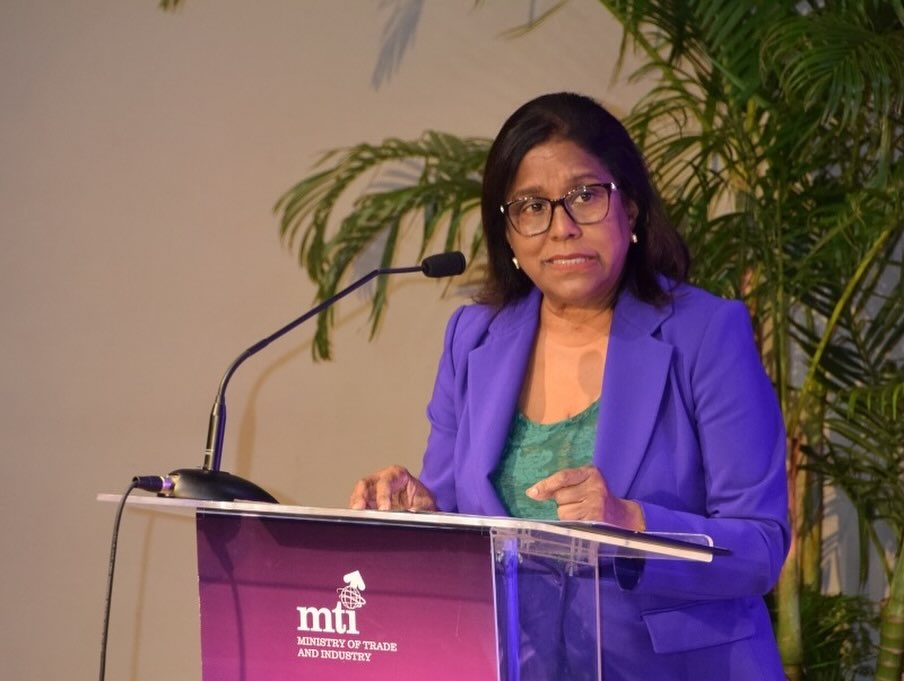
Remarks by Senator the Hon. Paula Gopee-Scoon, Minister of Trade and Industry of Trinidad and Tobago, and Chair of the Council for Trade and Economic Development (COTED), at a meeting with Ambassador Katherine Tai, U.S. Trade Representative, 2 August 2024.
Let me first express my extreme delight in joining Minister Todd and representatives of the CARICOM Secretariat in welcoming Ambassador Tai to Guyana and CARICOM.