Black Sigatoka tolerant bananas harvested in Dominica
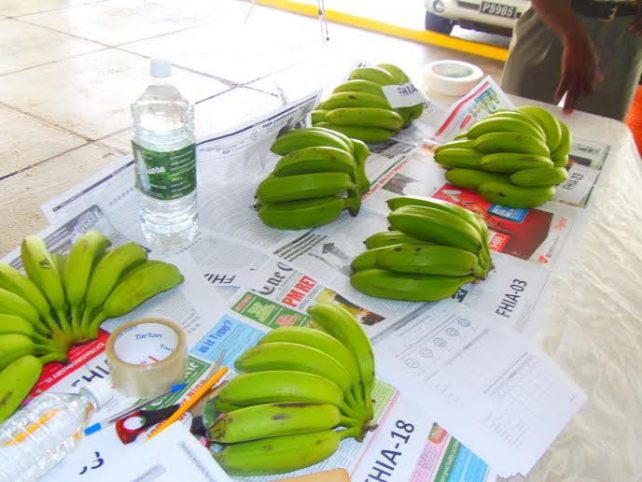
The Caribbean Agricultural Research and Development Institute (CARDI), in collaboration with the Ministry of Agriculture, has successfully harvested in Dominica types of banana and plantain, which are tolerant to the Black Sigatoka disease.
CARDI Research Assistant, Gregory Linton, noted that the crops—referred to as ‘FHIA’— unlike the local Cavendish, do not allow Black Sigatoka to progress past its second stage of development.
The first harvest of FHIA bananas in Dominica, dubbed by the numbers one, three , 18, and 23 were publicly sampled here on Friday.
“What we have noticed on our FHIA bananas — on basically all of them — is that you don’t have the later stages being developed. So, like the stage three, four, five, they generally don’t develop,” Linton told DNO on Friday morning. “So, that’s why we prefer to call them tolerant instead of resistant because they will be infected by the disease, they will be affected, but the disease, its cycle cannot progress because of the nature of the plant.”
The plants were tested by leaving them exposed to Black Sigatoka-infected Cavendish variety of banana plants present on the island.
Linton articulated that the success of the crops depends largely on the response of the public.
“We can have a very productive fruit — a very disease-tolerant fruit — if people don’t like it, it doesn’t make any sense…” he said. “It depends on the consumers. In terms of production, they are very productive, they are very disease-tolerant, but the taste, the texture, it might not be as appealing to some people as the traditional Cavendish, which is what we are accustomed to,” he stated.
He remarked that stakeholders hope to explore the export market, particularly in Latin-American countries, where the FHIA has replaced the traditional susceptible plantain variety. However, he said that the FHIA 3, 18, and 23 are not very commercial.
Linton added that the public will be allowed to do further sampling, and, based on their responses, a few varieties of the crops will be selected for mass production when the project comes to an end, in December 2016.
The suckers will then be distributed to relevant farmers.
The disease is said to develop in six stages: small specks (stage 1) which become streaks (stages 2 and 3) running parallel to the leaf veins. The streaks aggregate and eventually form spots that coalesce, form a chlorotic halo, and merge to cause extensive necrosis (stages 4, 5, and 6).
The Black Sigatoka disease confirmed in Dominica in 2012, is a leaf-spot disease of banana plants caused by the ascomycete fungus Mycosphaerella fijiensis (Morelet).
The initiative was first introduced in January 2015, and the plants were transplanted to fields in June 2015.
The plants, Linton said, were initially imported from St. Vincent.
You may also be interested in:
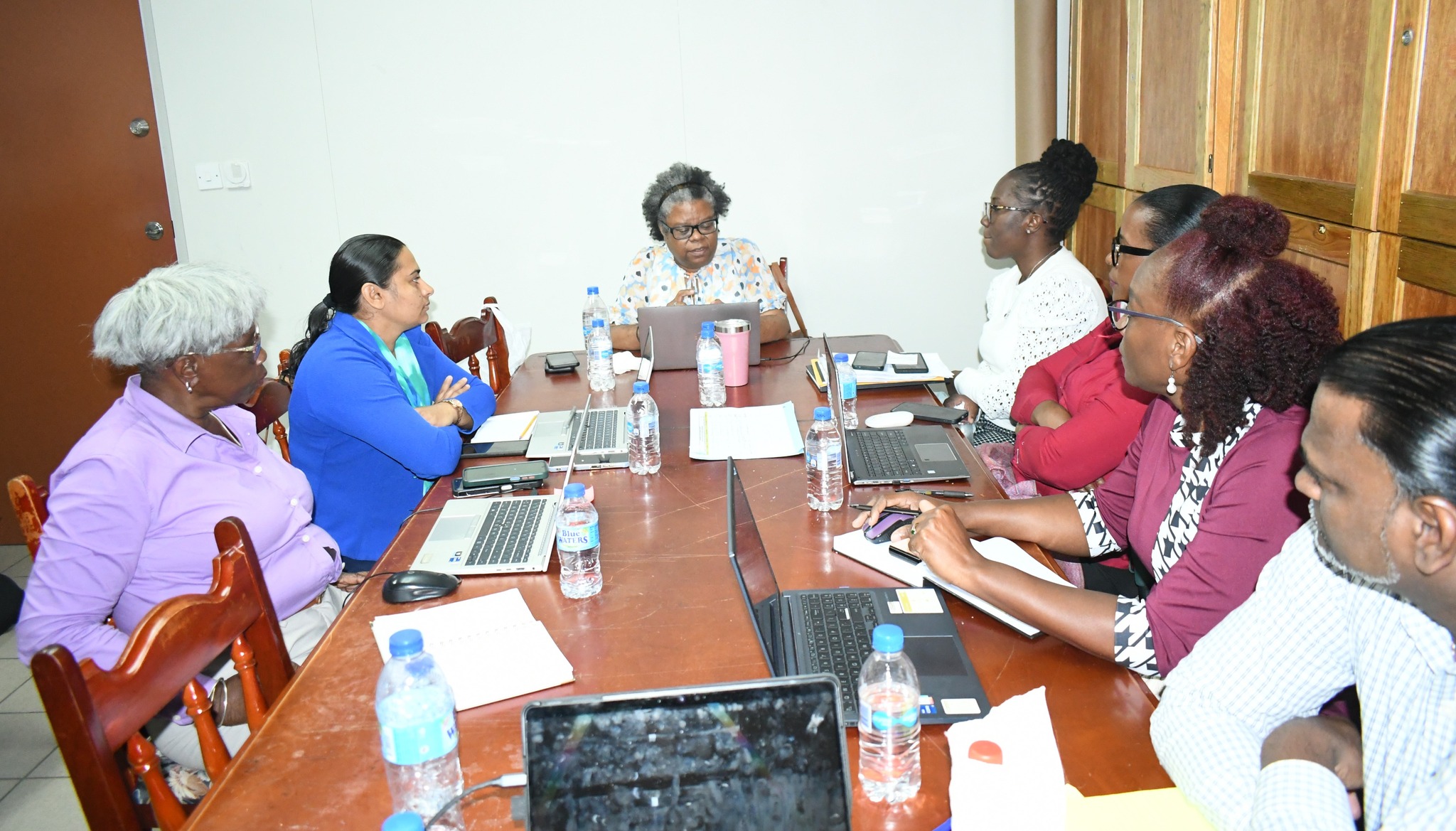
Stakeholders Engage in Consultations to Strengthen National Youth Policy
The Department of Youth Development and Sports, through its Youth Unit, has commenced a four-day series of half-day closed stakeholder consultations aimed at strengthening the development and imple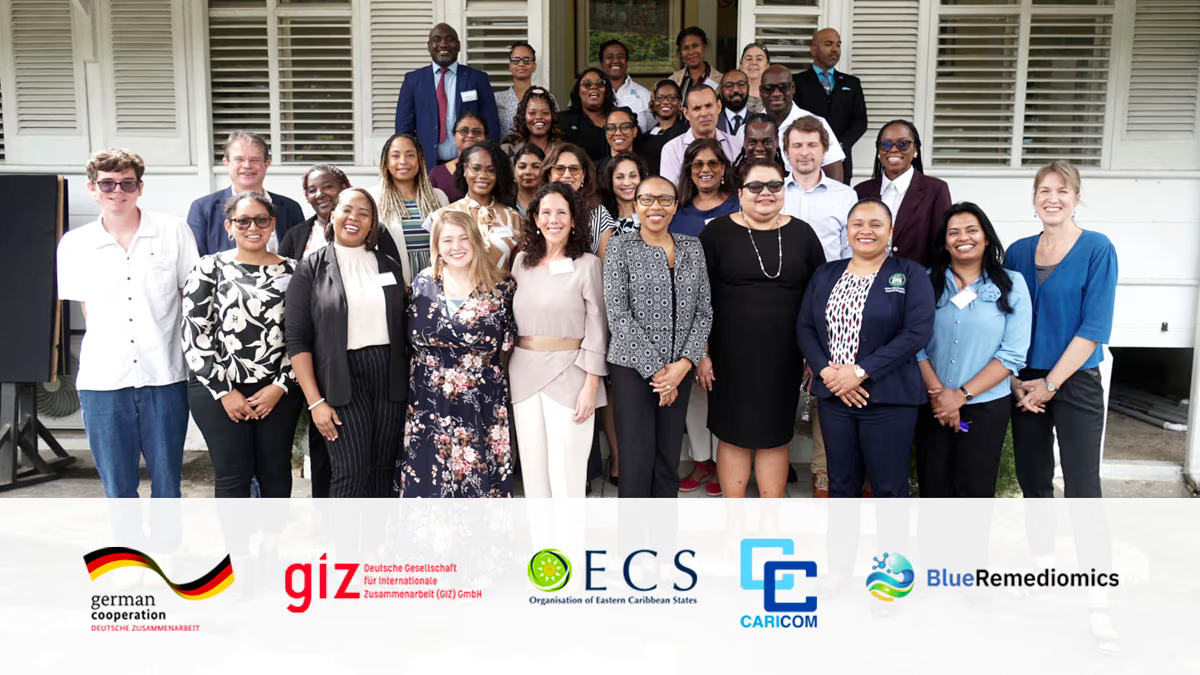
Regional Workshop Strengthens Caribbean Capacity on Genetic Resources
Regional policymakers, scientists, and biodiversity experts gathered from March 3-5, 2026, at The University of the West Indies (UWI), St.
Related Stories
Momentum accelerating towards fulfilling Region’s agriculture potential and food security
Raymond is passionate about farming. He is not one to simply plant a seed and expect it to grow, but he gets literally to the root of the science behind its growth.
Remarks by CARICOM Secretary-General Dr Carla Barnett at the Meeting of Ministers of Agriculture of the Andean Community (CAN) and the Caribbean Community (CARICOM) being held during the Thirty-Seventh Session of the FAO Regional Conference for Latin America and the Caribbean
Distinguished Chair; Honourable Ministers; Delegates; Ladies and Gentlemen.