Badly needed: A Caribbean democracy
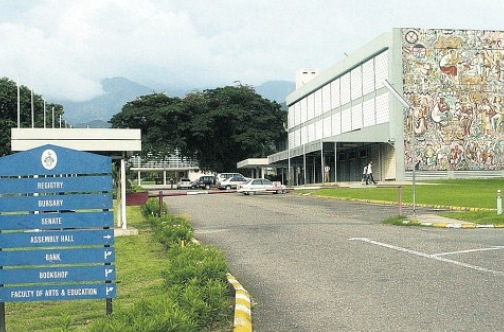
Last week, the University of the West Indies (UWI) held a two-day conference entitled 'Beyond Westminster in the Caribbean: Critiques, Challenges and Reform'.
The objective was to examine the practice and contemporary processes of political reform in the region, assessing attempts to modify, regenerate, or overhaul the Westminster model of governance in the post-independence Caribbean.
Speakers were drawn from the ranks of practising politicians, notably Peter Phillips and Ralph Gonzales; ex-politicians, ie Bruce Golding; political activist intellectuals, ie Trevor Munroe; prominent Caribbean scholars from the three UWI campuses, ie Selwyn Ryan; overseas academics from the universities of Cambridge, Toronto and Florida; international ambassadors present and past, and a host of other interested parties.
The perspectives were personal, feminist, national, regional, and global. There was plenty of profundity and platitude, but one pressing issue was virtually absent: The relationship between the Westminster system of government and the achievement of sustainable economic development in small States.
Economic development requires growth and change involving (a) transformative increases in the capacity for further change (b) sustainability, both socially and environmentally, (c) enhancement of the sovereignty of the population acting democratically, and (d) improvement in the quality of life of the majority of people.
None of this will be possible without economic growth because of the social and political pressure unleashed by economic stagnation and persistent poverty.
Our commitment to democracy remains unwavering, yet it is good sense to ponder whether in its current form the Westminster model is the best vehicle to provide for economic growth in the small States of the Caribbean.
It is noteworthy that several countries that have achieved economic take-off have acted in ways eschewed by the Westminster system of governance. Most of the now developed countries achieved their transformative growth similarly.
Adjudged by universal adult suffrage, a key element of the Westminster model then, neither England in the Industrial Revolution nor the United States until the late 1960s met the Westminster standards. If these examples are too arcane, then it must be conceded that the State was able to act in ways ruled out in the Westminster model to engineer rapid economic growth in Japan, Singapore, South Korea, Taiwan, and Israel, while maintaining their own unique form of democracy.
The form of government which produced industrialisation of Russia, the most rapid period of sustained economic growth in modern history in China, and the powerful health and education system in Cuba is regarded as unacceptable.
It is obvious that the Westminster model has not produced economic growth. It has merely coexisted with growth when exogenous factors have been very favourable, such as the bauxite boom in Jamaica in the 1960s or the existence of oil and natural gas in Trinidad and Tobago.
At this time the small States of the Caribbean desperately need a period of sustained high rates of economic growth. Therefore, it is time for the governments and people of the Caribbean to design and operate their own form of democracy conducive to attaining the economic development to which they aspire and are capable of achieving.
You may also be interested in:
Stakeholders Engage in Consultations to Strengthen National Youth Policy
The Department of Youth Development and Sports, through its Youth Unit, has commenced a four-day series of half-day closed stakeholder consultations aimed at strengthening the development and...
Regional Workshop Strengthens Caribbean Capacity on Genetic Resources
Regional policymakers, scientists, and biodiversity experts gathered from March 3-5, 2026, at The University of the West Indies (UWI), St.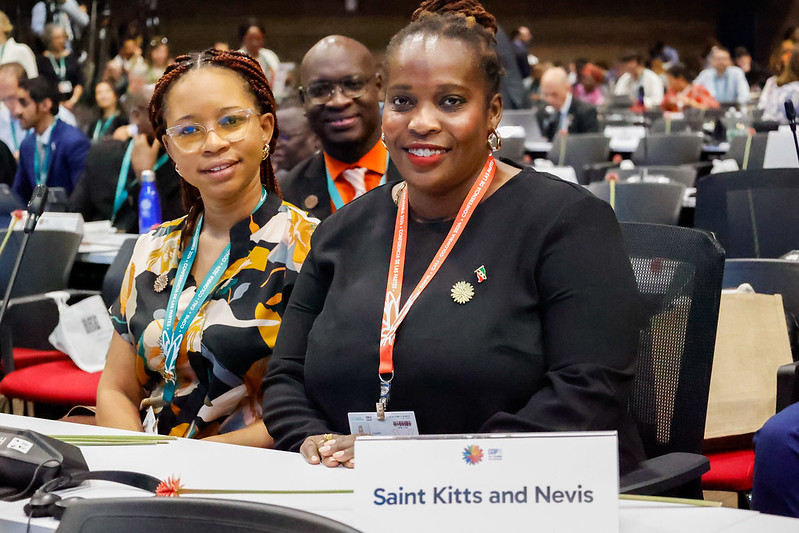
Statement by Hon. Dr. Joyelle Clarke, Minister of Sustainable Development, Environment, Climate Action and Constituency Empowerment of Saint Kitts and Nevis| High-Level Segment, 16th Meeting of the Conference of Parties of the UN Convention on Biological Diversity| Cali, Colombia| 30 October 2024
"The fight for biodiversity cannot be disentangled from the climate crisis. This is why our commitment to the Kunming-Montreal Biodiversity Framework is especially critical and why Saint KittsRelated Stories
CXC Regional Examinations to be held in July 2020
CSEC, CAPE and CCSLC students will be sitting their examinations in July this year.
Clive Landis | Agility and alignment: UWI research and innovation deployed in response to COVID-19
In answering the question on vaccine development posed by the editorial, it is important to understand that today’s recombinant vaccine technology requires constant investment by the State to build