Agri. Ministry partners with IICA to develop first ever bio-fortified rice variety in the Caribbean
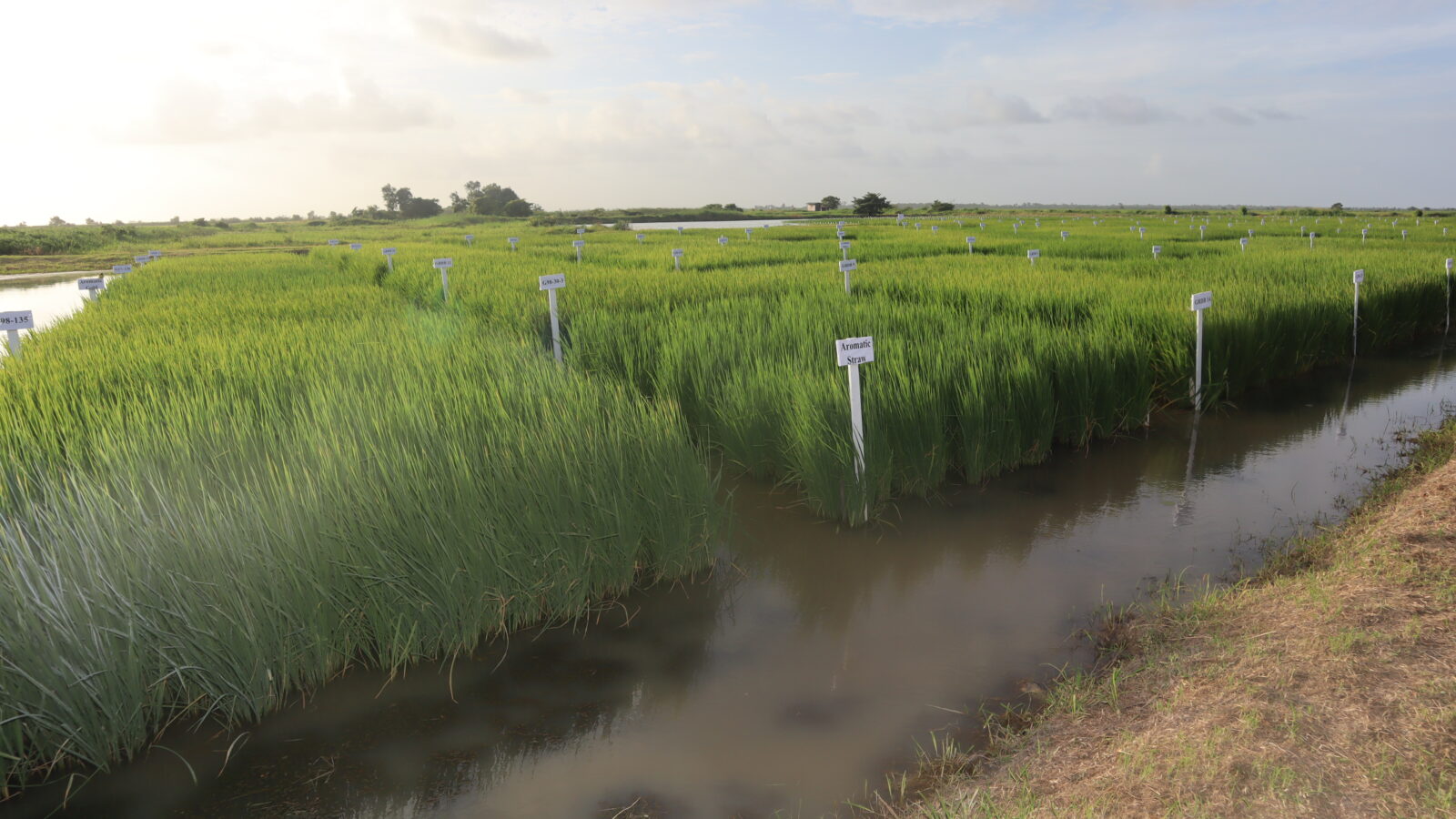
A section of the trial plot (Phoot credit Ministry of Agriculture)
– zinc, other minerals added
(DPI) In Guyana and the Caribbean, rice is considered a versatile staple and is a key component in the diet of most Guyanese.
In an effort to promote healthy food choices among citizens, the Ministry of Agriculture’s Rice Research Station has collaborated with the Inter- American Institute for Cooperation on Agriculture (IICA) to develop a bio-fortified rice variety with nutritionally enhanced Zinc.
Medical experts have recommended daily doses of Zinc to boost the immune system so that it can withstand infectious diseases such as the novel coronavirus.
Agriculture Minister Zulfikar Mustapha on Friday visited the rice research station, which is located in Burma, Region Five, to carry out an assessment of the trial plots currently under cultivation with the bio-fortified rice.
GRDB’s Chief Scientist, Dr. Mahendra Persaud, said that the strains are part of a breeding trial and will be tested over the next three seasons.
“We’ve been testing some breeding lines and established varieties for higher levels of Zinc. We have 17 promising entries at four trial locations. These trials will go on for at least three more seasons before we make a final selection on which of the strains will go into the farmers’ fields for a final analysis for release as a variety. It’s quite at the initial stage but we are very optimistic because we’ve seen these lines perform well at the breeding stage over the past five years.
Dr. Persaud said the bio-fortified rice will be released to the market once the breeding programme is completed and the selected strain meets the characteristics that farmers desire.
Minister Mustapha said that he was very impressed with the progress made with the development and pledged the Ministry’s full support throughout the process.
“I’m very excited about this project. I’m thankful to IICA and CARICOM for starting the pilot project here in Guyana. This project is good, not only for Guyana, but for the entire Caribbean because, once released, this variety will help with not only curbing hunger but with malnutrition and promoting healthy lifestyles. I am eager for this candidate variety to be given the green light for release to our farmers. This will also attract a higher market value which means better prices for our farmers,” Minister Mustapha said.
The subject Minister further stated that over the years, Guyana has been playing an important role in the Caribbean in terms of agriculture and will continue to work with other CARICOM nations to improve the Region’s food and nutrition security.
IICA Country Representative in Guyana, Wilmot Garnett said once released, the bio-fortified rice will be the first in the Region.
“It is the first in the Region for this type of trial and certainly the first in Guyana. As we know, especially with the COVID-19, there have been recommendations for small doses of Zinc and Vitamin C and so on. So, this is something we’ll continue. IICA will continue to work with GRDB. It would be very good if we can get one or two varieties very soon into the CARICOM market and we’ll ensure that benefits are realised outside of the borders of Guyana.
Shaun Baugh, who is the Programme Manager for Agricultural and Agro-Industrial Development at CARICOM, said project came about after CARICOM leaders felt the need to deal with issues surrounding food security and food and nutrition.
“This project came to the Secretariat… and we noticed that food security was one of the issues that needed to be dealt with, more importantly, food and nutrition hence the application of Zinc. This is one of the many projects that are ongoing. As we go along and as COVID-19 has taught us, the time is now for us in our Region to start looking at food security, where does our food come from, and from a collective purpose, to see how best we can start ruling our own destiny in terms of providing for our people,” Mr. Baugh said. The strains that are currently under cultivation as part of the breeding programme are expected to be harvested by the second week of March based on the flowering of the plants.
You may also be interested in:

CSME, food security, climate finance top agenda of CARICOM Summit in The Bahamas
The CARICOM Single Market and Economy (CSME); food security; climate change and climate finance; health; and security will be among the major topics when Heads of Government of
CARICOM Secretariat and Caribbean Agency for Justice Solutions (CAJS) Forge Partnership to Accelerate Digital Transformation
The CARICOM Secretariat (CCS) and the Caribbean Agency for Justice Solutions (CAJS) have come together in a significant partnership aimed at advancing digital transformation an
Related Stories
Momentum accelerating towards fulfilling Region’s agriculture potential and food security
Raymond is passionate about farming. He is not one to simply plant a seed and expect it to grow, but he gets literally to the root of the science behind its growth.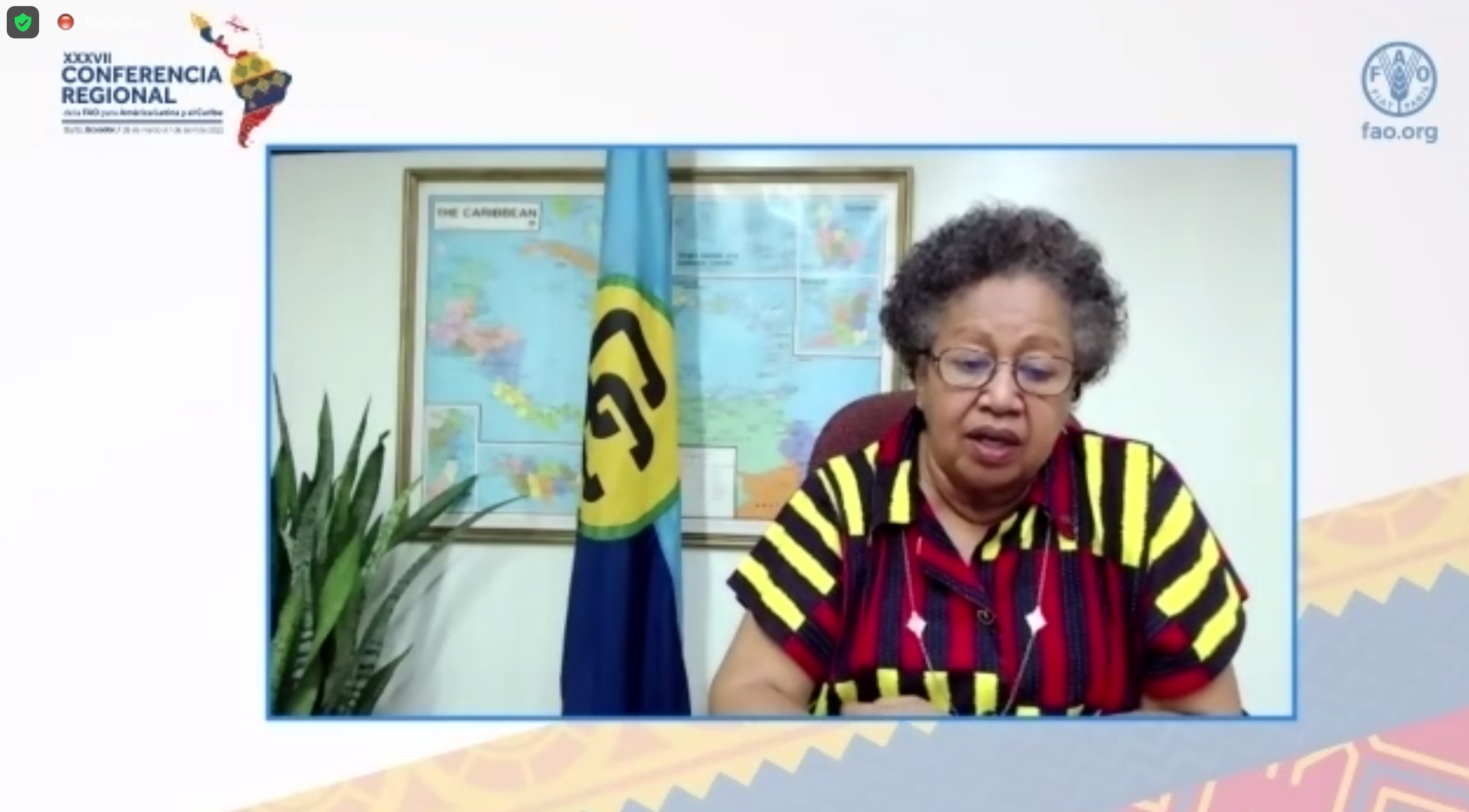
Remarks by CARICOM Secretary-General Dr Carla Barnett at the Meeting of Ministers of Agriculture of the Andean Community (CAN) and the Caribbean Community (CARICOM) being held during the Thirty-Seventh Session of the FAO Regional Conference for Latin America and the Caribbean
Distinguished Chair; Honourable Ministers; Delegates; Ladies and Gentlemen.